Oil prices climbed back above $100 a barrel after weekend talks between the United States and Iran ended without an agreement, and Donald Trump announced a blockade of the Strait of Hormuz.
The US president announced the blockade on Sunday—the measures are aimed at Iranian vessels as well as ships that had paid Tehran for passage through the strait, in what is intended to restrict Iranian oil exports.
US Central Command said the operation would begin at 10:00 a.m. Eastern Time—that is 5:30 p.m. in Iran and 3:00 p.m. in Britain—effectively establishing control over maritime traffic in the Strait of Hormuz.
The news pushed oil and gas prices higher again after the two-week truce between the United States and Iran announced on Wednesday had triggered a sharp drop—with oil falling below the psychological threshold of $100 a barrel by the end of the week.
Brent Oil Price in Dollars Per Barrel
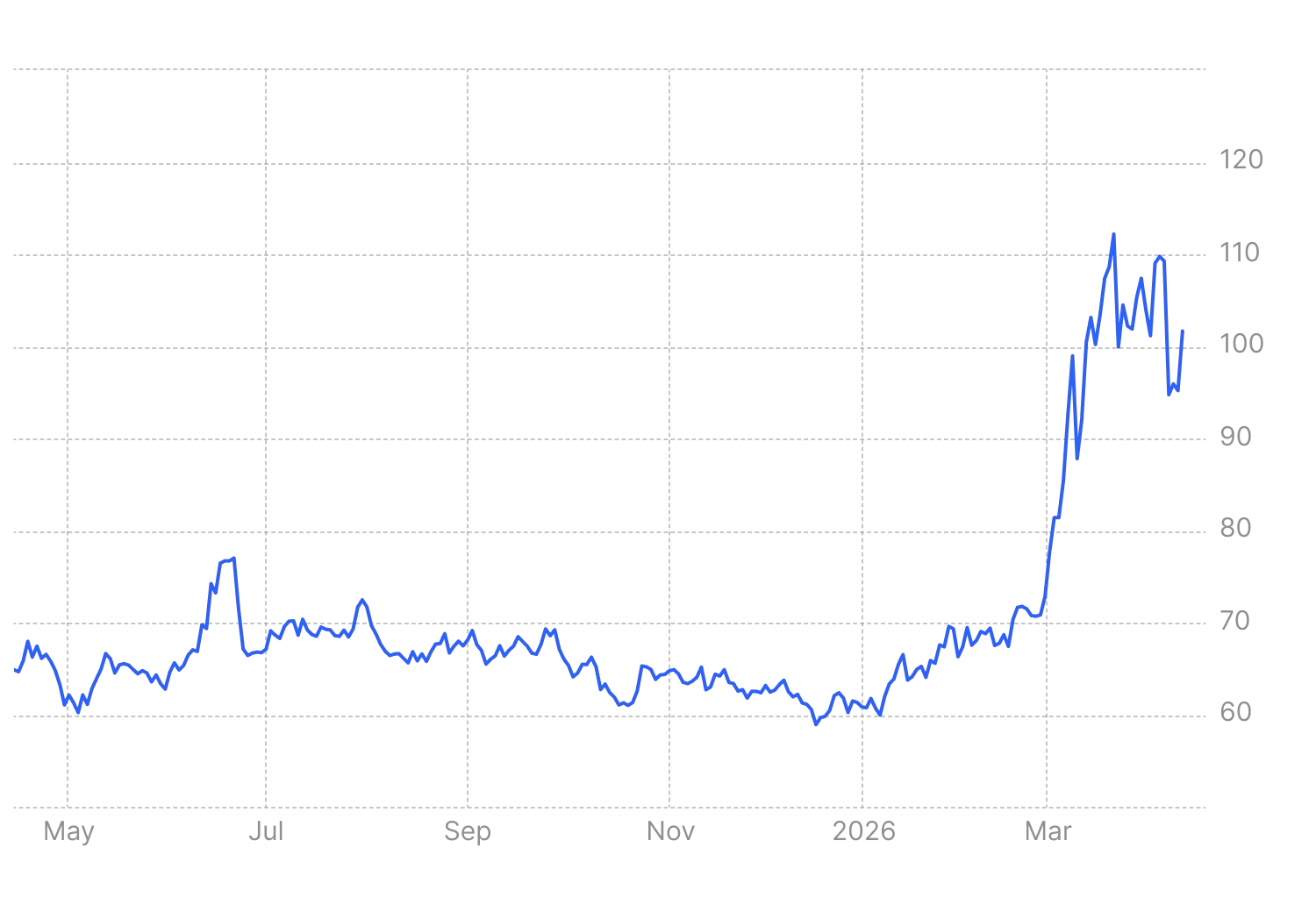
On Monday morning, Brent crude rose nearly 7% to $101.74 a barrel, while US crude climbed by more than 8% to $104.69.
Gas prices also moved higher—the British wholesale contract for May rose 11.7% to 122.5 pence per therm.
Analysts at JPMorgan Chase had noted as early as last week that oil prices were likely to remain above $100 a barrel in the second quarter before potentially easing in the second half of the year.
Most Asian stock markets fell on Monday—Japan’s Nikkei lost 0.7%, Hong Kong’s Hang Seng dropped 1.1%, while Chinese equities posted modest gains.
With a significant number of oil tankers still in the Persian Gulf, the truce had raised hopes that shipping traffic would resume. But the talks between Washington and Tehran, held in Islamabad and lasting 21 hours, ended without a result.
Priyanka Sachdeva, senior market analyst at brokerage Phillip Nova, said: “In the current environment, every additional barrel of risk in the oil market translates into an inflationary burden for the global economy.”