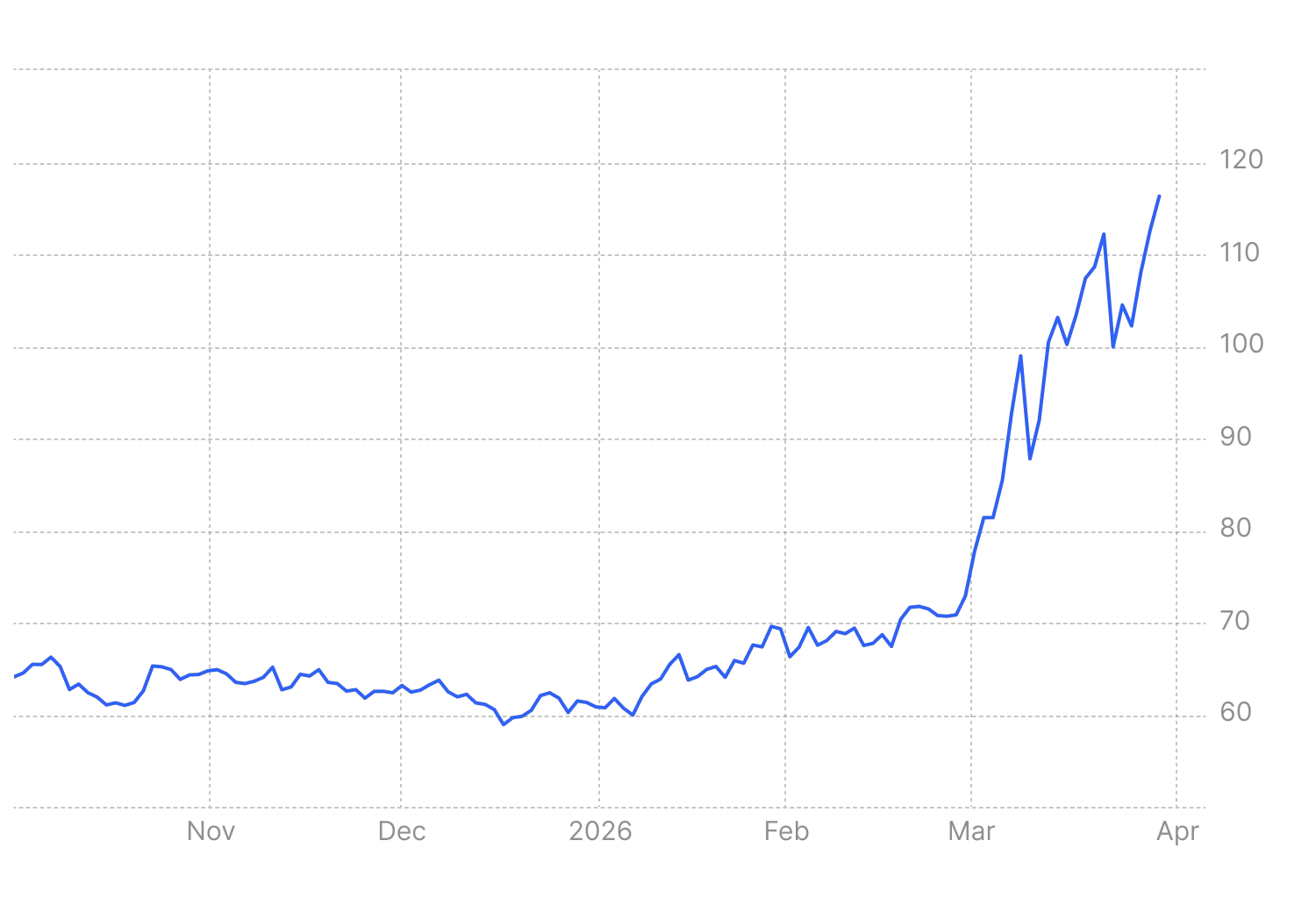
Oil prices surged to $116 a barrel after Donald Trump said he intended to “take Iran’s oil,” triggering a selloff across Asian stock markets.
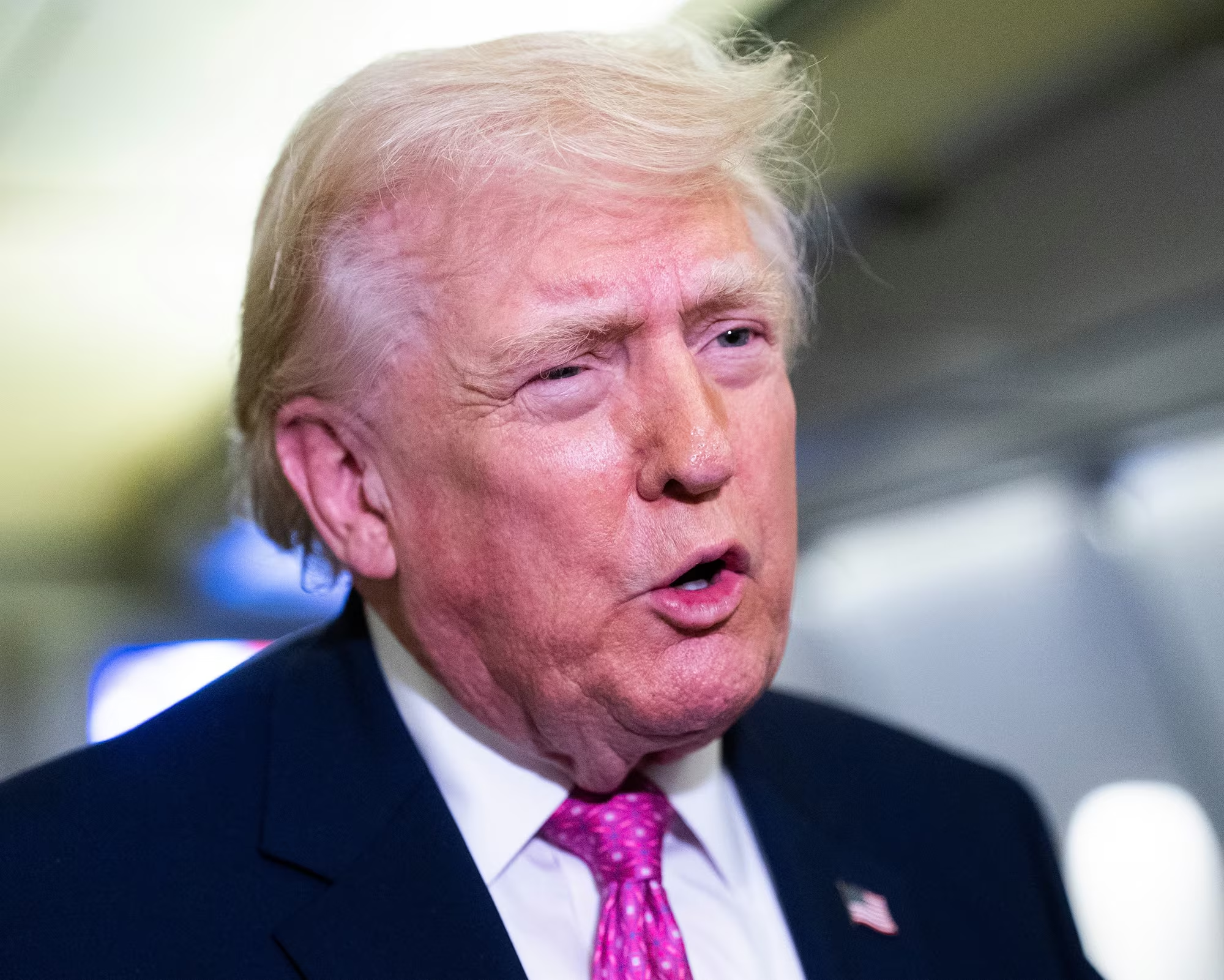
Brent crude, the global benchmark, rose 2% at the start of trading on Monday after Trump raised the possibility of seizing Iran’s export hub on Khark Island. In an interview with the Financial Times on Sunday, he said: “Frankly, my favorite option is to take Iran’s oil, but some stupid people in the United States ask: ‘why are you doing this?’ But they are stupid people.”
Brent Crude ($/bbl.)
He added: “We may take Khark Island, or we may not. We have many options.”
Across Asian markets, which are particularly vulnerable to disruptions in oil and gas supplies from the Persian Gulf, prices fell sharply. Japan’s Nikkei lost 3%, South Korea’s Kospi dropped 3.4%, and Hong Kong’s Hang Seng fell by about 1%.
Investor anxiety is deepening as the conflict in the Middle East intensifies—in recent days, another 3,500 American troops have arrived in the region. The Houthis in Yemen have also entered the fighting, launching ballistic missiles at targets in Israel, underscoring the widening scope of the conflict and the risk of a deeper global energy crisis.
Analysts at Deutsche Bank note: “There are still no signs that the conflict is nearing an end, and against the backdrop of the current news flow, investors fear a new escalation.”
The military escalation has already pushed oil prices toward historic levels. Since the start of March, Brent has risen by more than 50% and is on course for a record monthly gain, surpassing the previous high of 46% recorded in September 1990 after Saddam Hussein’s invasion of Kuwait.
British Prime Minister Keir Starmer is expected to hold talks on Monday with executives from Shell, BP, and Norway’s Equinor, as well as representatives of the financial, insurance, and shipping sectors. At the center of the discussions are possible emergency measures to contain the fallout from the crisis caused by the blockade of the Strait of Hormuz.
In March, Brent climbed as high as $119.50 a barrel—the highest level since June 2022—after Iran effectively shut the strait, through which roughly a fifth of global oil and gas supplies normally pass.
Ipek Ozkardeskaya, a senior analyst at Swissquote, said: “Markets are betting that oil could rise to $150 or even $200 a barrel if the war does not end quickly. I believe that at such levels, demand will come under severe pressure. Once prices move above $120-$130 a barrel, the likelihood of a global recession will increase, limiting further gains.”
She added that aluminum prices in Asia rose by more than 5% after Iran struck aluminum producers in Bahrain and the UAE over the weekend.
Meanwhile, Britain’s chancellor, Rachel Reeves, is expected to warn G7 countries of the need to accelerate the transition to clean energy in order to reduce their economies’ vulnerability to oil and gas price shocks. On Monday, she and Energy Secretary Ed Miliband will hold a virtual meeting with the finance and energy ministers of the G7 countries.
Against that backdrop, industry representatives are warning of possible “temporary disruptions” at petrol stations in Britain, as the conflict in the Middle East has already pushed average gasoline prices above 150 pence a liter.