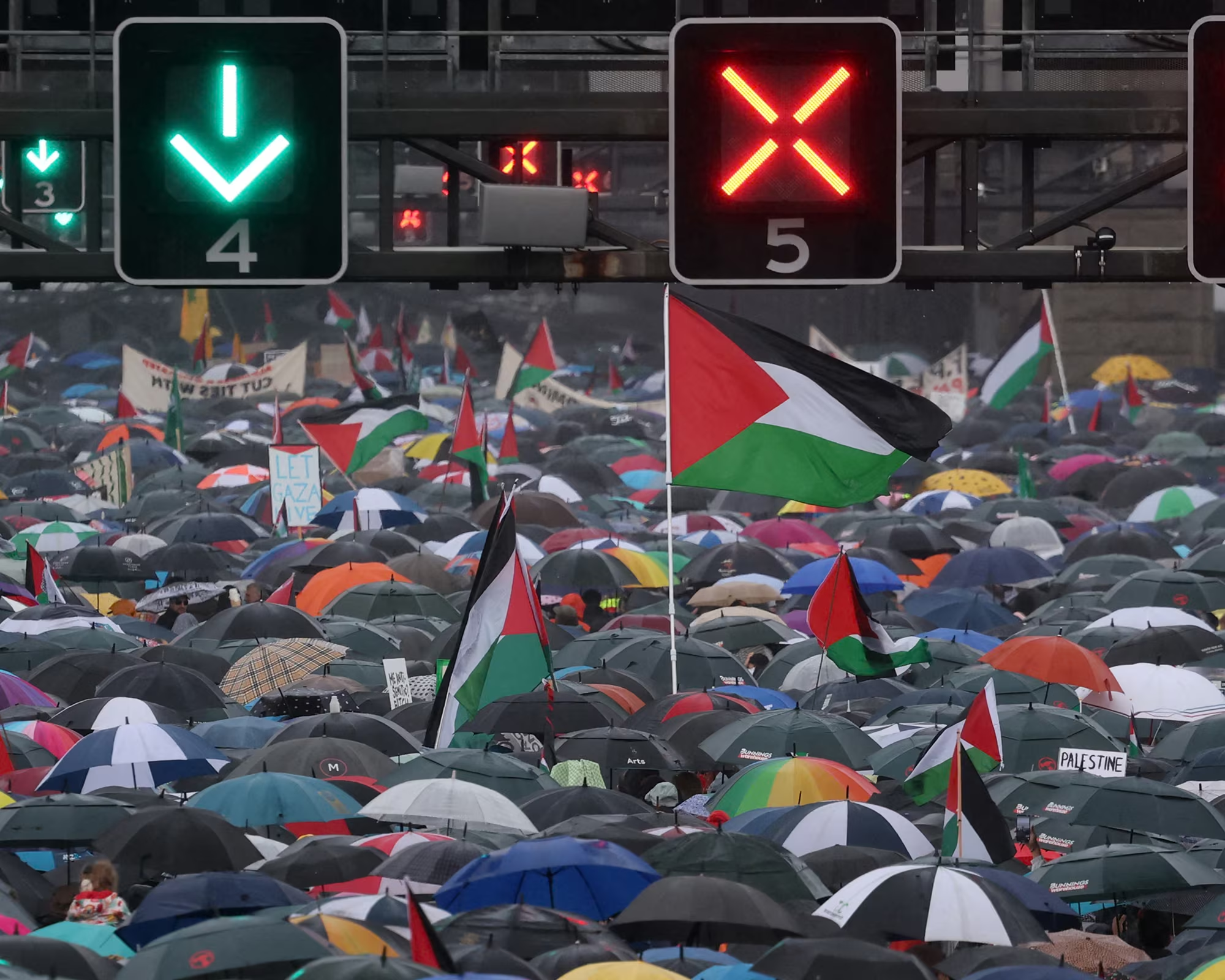
New South Wales Premier Chris Minns is proposing to grant the government “extraordinary powers” that would, in effect, allow street protests to be banned for up to three months. He claims that the “consequences” of pro-Palestinian demonstrations allegedly manifested themselves in the Bondi terror attack that left 15 people dead.
Speaking on December 19, Minns said that once a terrorist designation is applied, police—with the approval of the relevant minister—would be able to designate specific areas where public gatherings would be temporarily restricted. According to him, this could apply either to individual districts or to the entire state. “No public assemblies within a designated zone would be able to receive authorisation, including through the courts,” he stressed, describing the measures as “clearly extraordinary” and “without precedent in any jurisdiction in the country.”
The proposed restrictions would amount to a ban on protests for up to three months, without any form of judicial oversight. Minns argued that mass marches featuring “violent, graphic imagery, scenes of death and destruction” trigger social processes that organisers, in his view, are unable to contain. “We cannot risk another demonstration of this scale in New South Wales. The consequences, in my opinion, became clear on Sunday,” he said.
At the same time, Deputy Premier Penny Sharpe and other state Labor MPs themselves took part in an August march across Sydney’s Harbour Bridge against the killings in Gaza, which drew an estimated 225,000 to 300,000 people. The rally was also attended by federal Labor MP Ed Husic, who was dropped from Anthony Albanese’s cabinet in May. Both the premier and the Palestine Action Group, which organised the march, say that no further protests are planned.
Police said the shooters at Bondi Beach—24-year-old Naveed Akram and his 50-year-old father Sajid Akram—were “inspired by ISIS”. Australia’s domestic intelligence agency ASIO and the police confirmed that they held specific information on Naveed: an investigation into him had been under way for six months, beginning in October 2019. Prime Minister Anthony Albanese noted this week that Akram had been “considered in connection with his possible contacts with other individuals”, but that an assessment found no indications of an imminent threat or intent to resort to violence.
On Sunday evening, the target of the attack was a Hanukkah event in Archer Park, where 15 people were killed. The proposed anti-protest measures are to be formalised through amendments to counterterrorism legislation and other laws. They would include a mechanism known as a “public assembly restriction declaration”—Pard.
Such a declaration could be imposed within a designated area for up to 14 days following the assignment of a terrorist designation, if a public gathering is deemed capable of “causing fear of harassment, intimidation, or violence, or creating a risk to public safety”. It would grant police the authority to order dispersal in response to “certain types” of conduct. At the same time, the new rules are expected to include an exemption for “industrial disputes”.