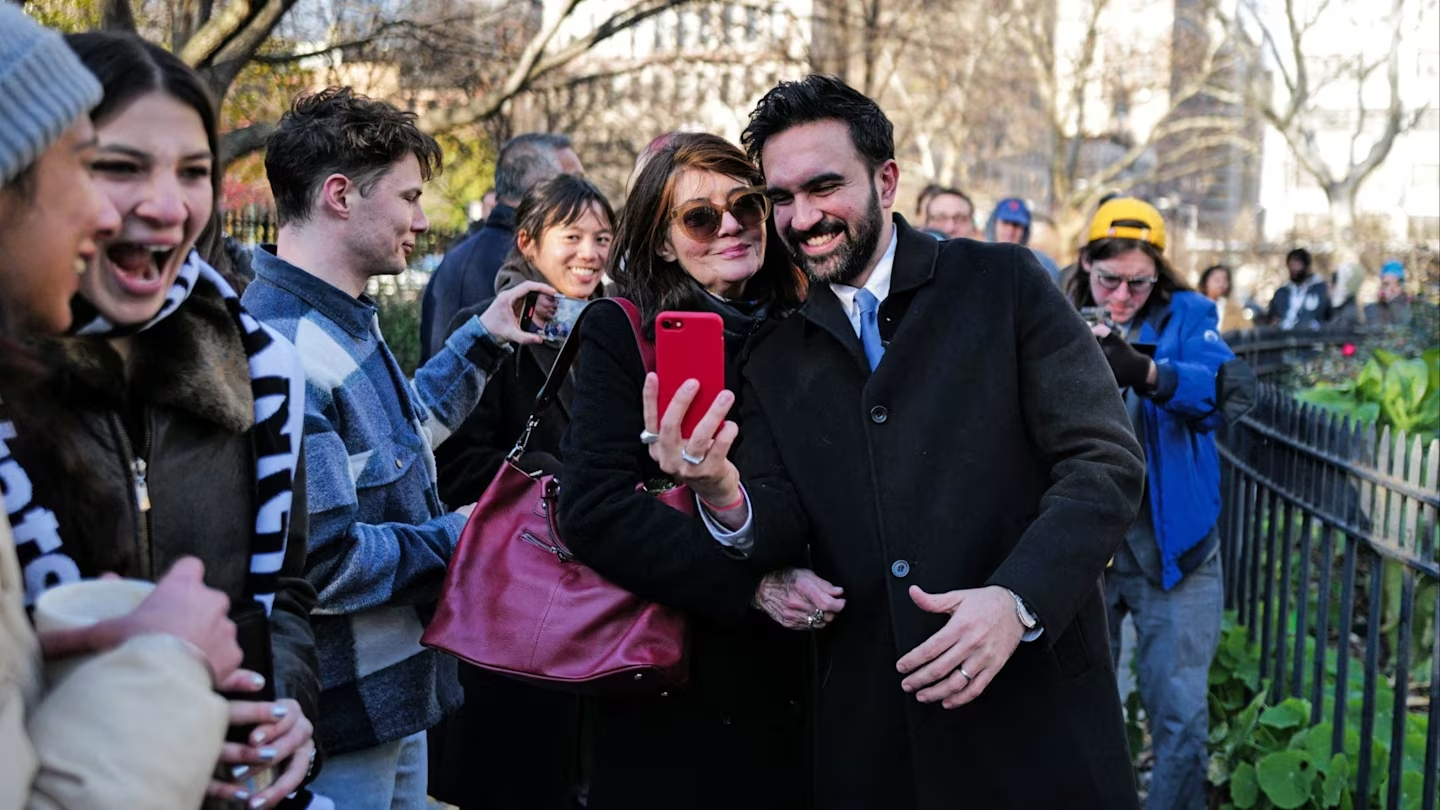
Upon taking office, Zohran Mamdani moved swiftly to define his administration’s priorities: revisiting tax policy and expanding the city’s role in addressing the cost-of-living crisis. City Hall argues that higher taxes on millionaires and corporations are necessary to fund expansive social programs and close the budget gap, dismissing concerns about an exodus of wealthy residents as overstated. The agenda is already encountering political resistance at the state level and is shaping up as the first serious test for the new city leadership.
New York’s new mayor, Zohran Mamdani, intends to push forward with an initiative to raise taxes on millionaires, rejecting warnings that the move could trigger an outflow of affluent residents from the United States’ largest financial center.
Dean Fulayhan, the incoming deputy mayor, acknowledged that balancing the city’s budget and delivering on Mamdani’s costly campaign promises would require “new sources of revenue.” At the same time, he dismissed arguments that a heavier tax burden would force wealthy New Yorkers to leave the city.
“Those who leave New York are people who can no longer afford it—not the millionaire class,” Fulayhan said. In his view, most residents understand that addressing the city’s affordability problem “is essential for business and for New York’s continued success.”
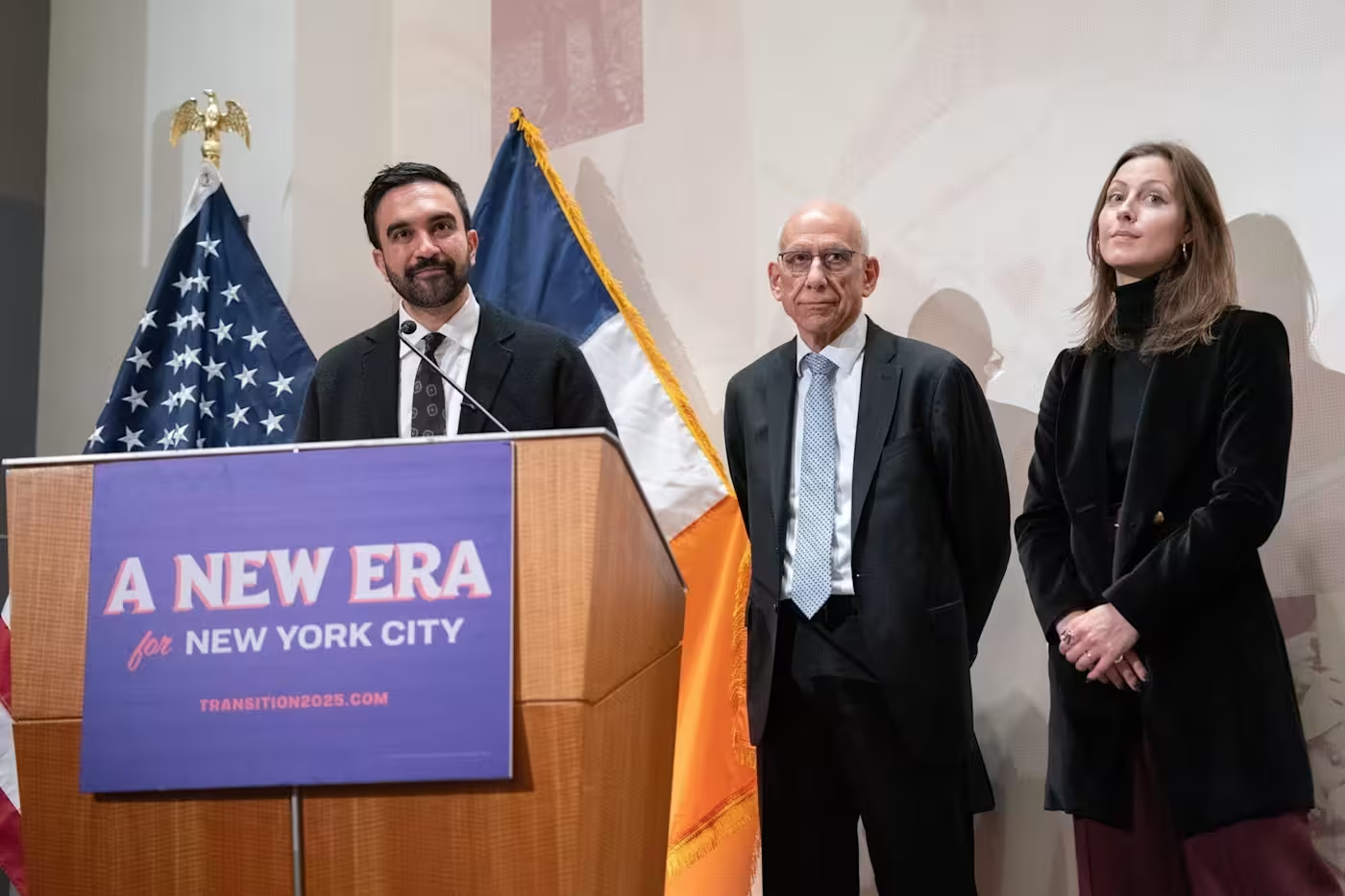
Dean Fulayhan, New York City’s incoming deputy mayor, center: “We cannot simply say there are budget constraints and therefore refuse to do what New Yorkers clearly demanded in this election.”
Zohran Mamdani, who describes himself as a democratic socialist, was sworn in as New York City’s first Muslim mayor at a closed ceremony in an abandoned subway station shortly before midnight on New Year’s Eve. The symbolic moment capped a rapid political ascent that caught the American political establishment off guard.
The 34-year-old member of the New York State Assembly, little known to most voters as recently as a year ago, rose to power on a wave of anger over the sharp increase in the cost of living in the nation’s most populous city. A central plank of his campaign was a pledge to make more assertive use of government tools to support working New Yorkers.
Mamdani pledged to raise the city income tax rate on annual earnings above $1 million by two percentage points—to roughly 5.9 percent—and to lift the top corporate tax rate from 7.25 percent to 11.5 percent, bringing it into line with neighboring New Jersey.
The additional revenue, under his plan, would be directed toward an expansive social program, including free universal childcare—with expected costs of about $6 billion a year—free public transportation, state-run grocery stores, and the construction of 200,000 units of affordable housing over the next decade.
Any initiative to increase budget revenues, however, will face resistance in the state legislature in Albany. Governor Kathy Hochul, a Democrat seeking re-election this year, has previously said she opposes raising income taxes.
“For Hochul, this will be a balancing act,” said Basil Smikle, a professor at Columbia University’s School of Professional Studies and a former executive director of the New York State Democratic Party. On the one hand, she will be under pressure to help Mamdani deliver on his agenda; on the other, she will have to avoid “provoking a backlash from the state’s conservative voters.” “The suburbs will pull her to the right,” he added.
At the same time, Mamdani’s aides say Hochul is inclined to work with the mayor to fulfill his campaign promises.
“The governor has stated quite clearly in public that her task in the upcoming session is to ensure the implementation of universal childcare,” said Sheriff Soliman, director of the mayor’s Office of Management and Budget. He noted that Hochul was instrumental in securing tax credits in last year’s state budget to help families cover the cost of childcare.
In an interview on December 28, Hochul effectively voiced support for Mamdani’s plans. “Employers in New York will benefit if their workers are not under stress about who is looking after their children,” she told radio station 77 WABC.
Dean Fulayhan, the incoming deputy mayor, recalled that a similar initiative by former mayor Bill de Blasio—to introduce city-funded universal free pre-kindergarten for four-year-olds—was initially dismissed as unrealistic.
“Everyone said it was impossible…that it couldn’t be done,” Fulayhan said, recalling his time as de Blasio’s budget director. “Yet within three months the program secured state funding and was rolled out over two years.”
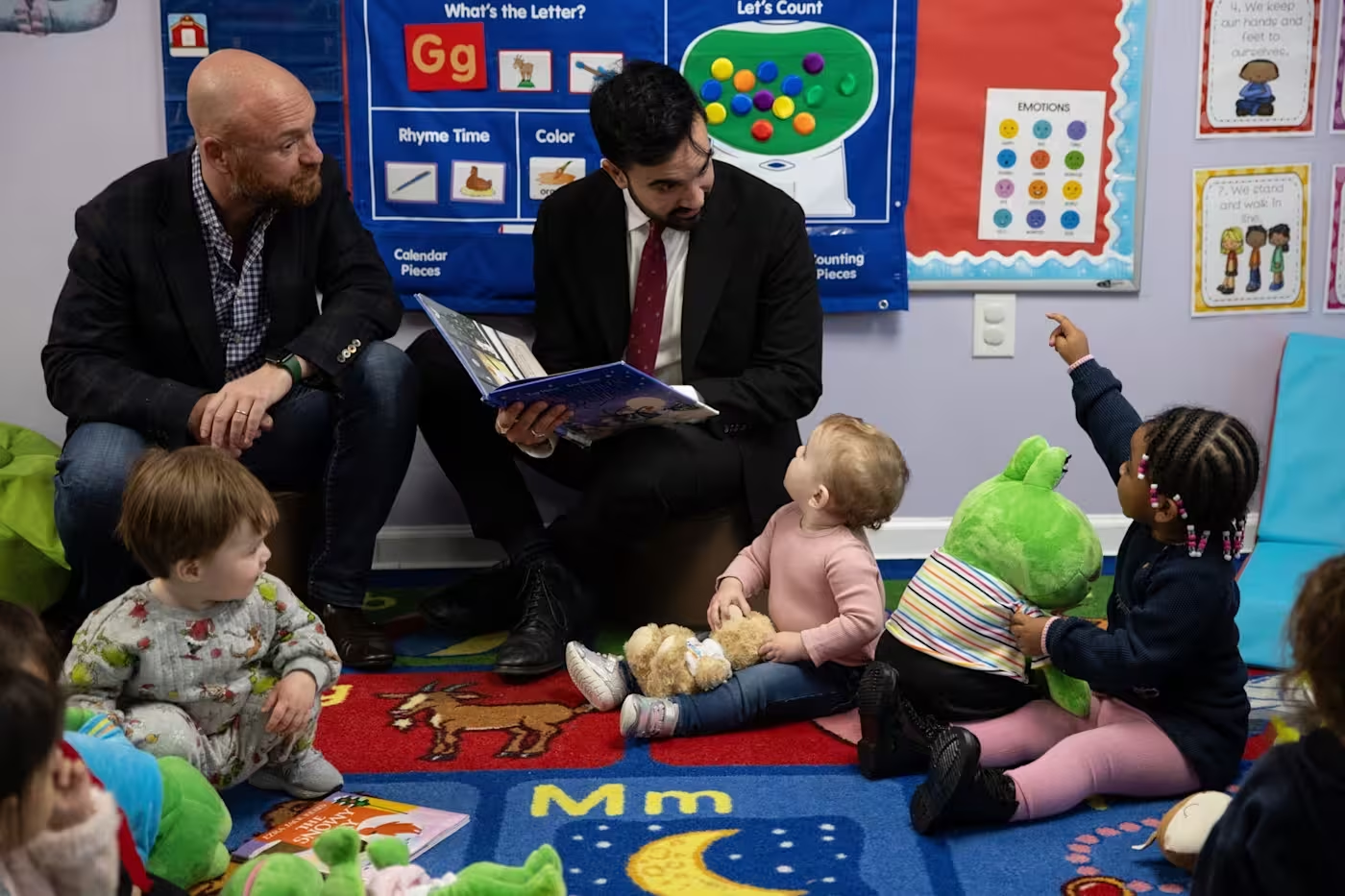
One of Mamdani’s campaign pledges was the introduction of free universal childcare.
Mamdani, however, faces other challenges as well. Under the administration of Eric Adams, New York City’s budget expanded by more than $2 billion—to $118 billion—while leaving the city with a projected deficit of about $4.7 billion that must be closed under balanced-budget requirements.
According to the independent watchdog Citizens Budget Commission, the structural deficit confronting the new administration could be larger still—up to $8 billion. Outgoing city comptroller Brad Lander has previously warned that in the next fiscal year New York may have to close a budget gap of as much as $10.4 billion.
An additional blow came from federal spending cuts initiated by U.S. President Donald Trump. His administration paused or froze $18 billion in funding for infrastructure projects, while a package of measures he dubbed “one big beautiful bill” slashed healthcare programs and food assistance on which millions of low-income city residents depend.
“Mamdani takes office with ambitious plans and serious fiscal challenges—a budget gap, the need to prepare for federal cuts, and better positioning for a potential recession,” said Andrew Rein, president of the CBC.
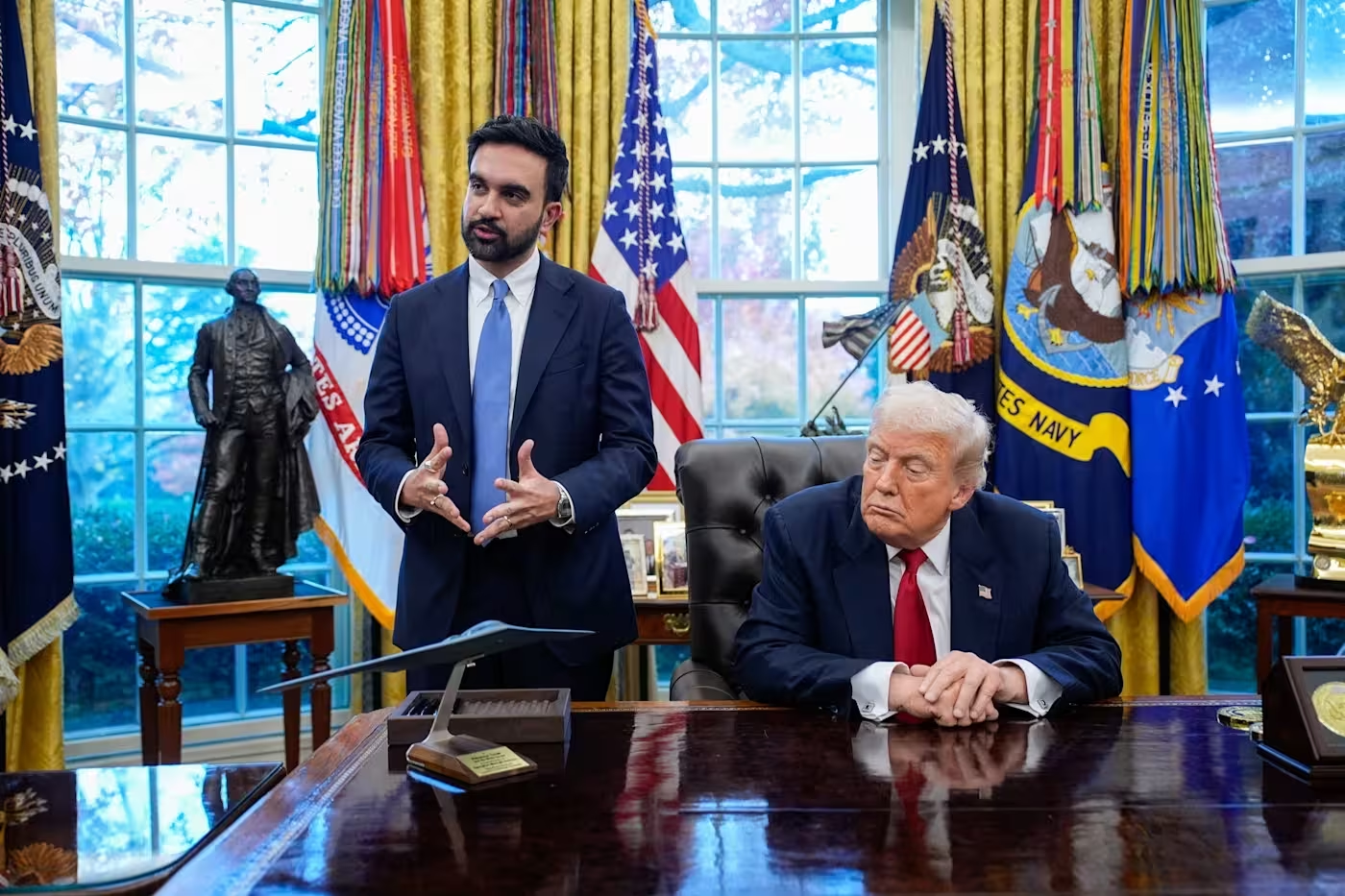
Mamdani met with President Donald Trump at the White House in November.
Andrew Rein, head of the Citizens Budget Commission, has cautioned Mamdani against further tax increases, noting that New York already has one of the highest combined top marginal income-tax rates in the United States. Surveys, he said, show that only 11 percent of residents believe the authorities manage their money effectively.
“We should be concerned not only about the affordability of housing and transportation in New York, but about the affordability of the tax system itself,” Rein said. He warned of a “real risk of resident and business outflows,” noting that in the year ending July 2024 the city lost 91 000 people to domestic migration.
At the same time, a study by the Fiscal Policy Institute, published in October, reached a different conclusion. It found that after New York State’s most recent income-tax hike in 2021, “no noticeable increase in out-migration among high-income groups was observed,” and that members of the top one percent by income left the state less frequently than other population groups.
Dean Fulayhan acknowledged that Mamdani’s incoming administration will operate under tight fiscal constraints. “This is serious, and I am not going to downplay it,” he said. Balancing the budget, he added, will require “new revenues,” something he noted cannot be achieved without “cooperation with Albany.”
At the same time, Fulayhan added, “we cannot simply say that there are fiscal difficulties and on that basis abandon what New Yorkers clearly demanded in the election.” Addressing the city’s cost-of-living crisis, he said, is precisely “our mandate.”
He also stressed that affluent households are well positioned to absorb higher taxes, particularly as their impact would be offset by substantial tax breaks embedded in Trump’s “big beautiful bill,” which primarily benefit wealthier Americans.
Sheriff Soliman, for his part, said it would be a mistake to reduce New York solely to the interests of the financial sector and its many millionaires. The city, he noted, remains a “global financial capital,” but is also home to “low-wage workers—in retail and healthcare,” a vibrant technology ecosystem, and a “dynamic artistic and cultural community.”
“It must remain a global hub for a wide range of economic and ethnic groups. That is what drives Mamdani’s agenda,” Soliman said.