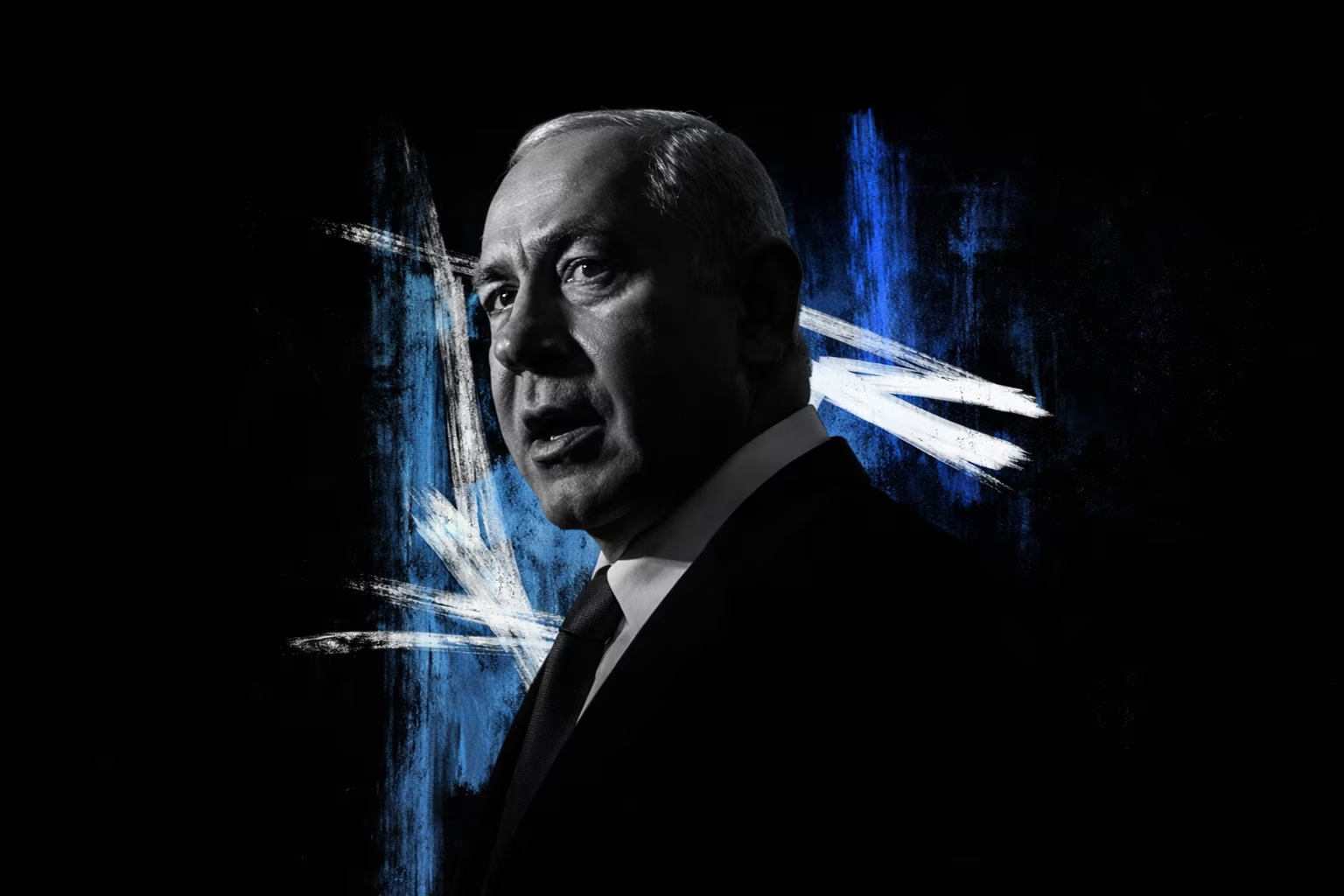
Israel’s prime minister, Benjamin Netanyahu, launched the war on February 28, declaring that Israel and the United States intended to “eliminate the existential threat posed by the terrorist regime in Iran.”
Yet two weeks later, despite the fact that Israeli and American aircraft effectively control the airspace over Iran, the stated objectives of the war have visibly narrowed. Now, according to Netanyahu, Israel seeks only to weaken the Islamic Republic as a source of nuclear and ballistic threat.
As for regime change, Israel will continue striking Iran’s internal security forces, Netanyahu said on Thursday, March 12, at his first press conference since the war began. Beyond that, he acknowledged, little can realistically be expected. The hope is that Iranian society itself will eventually find a way to overthrow the government—perhaps someday in the future, or perhaps sooner.
The shift is revealing. It reflects not only the limits of trying to achieve complex political goals through air power alone, but also a certain irony in the position of Israel’s leader. More than thirty years ago, Netanyahu was among the first to publicly identify Iran and its nuclear program as the central threat to his country. When the United States stood alongside Israel and entered the war, it seemed that he had finally obtained the conflict he had warned about for decades.
But the war is being fought on President Donald Trump’s terms.
Washington exerts direct influence over which targets Israel is allowed to strike inside Iran. That became clear a week ago, when American politicians voiced displeasure over attacks on oil storage facilities in and around Tehran—strikes that sent vast clouds of black smoke billowing over the city.
“Please exercise caution in target selection,” Senator Lindsey Graham, a Republican from South Carolina and an ally of Mr. Trump, wrote on social media the following day. He stressed that such infrastructure should be preserved so that Iranian society retains the prospect of a functioning economy if it succeeds in overthrowing its own government.
This rebuke has fueled speculation in Israel that, beyond Mr. Netanyahu’s own hopes, the Trump administration may be pursuing a broader strategy than merely eliminating the threat to Israel. If the United States emerges from the war with influence over Iran’s oil sector, some observers argue, it would give Washington additional leverage over China—the largest buyer of Iranian oil—in any future confrontation over Taiwan.
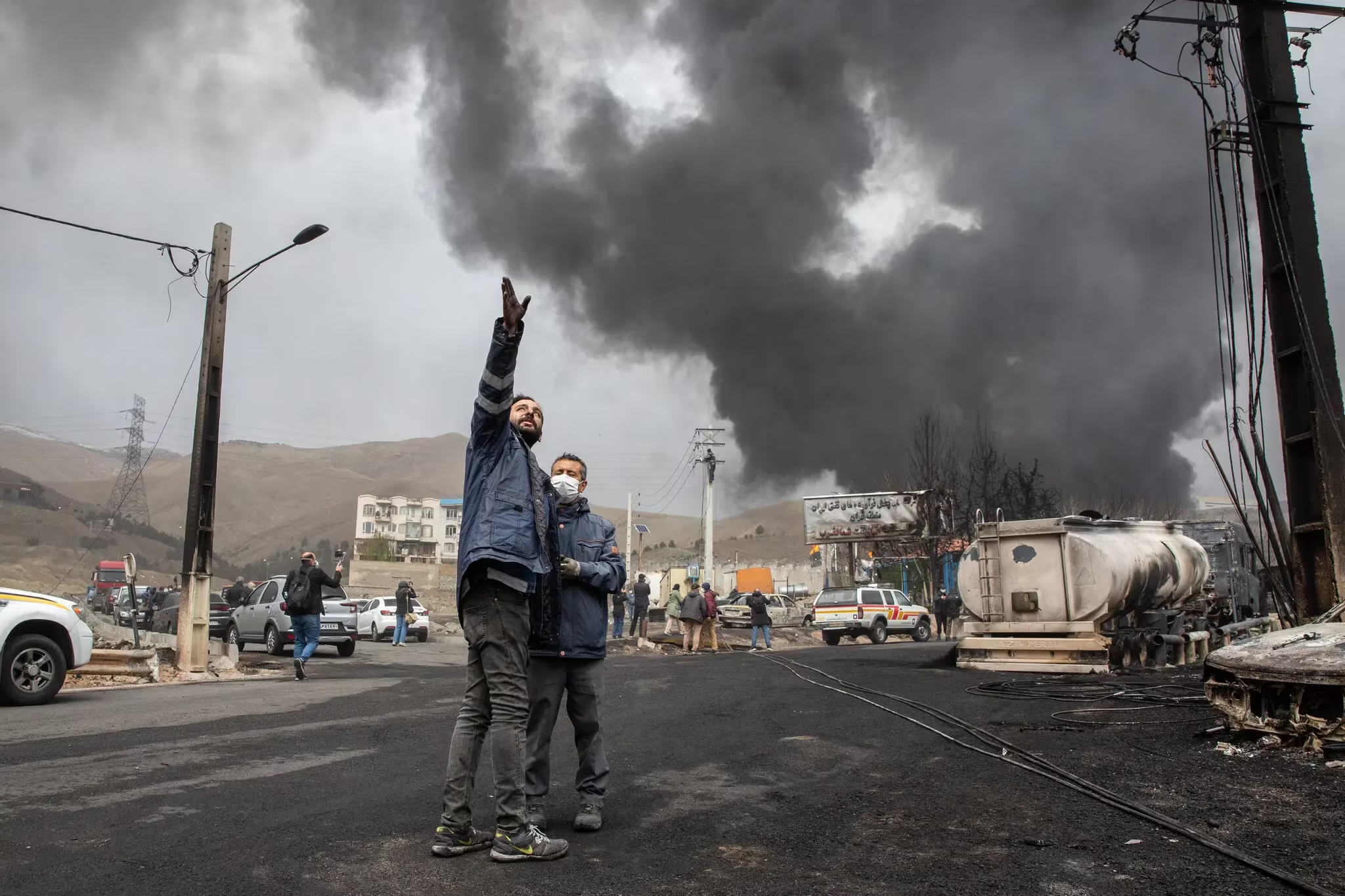
Smoke rises after a strike on an oil storage facility in Tehran. March 8, 2026.
In Israel, where the war commands the support of an overwhelming majority of society, a gradual understanding has taken hold that it is the United States that will ultimately decide when the conflict ends—both on the Iranian front and on the second front against Hezbollah in Lebanon, whose government enjoys Washington’s backing.
“Israel is participating in the war, but it is not directing it,” the columnist Nahum Barnea wrote on Friday in the newspaper Yediot Aharonot. According to him, the country is acting almost blindly, and the same question hangs over each of its moves: “When will Trump—the supreme leader on our side—decide to declare victory and call a ceasefire?”
Mr. Netanyahu sought to soften such impressions. At a press conference on Thursday, he assured Israelis that he speaks with Donald Trump “almost every day, frankly and without equivocation.”
“We are working closely together, exchanging ideas and advice, and making decisions jointly,” he said
At the same time, however, the prime minister—judging by his remarks—appeared to begin preparing the public for the possibility that the war will eventually end, and that it will not amount to a final confrontation with Iran or its allies.
According to Mr. Netanyahu, the current hostilities have weakened Tehran to such an extent that “it no longer poses the kind of threat it once did.” At the same time, he warned: “If we have to defeat them again and again, we will defeat them again and again.”
“One cannot say that everything will be definitively finished,” he added. “There will be more strikes and more strikes. But these strikes are massively weakening our enemies.”
For Israelis, who in recent years have been promised decisive victories in Gaza, Lebanon, and Iran—and none of them have materialized in the way they were originally envisioned—Mr. Netanyahu’s lowering of rhetorical expectations, from a decisive triumph to yet another round of confrontation, sounded familiar.
“If you look at the Netanyahu doctrine, it goes something like this: strike, weaken, declare victory, rebuild strength, prepare—and then repeat the cycle,” says Yaakov Katz, an Israeli analyst and founder of the Middle East-America Dialogue. “And Israel will probably continue to operate this way, because we consistently refuse to conclude military campaigns with a political settlement.”
For a prime minister who for many years has aspired to comparisons with Winston Churchill, it was also striking how quietly and unobtrusively he conducted himself during the war.
Until Thursday, Mr. Netanyahu had limited himself to just a few video messages and a single interview—conducted in English, with Sean Hannity on Fox News. The conversation, which took place on March 2, was arranged hastily after Secretary of State Marco Rubio told reporters in Washington that the United States had attacked Iran because Israel was going to strike anyway—and that such a move would inevitably have triggered retaliation from Tehran against American forces.
“There are people who say, ‘Wow, the prime minister of Israel dragged him into this,’” Hannity remarked.
Mr. Netanyahu laughed. “That’s ridiculous,” he replied. “Donald Trump is the strongest leader in the world. He does what he believes is right for America.”
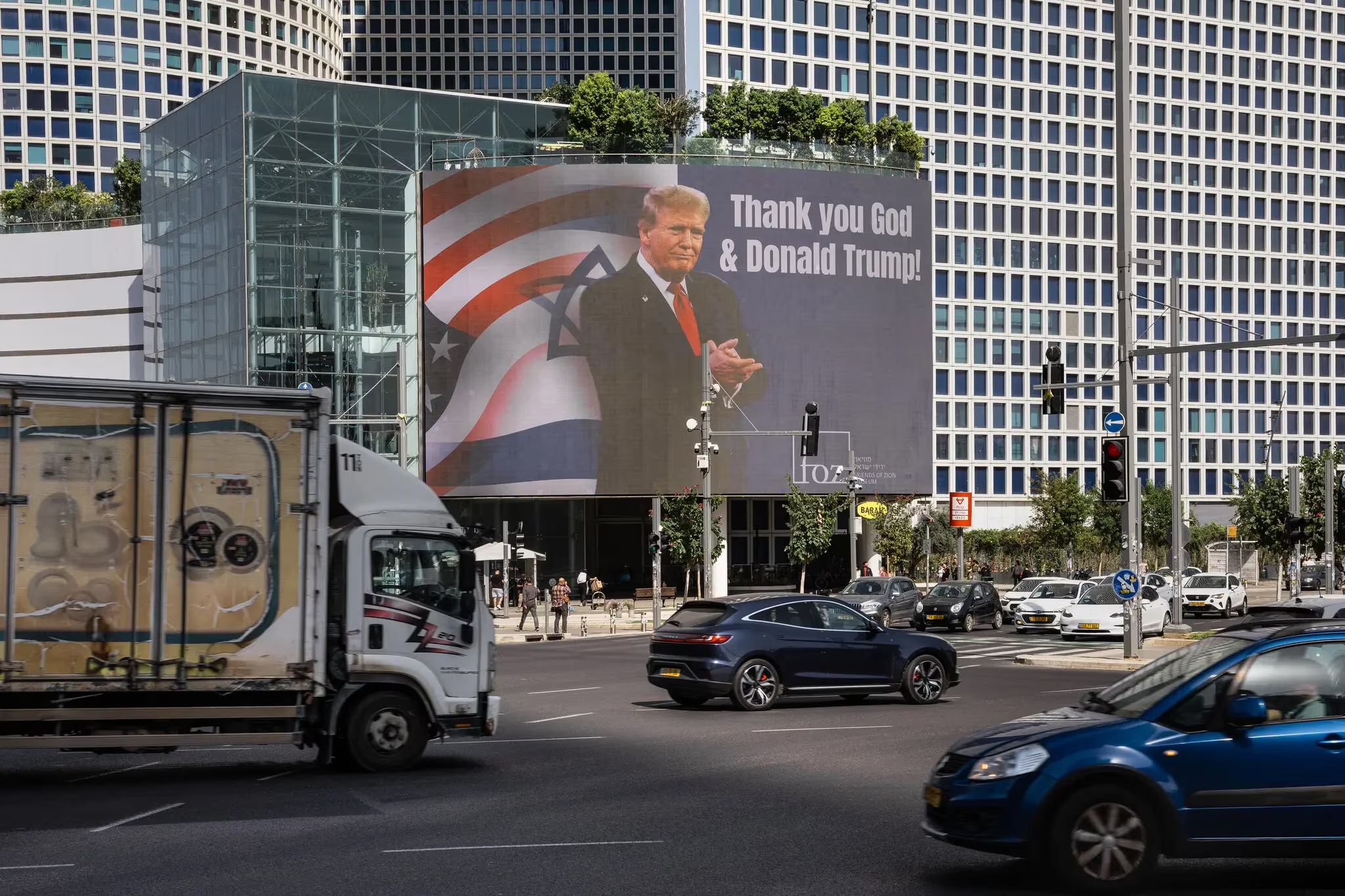
A billboard in Tel Aviv. According to polls, Israelis overwhelmingly support the war. March 12, 2026.
Of course, it would be imprudent for Mr. Netanyahu to openly claim that he persuaded Donald Trump to enter the war. Mr. Trump is already facing pressure from many allies within the MAGA movement who are urging him to distance himself from close support for Israel.
Then again, Mr. Netanyahu does not need to persuade Israelis that he pushed the American president toward striking Iran. His allies are doing that for him.
On Israel’s Channel 14—which supports Mr. Netanyahu with no less enthusiasm than Fox News backs Mr. Trump—leading commentators, including Yaakov Bardugo, have already begun crediting the prime minister with a historic role surpassing even that of Winston Churchill. The British leader, Mr. Bardugo noted, succeeded in persuading Franklin Roosevelt to support Britain in the Second World War, whereas Mr. Netanyahu managed to ensure that the United States entered the current conflict from the very beginning.
Polls show that Israeli society broadly approves of the way Mr. Netanyahu is conducting the war. Yet this has not so far translated into political gains where it matters most for him—in the prospects for the coming election, which must be held no later than October.
According to the latest survey, published on Friday by the newspaper Maariv, the coalition of right-wing and religious parties led by Mr. Netanyahu would secure only 50 of the Knesset’s 120 seats if voting were held now—roughly the same level of support it has maintained in recent years. Jewish opposition parties would win 60 mandates, approaching a parliamentary majority, while Arab parties aligned with the opposition would take another 10.
However much the war has rallied Israeli society around the military, it has simultaneously provided Mr. Netanyahu’s domestic opponents with fresh arguments against him.
On Tuesday, while advancing increased budget spending to finance the war effort, the government also approved the allocation of hundreds of millions of dollars in additional aid to ultra-Orthodox Jewish institutions. The decision came at a time when the army faces manpower shortages and thousands of reservists and their families are angered that many ultra-Orthodox men continue to avoid conscription.
All of this is a reminder that comparisons with Churchill have another side. They may flatter Mr. Netanyahu, but they also inspire his opponents. After all, Churchill himself was removed from power before the Second World War had even come to an end.