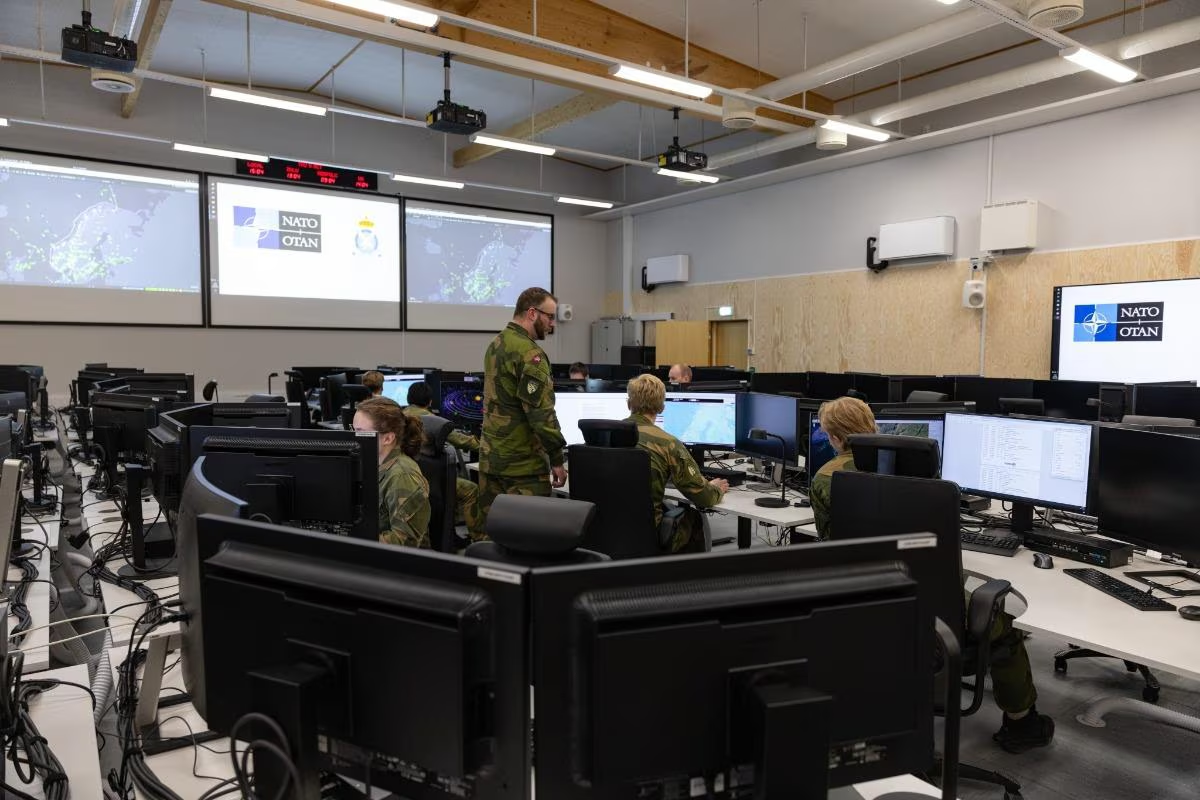
NATO has expanded operations to track Russian submarines in the North Atlantic, Bloomberg reports. At the center of attention are the Northern Fleet’s advanced nuclear submarines, long regarded as one of the key pillars of Russia’s military power.
Coordination is being run from a Norwegian base, where data from sensors covering the space from the seabed to outer space is processed. The central task is to detect submarines before they break out into the Atlantic.
The alliance stresses that the monitoring is conducted around the clock. At the same time, military officials do not conceal that the risk of losing track of a submarine remains. The British side has estimated that Russian submarine activity near its waters has risen by roughly 30% over the past two years.
In recent years, Russia has significantly modernized its fleet. Borei-A and Yasen-M class submarines have entered service, capable of carrying ballistic and cruise missiles and regarded as part of the country’s nuclear triad.
Experts say the new submarines are harder to detect: they exploit the Arctic’s conditions, including ice cover, to move covertly.
In response, NATO is strengthening its anti-submarine defenses—with P-8 Poseidon aircraft, frigates, and underwater detection systems being deployed. The area of operations is shifting northward—closer to the Barents Sea and the Arctic.