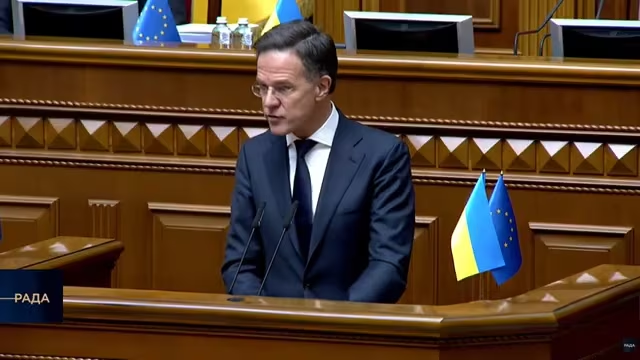
On February 3, NATO Secretary General Rutte addressed Ukraine’s Verkhovna Rada. Speaking from the parliamentary rostrum, he said that “once a peace agreement is reached, there will be armed forces, aircraft in the air, and maritime support from countries willing to take part.”
According to him, the alliance’s remaining members would “provide assistance in other ways.”
In this way, the support model outlined by Rutte envisages the deployment of air power, naval forces, and other elements only after a peace agreement has been achieved. In other words, this refers to measures of postwar presence and deterrence, rather than assistance capable of influencing the course of the current fighting.
Moscow has repeatedly stressed that it opposes the deployment of foreign troops on Ukrainian territory. At the same time, European states are unwilling to send their contingents without firm guarantees of support from the United States. Washington has so far provided no such assurances.