NASA plans to invest $20 billion over the next seven years to build a base on the surface of the Moon, while postponing plans to construct an orbital station around it, the agency’s new head said on Tuesday.
NASA Administrator Jared Isaacman, who took office in January, unveiled the project at the “Ignition” event, where he and other senior agency officials outlined a series of initiatives aimed at landing humans on the Moon by the end of 2028.
“It should not come as a surprise to anyone—we are pausing the Gateway project in its current form and focusing on infrastructure that supports a sustained presence on the lunar surface,” Isaacman said, commenting on the shift in priorities.
“Despite very real technical and scheduling challenges, we can reallocate hardware and international partner commitments to support surface operations and other program objectives.”
The Lunar Gateway orbital station project, proposed in 2018, was seen as a key component of the Artemis programme—it was intended to support scientific research in lunar orbit and serve as a staging point for astronauts travelling to and from the Moon’s surface.
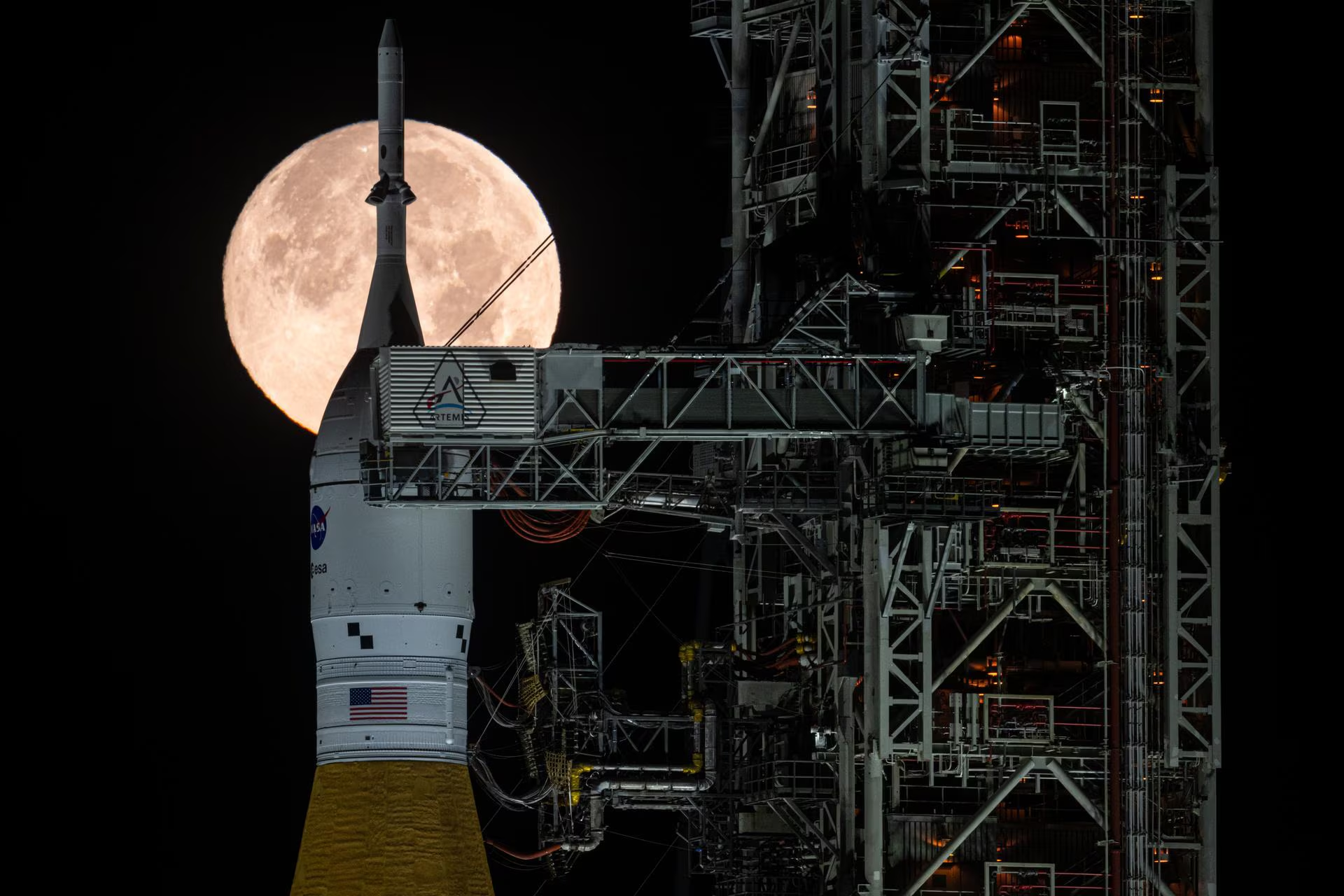
Meanwhile, NASA is preparing to launch its SLS rocket as part of the Artemis II mission—the launch could take place as early as next week. Four astronauts will be on board for a 10-day journey around the Moon before returning to Earth.
“As we move forward, we plan to launch Artemis III in 2027 to test the joint operation of the Orion spacecraft and one or two lunar landers in Earth orbit,” Isaacman said. “The data gathered during this mission should give us the confidence to begin attempts at a Moon landing—starting with Artemis IV in 2028.”
The programme review comes against the backdrop of China’s announcement in October that it is moving toward landing its astronauts on the Moon by 2030, thereby challenging the United States’ position as a leader