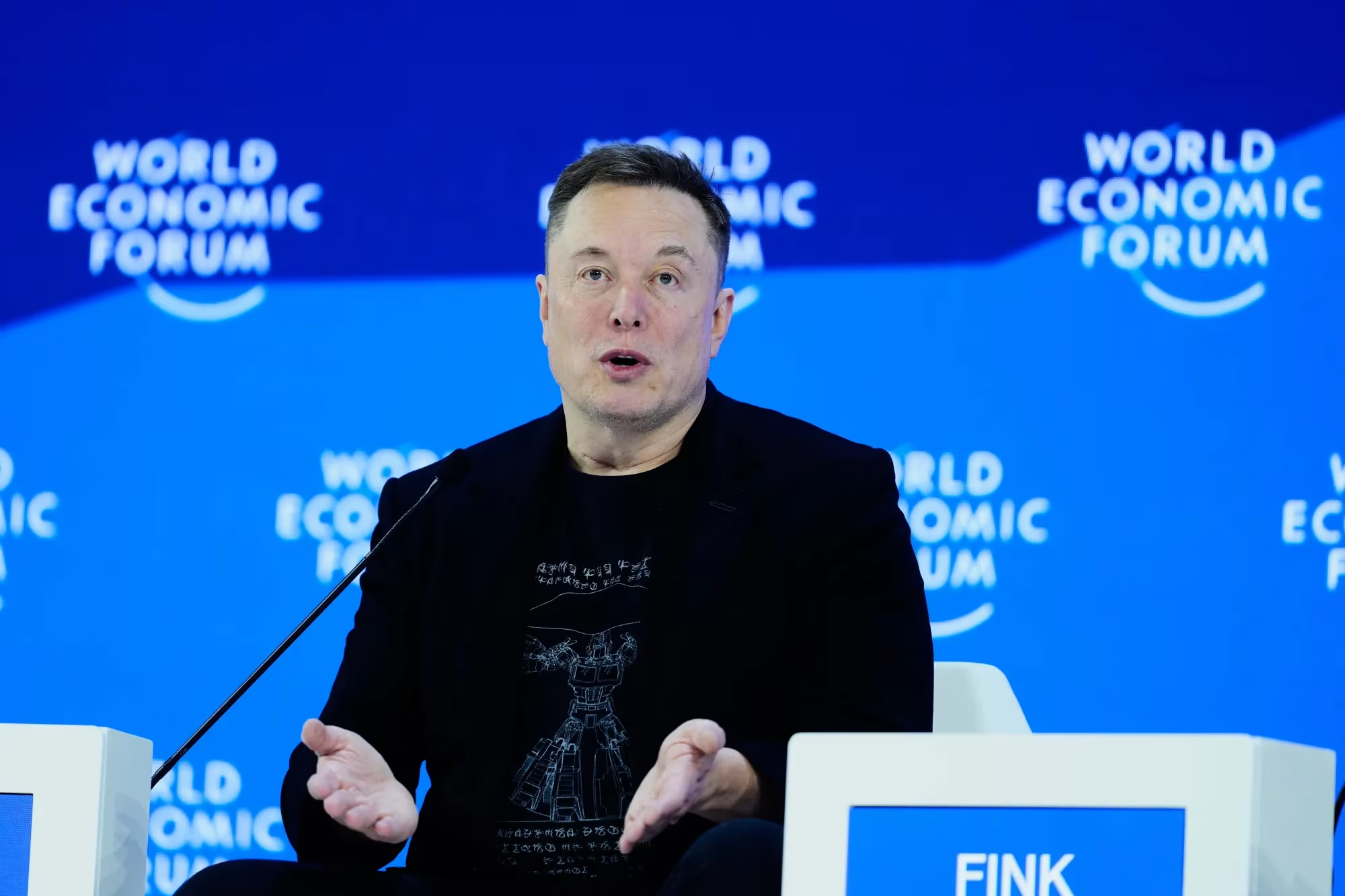
Elon Musk ignored a summons to meet Paris prosecutors on Monday morning, escalating the standoff between the French judicial system and the American technology company X.
His failure to appear came more than two months after French police searched X’s Paris office as part of a long-running investigation led by the cybercrime unit of the Paris prosecutor’s office.
The investigation, opened in January 2025, is focused on seven possible violations of French law. They include alleged facilitation of the spread of child sexual abuse material, the creation of content denying crimes against humanity, and unlawful data extraction.
On the day of the February search, Musk was formally invited to an April meeting with an investigating magistrate to discuss possible charges. Prosecutors said at the time that such a procedure is a standard part of criminal proceedings and gives those under investigation an opportunity to “set out their position on the facts and present the compliance measures they intend to implement.”
Musk’s refusal to take part had been widely expected: he had earlier denounced the investigation as a “political attack.” The prosecutor’s office did not announce any immediate legal consequences for his absence. Musk himself did not respond to a request for comment.
The investigation was initially tied to concerns among French authorities over X’s algorithm—the system that determines how content is ranked and displayed on the platform. The case later widened amid accusations that the Grok chatbot had spread Holocaust-denying claims as well as sexualized deepfakes.
After the February search, the company’s government affairs division said it “categorically denies any wrongdoing,” adding that the investigation “distorts French law, circumvents due process and threatens freedom of speech.”
Separately, the company said in January that it had restricted Grok’s image-generation capabilities to prevent the spread of sexualized content.
In a statement published on Monday, the Paris prosecutor’s office stressed that Musk’s absence “will not prevent the investigation from continuing,” adding that the judiciary is independent because “France’s Constitution guarantees the separation of powers.”
The case has become part of a broader conflict between American technology companies and European governments over platform responsibility for hosted content.
The European Union has adopted sweeping digital rules that provide for fines on technology companies if they fail to police illegal content, disinformation, and hate speech.
In December, the EU imposed penalties for the first time under its new Digital Services Act, fining X $140 million for violations. The very next month, European regulators opened a separate investigation into X over the spread of sexualized images generated by Grok.
French authorities are showing a rare willingness to hold not only companies but also their executives to account, considering whether senior managers can bear personal responsibility for the actions of platform users.
The situation has intensified against the backdrop of the Donald Trump administration’s increasingly hard-line response to European efforts to regulate American technology companies.
The dispute reflects deeper disagreements on both sides of the Atlantic over how—and to what extent—social media should be regulated.
European governments say their measures are meant to protect users from harmful content. The Trump administration, for its part, describes the fines as an unfair way of extracting money from American companies and regards the regulation as an attack on free speech. In the United States, legal restrictions in this area remain limited, whereas France provides for criminal liability for hate speech, Holocaust denial, and the justification of terrorism.