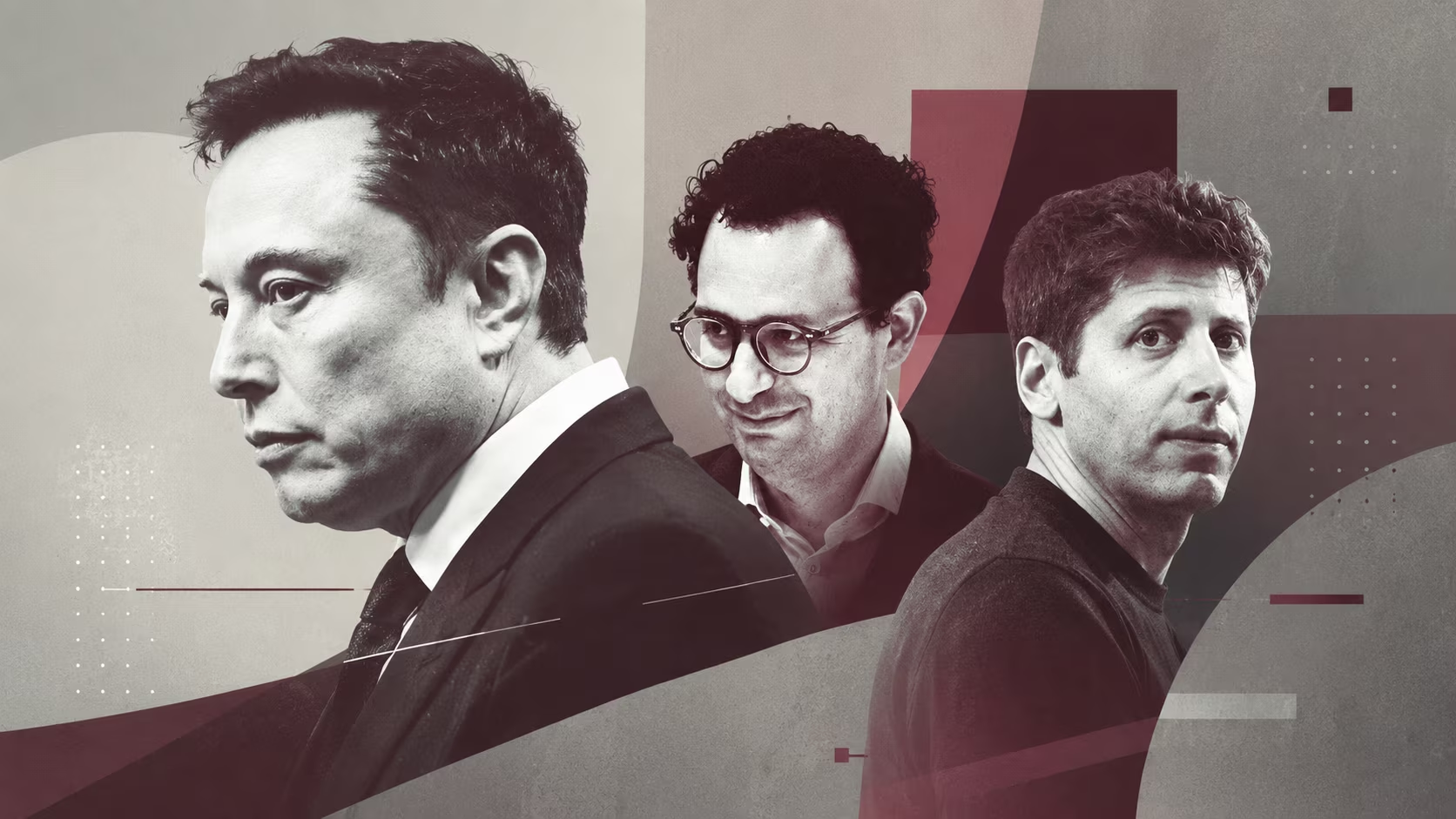
Elon Musk’s unexpected agreement with Anthropic allows him to accomplish two goals at once—turn excess computing capacity into a revenue stream ahead of SpaceX’s anticipated IPO while simultaneously increasing pressure on his chief rival, Sam Altman.
Just a few months ago, Musk was publicly criticizing Anthropic, describing the company as “misanthropic.” Now the two sides have entered into a partnership. The reversal underscores how quickly competition in the AI industry can give way to pragmatic alliances.
For Anthropic, the deal addresses one of the company’s central problems—a shortage of computing resources. Speaking at a developer conference, chief executive Dario Amodei said revenue and usage grew “80x year-over-year” in the first quarter of 2026, despite the company having projected only tenfold growth. According to him, the surge in demand created a severe compute deficit and forced the company to impose restrictions that frustrated users.
Under the agreement, SpaceX will provide Anthropic with the full capacity of the Colossus 1 data center—more than 300 megawatts of computing power, including over 220,000 Nvidia GPUs. The transfer of resources is expected to be completed within a month.
xAI—Musk’s artificial intelligence company, previously acquired by SpaceX—will continue operating on the separate Colossus 2 supercomputer.
SpaceX also said Anthropic had expressed interest in jointly developing orbital AI infrastructure with computing capacity measured in multiple gigawatts.
The agreement comes amid Musk’s ongoing legal conflict with OpenAI—the company he once co-founded and which remains Anthropic’s main competitor.
“Elon’s enemy is Sam. Dario’s enemy is Sam. The enemy of my enemy becomes a compute partner,” technology analyst Ben Pouladian wrote on X.
In February, Musk publicly attacked Anthropic following the announcement of its $380 billion valuation. He has since said he was “impressed” after meeting with the company’s leadership last week. According to media reports, Anthropic’s valuation may now be approaching $900 billion.
The agreement also carries a direct financial rationale for both sides. According to PitchBook analyst Harrison Rolfs, Musk has traditionally invested in infrastructure faster than demand for products has grown. As a result, Colossus 1 ended up underutilized—the user base for Grok, xAI’s flagship product, failed to expand enough to fully consume the available capacity.
By leasing the capacity to Anthropic, Musk is transforming an expensive idle asset into a high-margin revenue stream for SpaceX. That is particularly important ahead of the company’s expected IPO filing in June, as it allows SpaceX to avoid multibillion-dollar write-downs on unused chips and approach the market with a major client already secured in Anthropic.
At the same time, the deal itself suggests that xAI is not facing the kind of compute shortage described by Anthropic. According to The Information, Musk’s company is using only about 11% of the potential capacity of its chip inventory, although it remains unclear whether this is due to weak demand, low infrastructure utilization, or a combination of both.
In the end, the partnership brought together two complementary needs: Anthropic secured the computing power required to sustain its explosive growth, while Musk gained a new revenue source capable of strengthening SpaceX’s financial position ahead of the company’s stock market debut.