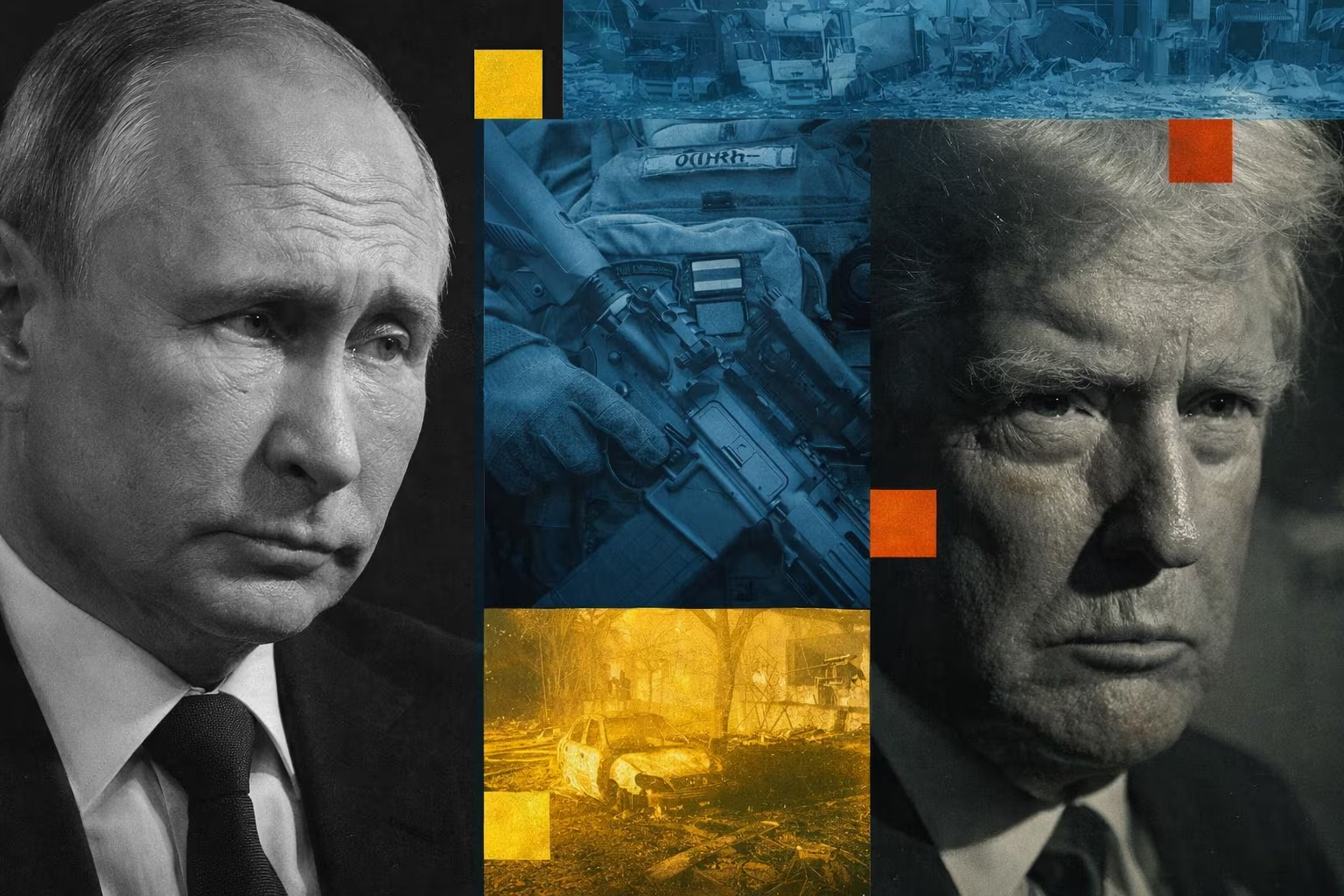
Ukraine has been named one of the first victims of an emerging world order in which global and regional centers of power entrench their own rules within their respective spheres of influence. This conclusion is set out in a report prepared by the organizers of the Munich Security Conference, which opens in the coming days.
The document also states that Donald Trump has become the most prominent disrupter of the previous architecture of international relations, while Europe has effectively lost the American security “umbrella.” At the same time, the authors stop short of offering a definitive answer as to what the new world order will look like, noting only that one possible scenario is a system dominated by regional hegemons that set the rules in their own zones of influence.
Russia’s war against Ukraine, now approaching its fourth year, is examined precisely in this context. The report stresses that the conflict is increasingly seen not as a matter of sovereignty and international law, but as an object of bargaining among strong leaders, in which territory, security guarantees, and even natural resources are turned into negotiating chips. At the same time, attention to the war in Ukraine in the current report is noticeably lower than in previous years.
The authors note that Europe continues to support Kyiv, but does so unevenly. The gap is particularly pronounced between the more financially resilient countries of the continent’s north-east and the states of the south-west, which cannot afford a significant increase in defense spending. The failure to use Russian assets frozen in the EU to assist Ukraine, the report argues, has exposed the limits of a collective European response in the face of Russian pressure.
At the same time, the report records a decline in public perceptions of the threat posed by Russia in the largest Western countries. These findings are based on data from the Munich Security Index, which has been included in the report since 2021. In November 2025, representative surveys were conducted in 11 countries, divided into two groups—the G7 and the BRICS excluding Russia. Respondents were asked to assess a wide range of risks—from specific states to economic, military, and social factors, including disinformation, the use of nuclear weapons, and food insecurity.
One of the most significant shifts over the past year has been a rise in perceived risks emanating from the United States across most G7 countries. The authors suggest that this figure might have been even higher had the survey been conducted in January 2026, after events in Venezuela and the crisis surrounding Greenland. Against this backdrop, the perceived threat from Russia has faded markedly—in the eyes of respondents in the G7, it fell from second to eighth place among the 32 most serious risks.