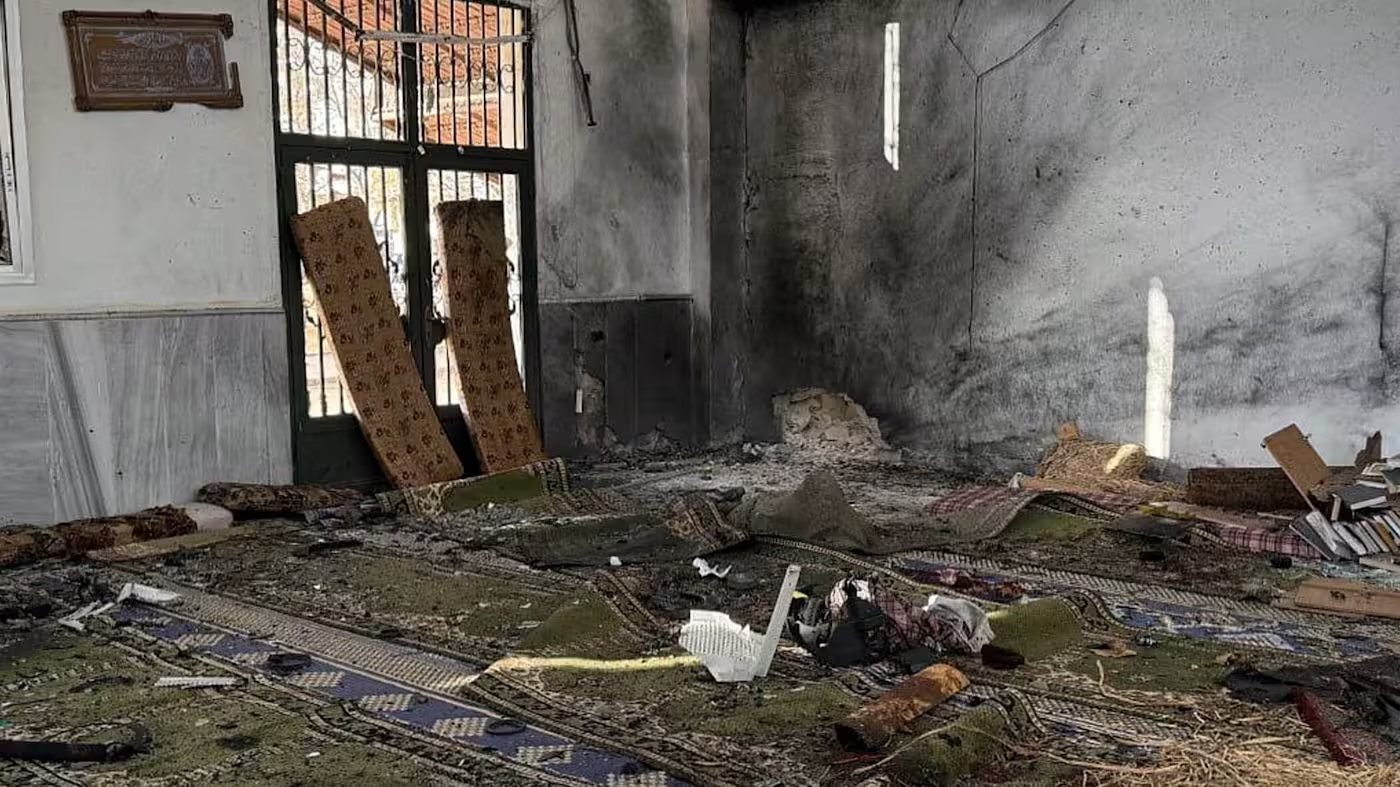
At least eight people were killed in an explosion at a mosque in a predominantly Alawite district of the Syrian city of Homs. Authorities said the attack was intended to destabilise the country. The blast occurred during Friday prayers and, according to a security source cited by state media, was caused by devices planted inside the building. A further 18 people were wounded.
The Imam Ali ibn Abi Talib mosque is located in the Wadi al-Dhahab neighbourhood, home to a substantial share of Homs’s Alawite population. Since the fall of Bashar al-Assad’s regime—Assad himself was Alawite—tensions between the Alawite minority and the country’s Sunni majority have repeatedly escalated into episodes of mass violence.
Syria’s foreign ministry condemned the incident, calling it a “terrorist crime” and saying the attack fits “into the context of repeated attempts at destabilisation and the spread of chaos among the Syrian people”.
The incident occurred as President Ahmed al-Sharaa’s government seeks to tighten its grip on security across the country a year after coming to power, and amid a recent uptick in attacks linked to the Islamist extremist group Isis.
Information minister Hamza al-Mustafa said that “remnants of the former regime, Isis and their accomplices have converged on a single goal—to obstruct the advance of the new state and undermine civil peace”.
Footage published by state media showed emergency responders and security personnel inspecting the mosque building, strewn with debris. The interior ministry said the area had been cordoned off and that the investigation was continuing. The head of the health ministry’s emergency service confirmed that the death toll currently stands at eight, with 18 people injured.
In March, a wave of sectarian violence swept across the country’s coastal areas—a traditional Alawite stronghold—killing about 1,400 people, most of them Alawite civilians. The bloodshed followed clashes between government forces and their supporters and loyalists of Assad.