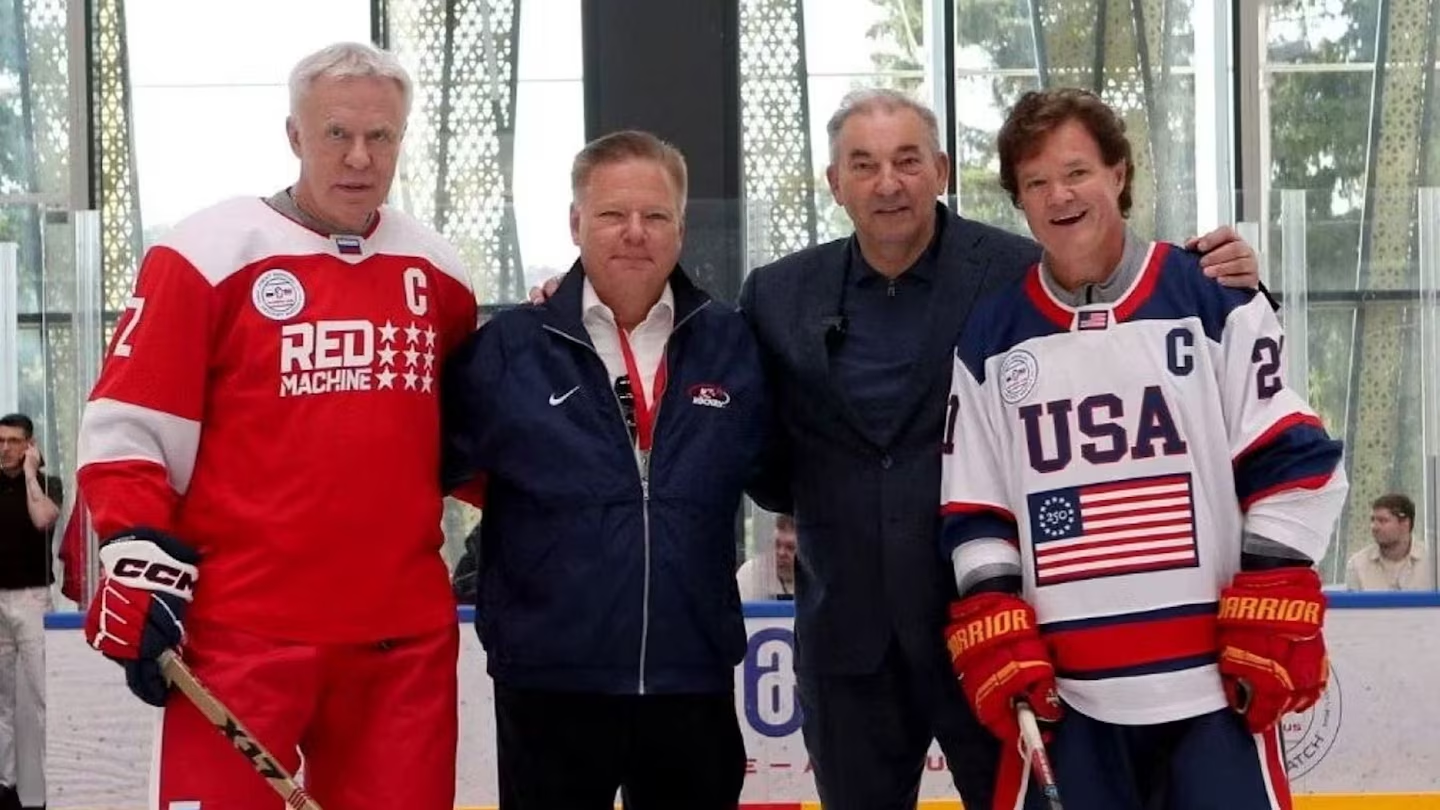
Russia’s attempt to revive business ties with the United States began with the idea of staging a professional hockey game between the two countries. In practice, it has so far amounted to a more modest business-linked event at a Moscow rink.
This week, the Russian capital hosted the first hockey game between US and Russian teams since the start of the full-scale invasion of Ukraine in 2022. Stanley Cup winners and Olympic champions took part, but Russia’s 10–6 victory on Wednesday was a long way from the major sporting event that Vladimir Putin first discussed with Donald Trump last year.
“Both sides had hoped the process would move a little faster than it ultimately did,” said Robert Agee, president of the American Chamber of Commerce in Moscow. “We cannot speak for what the Russian and American governments are or are not doing, but we are doing what we can at our level. More dialogue is better than less dialogue.”
Negotiations to end the war have reached a deadlock. Against that backdrop, senior Russian officials have begun claiming that the United States has retreated from understandings that Trump and Putin are believed to have reached at a summit in Anchorage, Alaska, in August last year.
“Trump has always approached negotiations according to the logic that if business can be restored, politics will follow,” said Charles Hecker, the author of Zero Sum, a book about the history of Western business in Russia. “There is no doubt that the desire to get back to business exists. Why has that not happened yet? Because there needs to be a durable settlement on the ground in Ukraine, and that remains elusive, to put it mildly.”
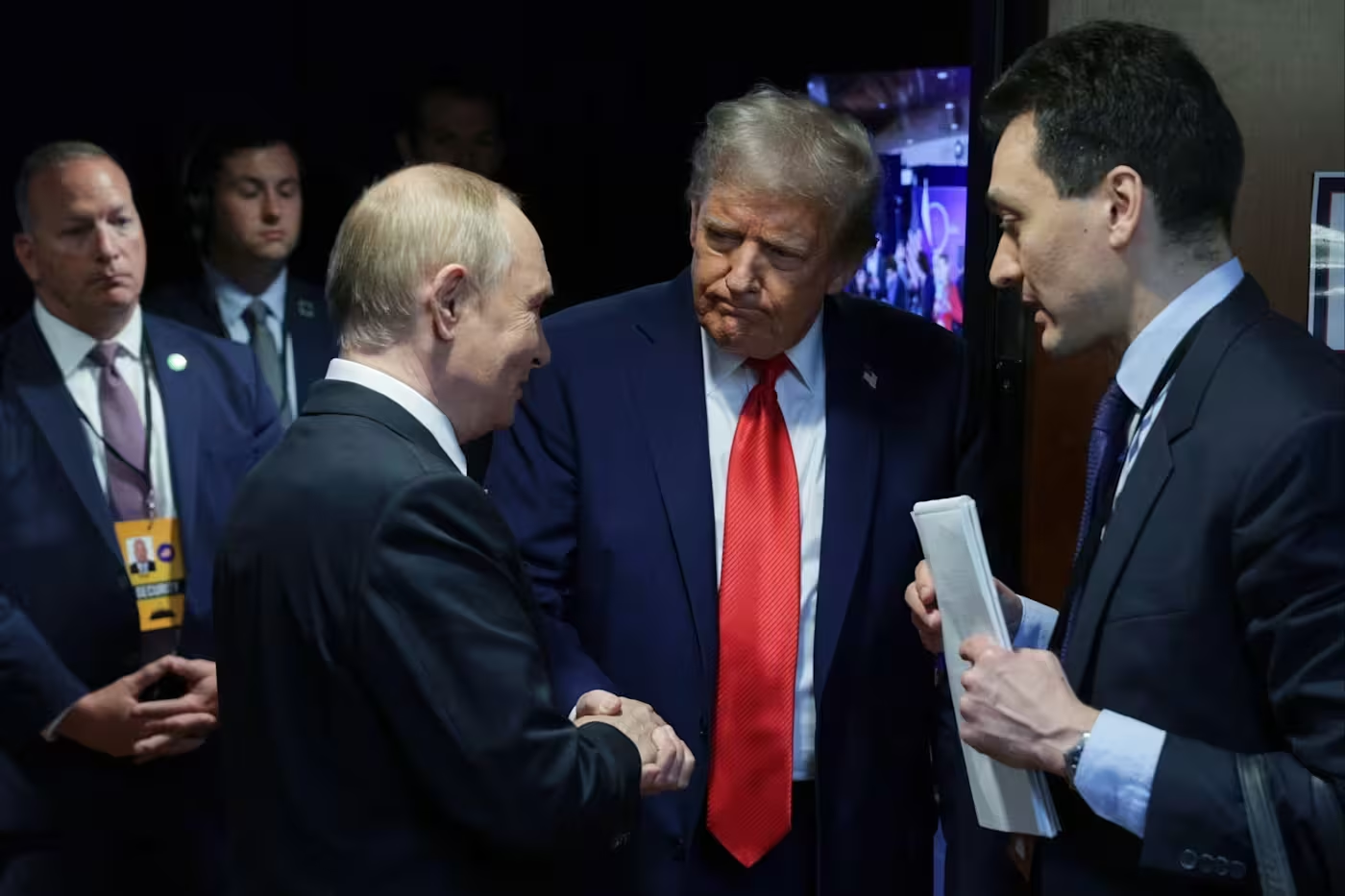
Vladimir Putin shakes hands with Donald Trump in Anchorage, Alaska. August 2025.
The Trump administration has discussed economic deals with Moscow, but it has kept US sanctions in place and imposed new restrictions on Russian energy. According to the Kyiv School of Economics Institute, of the 795 American companies operating in Russia before the war, only 309 remain active in the market.
According to Agee, the idea for the game emerged after he learned that several American hockey players were planning to come to Moscow for a private event. The organizers did not disclose the players’ names, apart from the captain. The Russian team was noticeably more decorated, while the American side, Agee said, consisted mainly of former players.
The American team was captained by Scott MacPherson, who played for the US team that finished fourth at the 1989 Universiade. The roster also included executives from the Moscow offices of American companies.
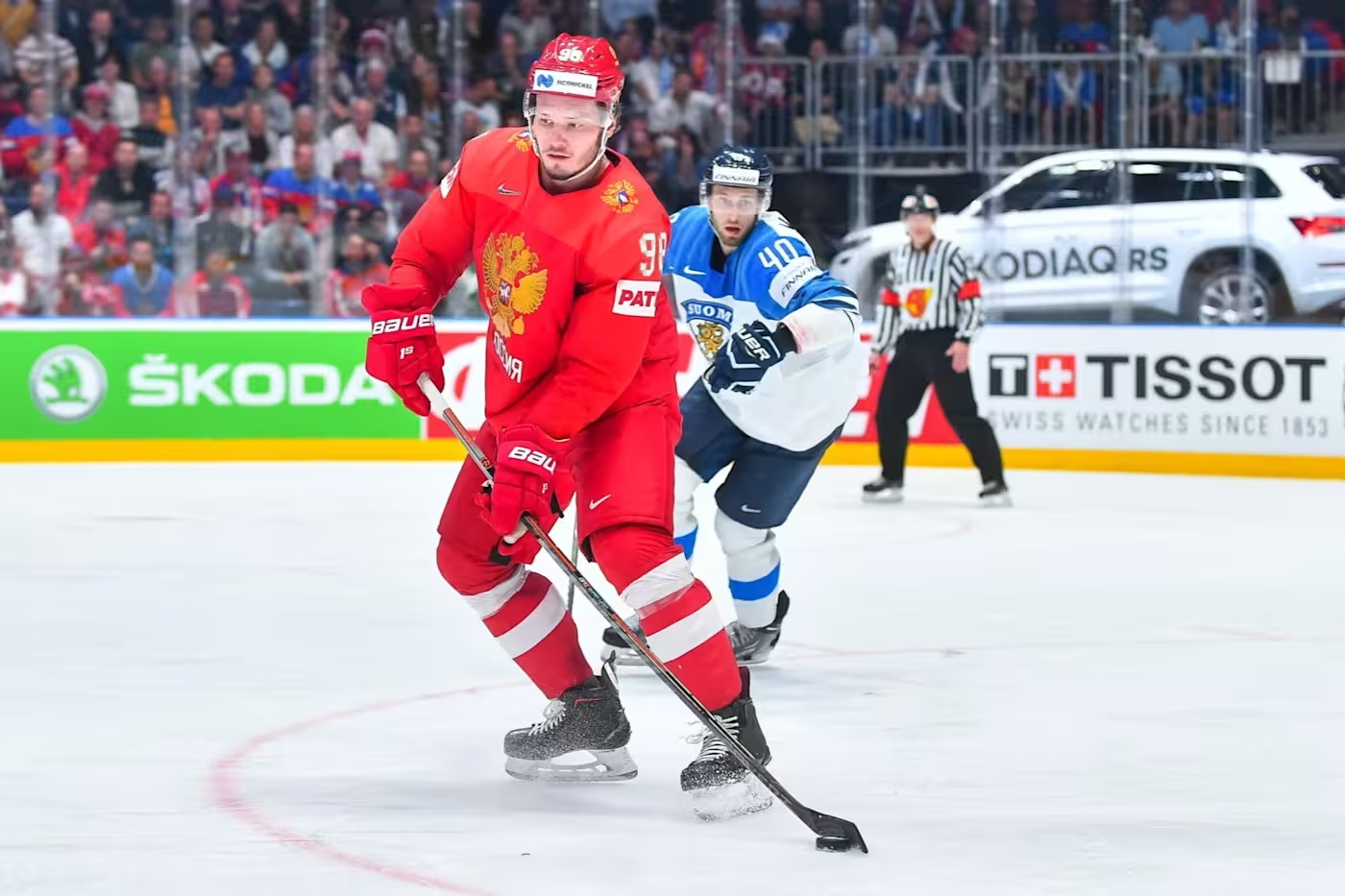
Stanley Cup winner Mikhail Sergachev makes a pass during a game against Finland.
The Russian team was led by Vyacheslav Fetisov—a two-time Olympic champion, former National Hockey League player, and current lawmaker. According to the Russian sports site Championat, the team also included current NHL stars, including two-time Stanley Cup winner Mikhail Sergachev, mid-ranking officials from Kremlin structures, and the pro-Putin saxophonist Igor Butman.
“We understand that this may be perceived as propaganda—a modern technological brainwashing scheme that has at times sown discord between people. Nevertheless, we are grateful to those who proposed this game,” Fetisov told the state news agency TASS. “The press has already picked up the story, and the interest is fantastic—people are asking about tickets.”
In the end, tickets for the 500-seat Kristall arena were not put on public sale, and the organizers sought to avoid overstating the event’s significance. Fetisov said that, according to “experts,” staging the professional game discussed by Trump and Putin would require “two or three years.”
Still, the event became the first item on Trump and Putin’s agenda that was actually carried out. The Kremlin has proposed potential partnerships with the United States in energy, rare-earth metals, and Arctic development, but the Trump administration insists that the war must first be brought to an end.
Last month, at Russia’s main economic forum, Kirill Dmitriev, a presidential envoy who has played a prominent role in talks with the United States, announced plans to sign a memorandum on an implausible project for a tunnel between Alaska and Chukotka—the remote northeastern Russian region across the Bering Strait.
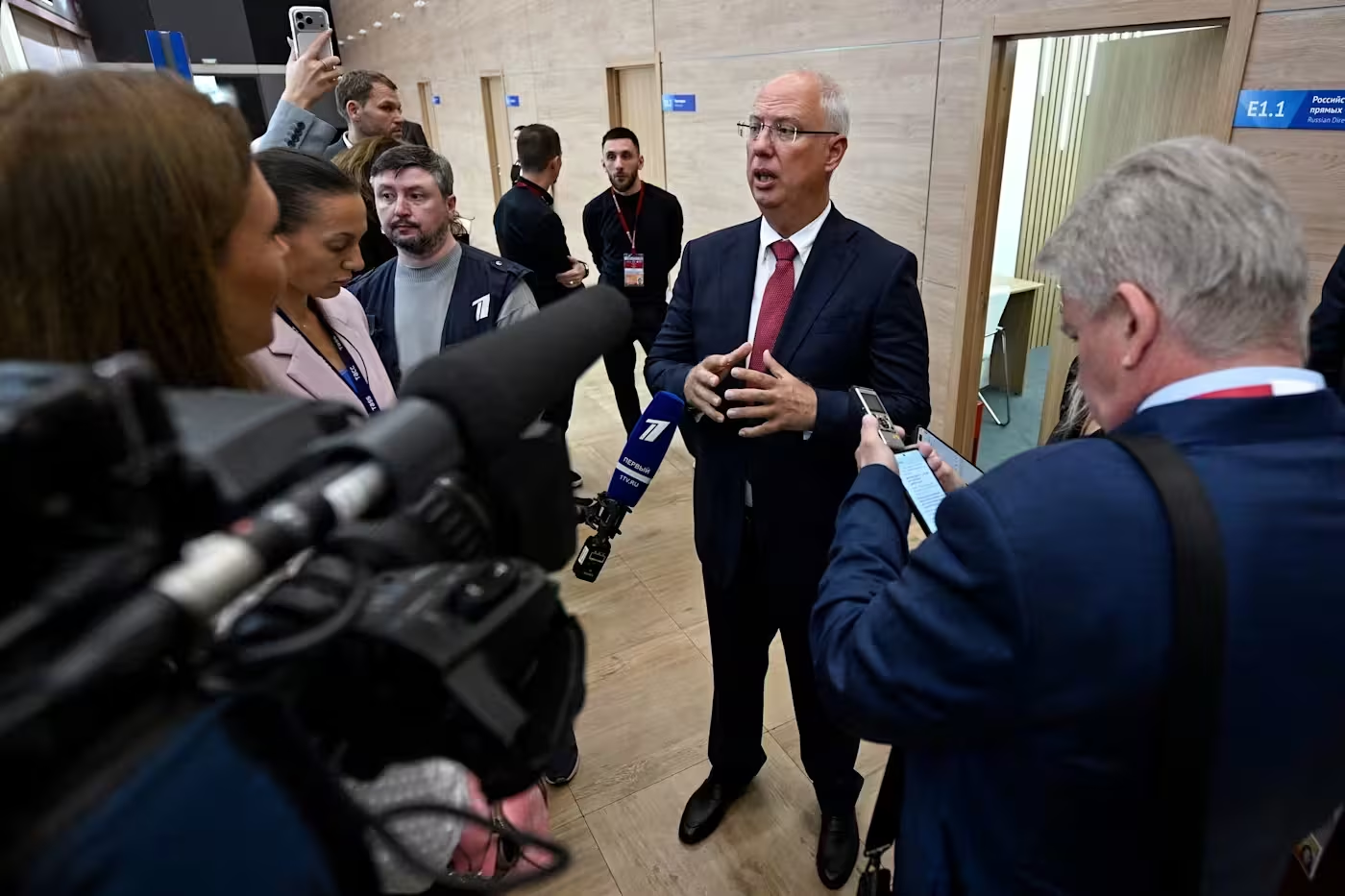
Kirill Dmitriev announced the preparation of a memorandum proposing the construction of a tunnel between Alaska and Chukotka.
Dmitriev later clarified that the memorandum, signed with unnamed “colleagues from Asia,” concerned technical plans for a hypothetical tunnel, not the consent of US authorities to carry it out. In October last year, Trump called the idea “interesting,” but has not commented on it publicly since.
Both sides have at times expressed frustration that promised commercial benefits have failed to break the political deadlock. “The logic of Trump’s approach does not work in this case. Good business relations do not necessarily create good political relations,” Hecker said.
Some Russian participants in the game made clear that they hoped it would have a broader effect. Roman Rotenberg, a senior Russian hockey official and the son of one of Putin’s closest friends, said when the game was announced that it “could help, step by step, so that we can play at every level.”
Agee acknowledged that the prospect of economic rapprochement depends on ending the war, while Putin appears unwilling to negotiate except on his own maximalist terms.
“You cannot talk about resuming commercial activity until there is geopolitical alignment,” Agee said. “At first, there was probably a bit more optimism after [Trump’s] election and, of course, after Anchorage […] but now, I would say, there is more cautious observation of what is actually happening.”
“There Really Were No Agreements in Anchorage.”
Lavrov Says Russia Accepted U.S. Proposals to End War
The United States, Russia, and Ukraine Held Talks on Possible Parameters for Ending the War in Abu Dhabi
From Reykjavik to Anchorage