
Monobank refused to continue servicing a client after a video verification because a flag visible in the background was mistaken by bank staff for a Russian one. It later emerged that the flag was in fact that of Slovenia. The bank’s management publicly described the woman as a “collaborator.”
A photograph of the client accompanied by an ironic caption was posted on social media by Monobank co-founder Oleh Horokhovskyi. “The client came to video verification asking why her account had been blocked. They said it was because her hair looked unwashed,” he wrote.
Horokhovskyi later added: “Supporters of the Russian world in Ukraine will receive no protection of personal data. After 12 years of war, we cannot guarantee the protection of collaborators’ data.”
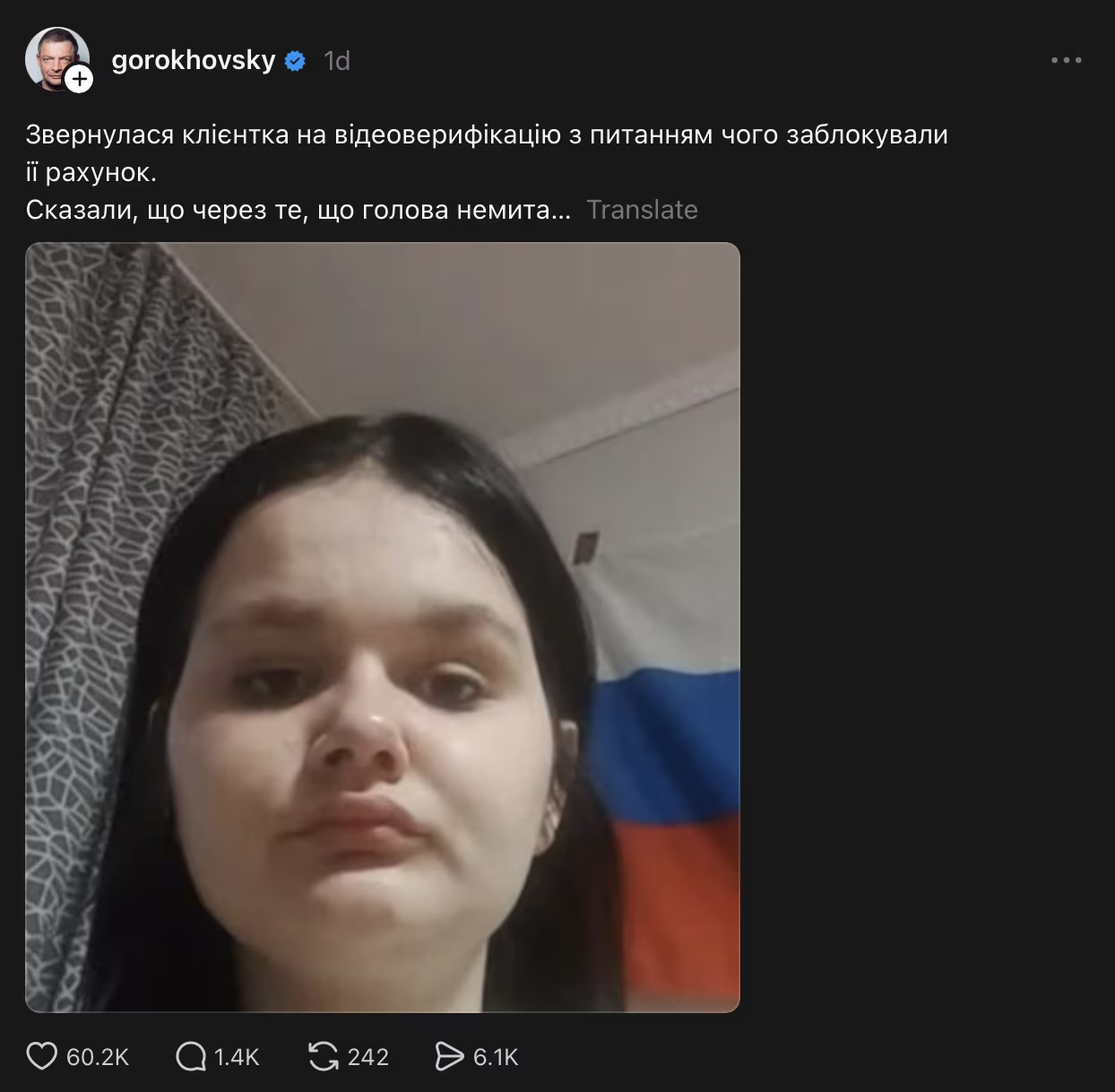
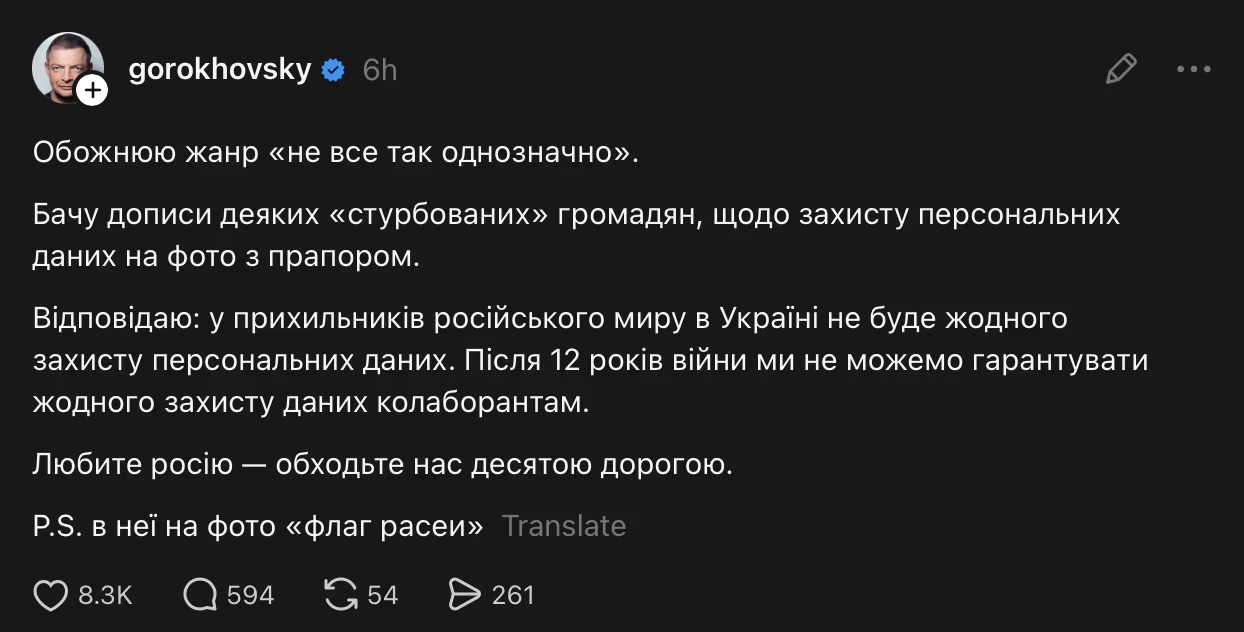
Screenshots of Oleh Horokhovskyi’s posts on Threads.
The woman herself said that the flag in the background was Slovenian. According to her, the photograph was taken not in her own room but in the apartment of her friend—a Slovenian citizen. She also says that she currently lives in Germany.
She added that members of her family are currently serving at the front and fighting for Ukraine.
After the publication, the story triggered a broad reaction on social media. Many users criticized Horokhovskyi for posting the client’s photograph and mocking her publicly. Commentators noted that even if suspicions arise, a bank is obliged to respect the confidentiality of clients’ personal data.
A representative of a law firm, commenting on the situation, said that blocking accounts can be a legitimate measure, but the public dissemination of a client’s image appears excessive. “Blocking the accounts is the right decision, but publishing the client’s face while mocking her ‘unwashed hair’ is clearly going too far. It looks even more cynical when it is done by the head of a bank,” he wrote. According to him, if a bank suspects a client of cooperating with the enemy or engaging in other subversive activity, such information should be passed to law enforcement authorities.
Further details of the situation were published by Ukrainian serviceman and civic activist Serhii Hnezdilov. He said he had contacted the woman at the center of the post—Karina Kolb.
According to her, in 2023 she moved with her mother from Kharkiv to Slovenia as a refugee. She lived there until 2024, after which she moved to Germany, where she is currently staying. At the moment of the video verification she was at the home of her friend—a Slovenian citizen—in whose room a Slovenian flag does indeed hang.
Kolb said she had not expected the video check to proceed so quickly and therefore entered the room where the flag was hanging. She was told that a decision on unblocking her card would be made the following day, but already the next morning, she said, her mother informed her that she had become widely known after the post appeared on social media.
“My father serves in the Armed Forces. I do not understand how anyone could accuse me of sympathizing with Russia,” Hnezdilov quotes her as saying.
He also noted that a brief review of Kolb’s and her family’s social media pages revealed no signs of pro-Russian views. According to him, her brother has a Ukrainian flag as his profile picture, while the woman herself posts material from Ukrainian sources and shares posts from groups searching for missing persons.
Hnezdilov added that in such a situation the bank’s leadership could publicly apologize, promise to blur clients’ faces in similar posts in the future, and, if suspicions arise, pass the information to law enforcement authorities. Otherwise, he said, the situation could end in legal proceedings.