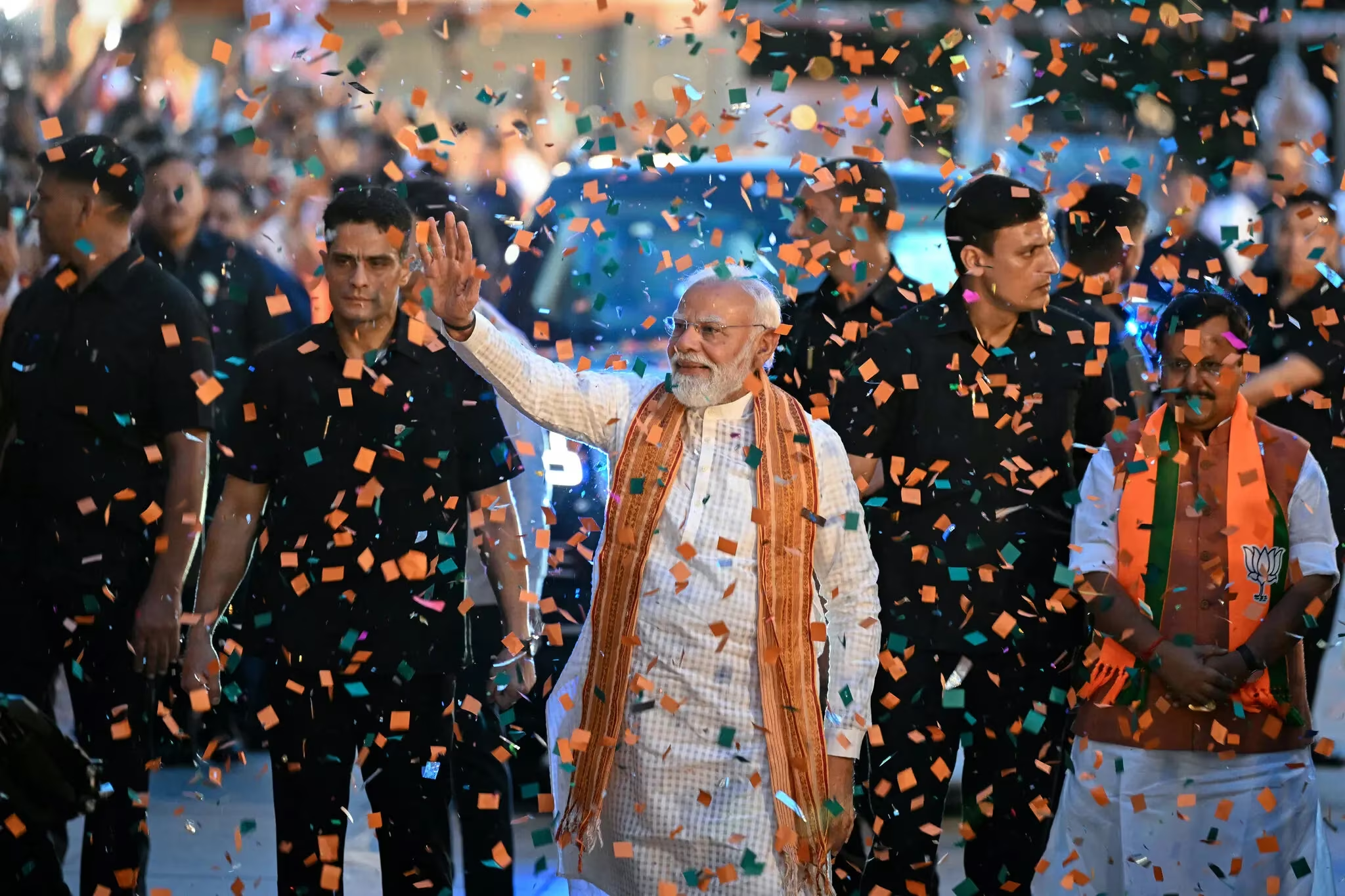
The Hindu nationalist party of Indian Prime Minister Narendra Modi has won elections in one of the country’s largest states, West Bengal, taking power there for the first time and securing one of the most significant gains in decades of political expansion.
The Bharatiya Janata Party is projected to win 208 of 294 seats in the state assembly—a dramatic surge from just three seats a decade ago. The result ends 15 years of rule by Mamata Banerjee, one of Modi’s most consistent critics, whose Trinamool Congress suffered a heavy defeat.
The victory strengthens Modi’s push for a Hindu-first political agenda, which has defined his leadership since taking power nationally in 2014. After losing its parliamentary majority in 2024, the party shifted focus to state elections, winning where it invested heavily—from Haryana to Maharashtra and Bihar. Yet the breakthrough in West Bengal stands out as the most consequential.
“Today we have created a new history,” Modi told supporters. “Our constitutional institutions have prevailed, our democratic processes have prevailed.”
The campaign, however, was marked by intense controversy over the very institutions Modi praised. Ahead of the vote, 9 million names were removed from electoral rolls—many reportedly belonging to Muslims. Banerjee accused the authorities of manipulation, saying Modi had “stolen votes in more than 100 constituencies.” The election commission, led by an official seen as close to the prime minister, had earlier rejected such claims.
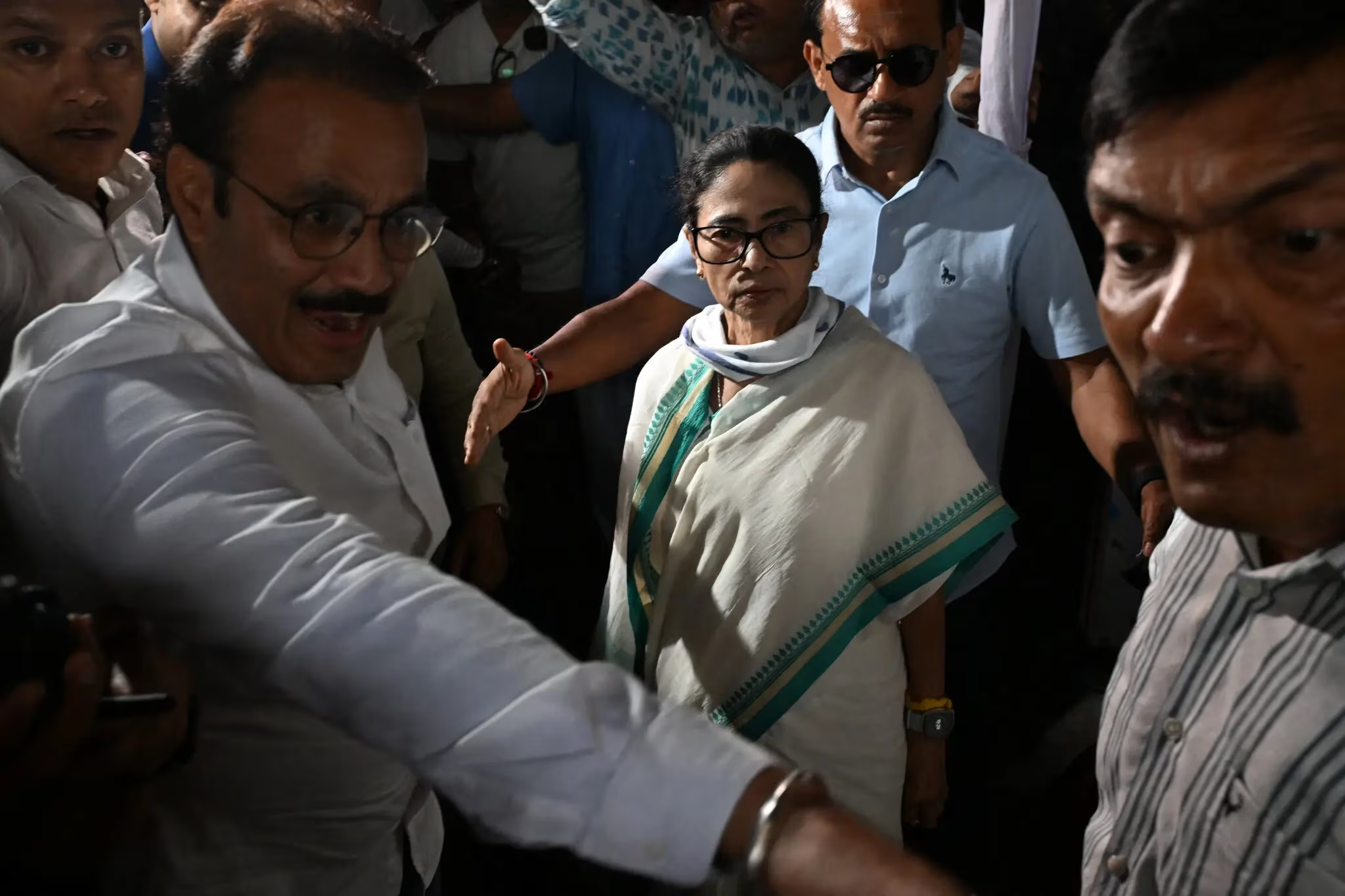
Mamata Banerjee, who has led the government of West Bengal since 2011, campaigning in Kolkata last week.
Banerjee’s defeat could mark a turning point in India’s regional politics, analysts say. “She was one of the pillars of opposition, with a strong federalist stance and a firm anti-BJP position,” said political analyst Arati Radhika Jerath. “Her loss may signal the beginning of the end for regional parties.”
Banerjee also lost her own seat in Bhabanipur, Kolkata. The winner was Suvendu Adhikari—her former ally who defected to the BJP in 2020—and he is expected to lead the new state government.
More than 154 million people voted over the past month in elections across four states and one territory. The BJP strengthened its position in Assam and made gains even in Kerala and Tamil Nadu, where it has traditionally been weak. The opposition now governs just seven of India’s 28 states.
One surprise came in Tamil Nadu, where the party of actor Joseph Vijay Chandrasekhar—new to politics—outperformed several established political forces.
West Bengal had been seen as a key test of the limits of Hindu nationalism. Turnout exceeded 92%, a record for the region, despite the removal of millions of voters from the rolls.
On the streets, BJP supporters celebrated the victory, painting their faces in party colors and chanting nationalist slogans.
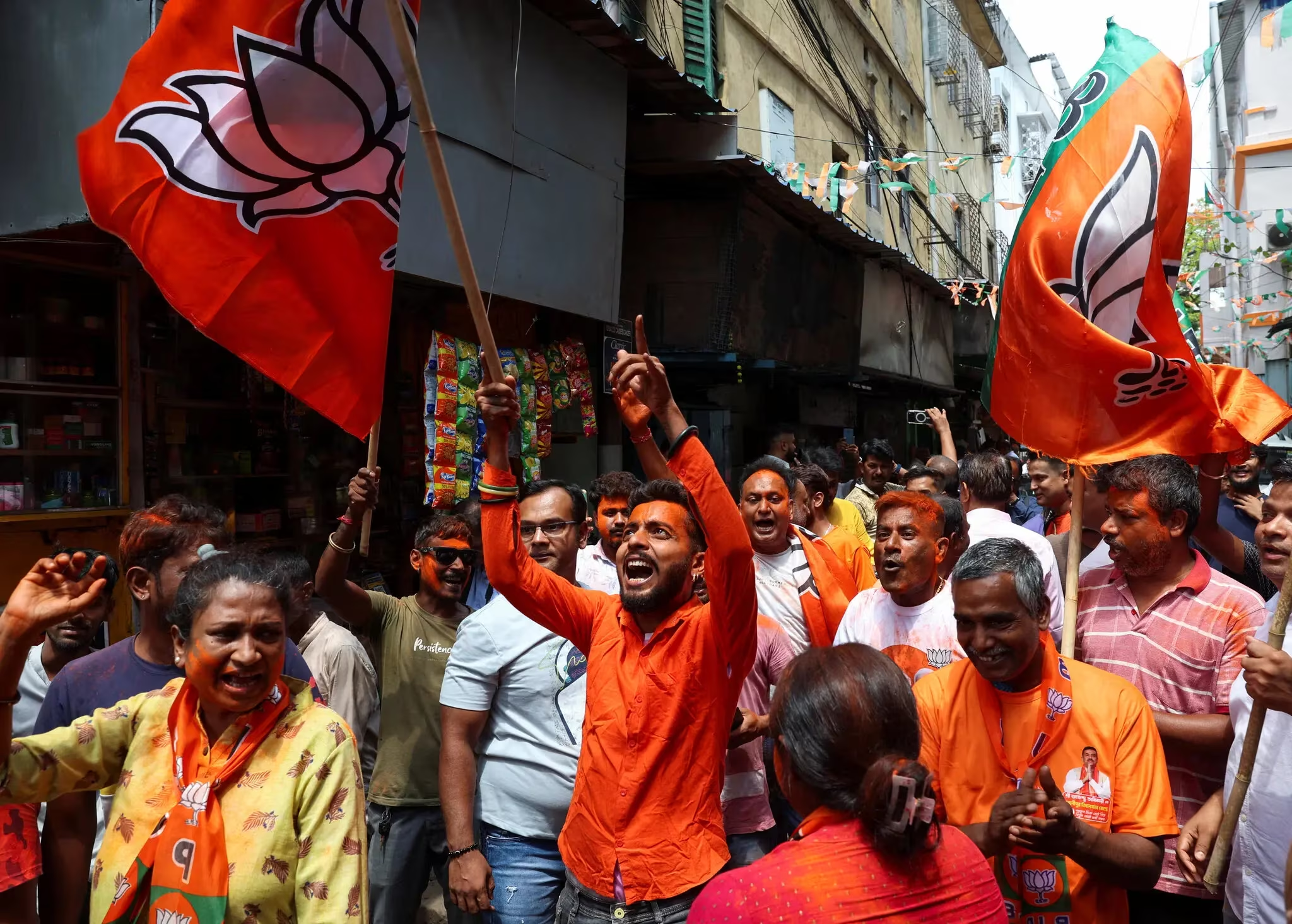
Bharatiya Janata Party supporters celebrating outside the party’s regional office in Kolkata. May 4, 2026.
“People wanted change,” one voter said. “This is a vote for change from people who have faced corruption.”
Criticism of the previous administration centered largely on allegations of corruption and economic stagnation. “She is not bad, but her party is corrupt. They drove industry out of Bengal,” said a resident of Kolkata.
Just a few years ago, such an outcome seemed unlikely. But after the 2024 general election, the BJP refocused on state-level contests and managed to reverse its fortunes.
West Bengal has long been seen as a stronghold of secular, culturally oriented politics. It was dominated first by communists, then by Banerjee, who emphasized social programs and the secular character of the state. Her administration, however, also faced accusations of corruption and heavy-handed governance.
Observers say cultural identity alone proved insufficient. “That is no longer enough. People want jobs—they want growth and opportunity,” Jerath said.