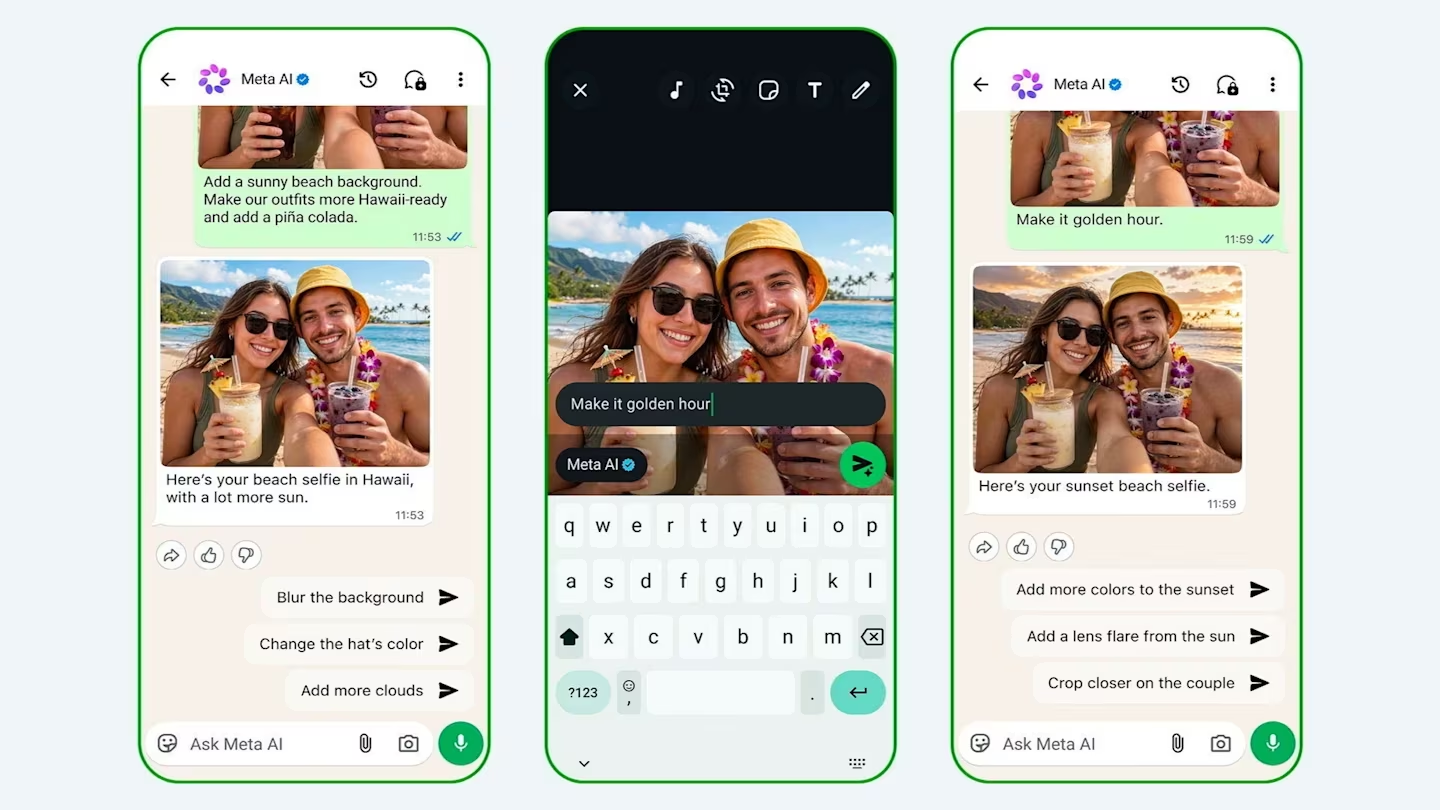
Meta Platforms has unveiled a new artificial-intelligence model for generating images—the company’s first such release since it spent billions of dollars restructuring its AI lab under Chief AI Officer Alexandr Wang.
The model is called Muse Image. On Tuesday, Meta began rolling it out in the Meta AI chatbot, the company said in a statement.
Muse Image will also appear in Meta’s social apps, including Instagram and WhatsApp. Users will be able to create images from text prompts or ask AI to alter existing pictures.
Advertisers will also gain access to the model later and will be able to use it to create marketing materials.
Meta will also allow users to generate images featuring friends or content creators based on their public Instagram posts. The company describes this as part of an effort to make the platform more personalized.
Users who do not want others to be able to “reuse or remix” their content with AI will be able to turn off that option in settings.
Over the past year, Meta has sharply increased spending on the overhaul of its AI division. The company hired Wang and a number of highly paid researchers to build models capable of competing with those developed by OpenAI and Anthropic.
Meta Superintelligence Labs, as the division is called, unveiled its first large language model in April. The company is also developing a video-generation model that should be ready in the coming months, a Meta representative said.
In the longer term, Meta plans to sell outside developers access to its AI models through a cloud service. That would allow the company to host the technology on its own infrastructure and charge for its use.
The plan is part of Meta’s broader cloud strategy. The company is looking for ways to monetize its data centers and costly AI chips. Bloomberg previously reported that Meta is considering several cloud products, including selling access to computing power.
At the same time, Meta still needs additional computing resources, a company representative said. It continues to build new data centers and recently signed major computing agreements with CoreWeave, Google, and Oracle.
Text-to-image generation has become a basic feature for most major AI labs, but the technology has already drawn controversy.
Models from Elon Musk’s xAI were previously used to create images in which people were digitally stripped without their consent on the social network X. Other AI models have been used to create new or altered sexualized images of children, known as child sexual abuse material, or CSAM.
All images created with Muse Image will contain an invisible watermark. According to a Meta representative, the system also includes safety measures intended to prevent the creation of material that violates the company’s rules, including CSAM.
Meta has previously used various image-generation tools, including its own Emu model. The company has also licensed technology from other developers, including Midjourney.
Meta Lays Off 10% of Its Staff—Roughly 8,000 People—to Redirect Funds Into AI Development
Meta Is Launching AI Agents in WhatsApp to Respond to Customers on Behalf of Businesses—an Attempt to Monetize a Messenger With 3 Billion Users
Meta Secured 6 GW of Nuclear Power Supplies to Support AI Growth
UK Regulator Launched an Investigation Into X Over Sexualized Deepfakes Created Using Grok