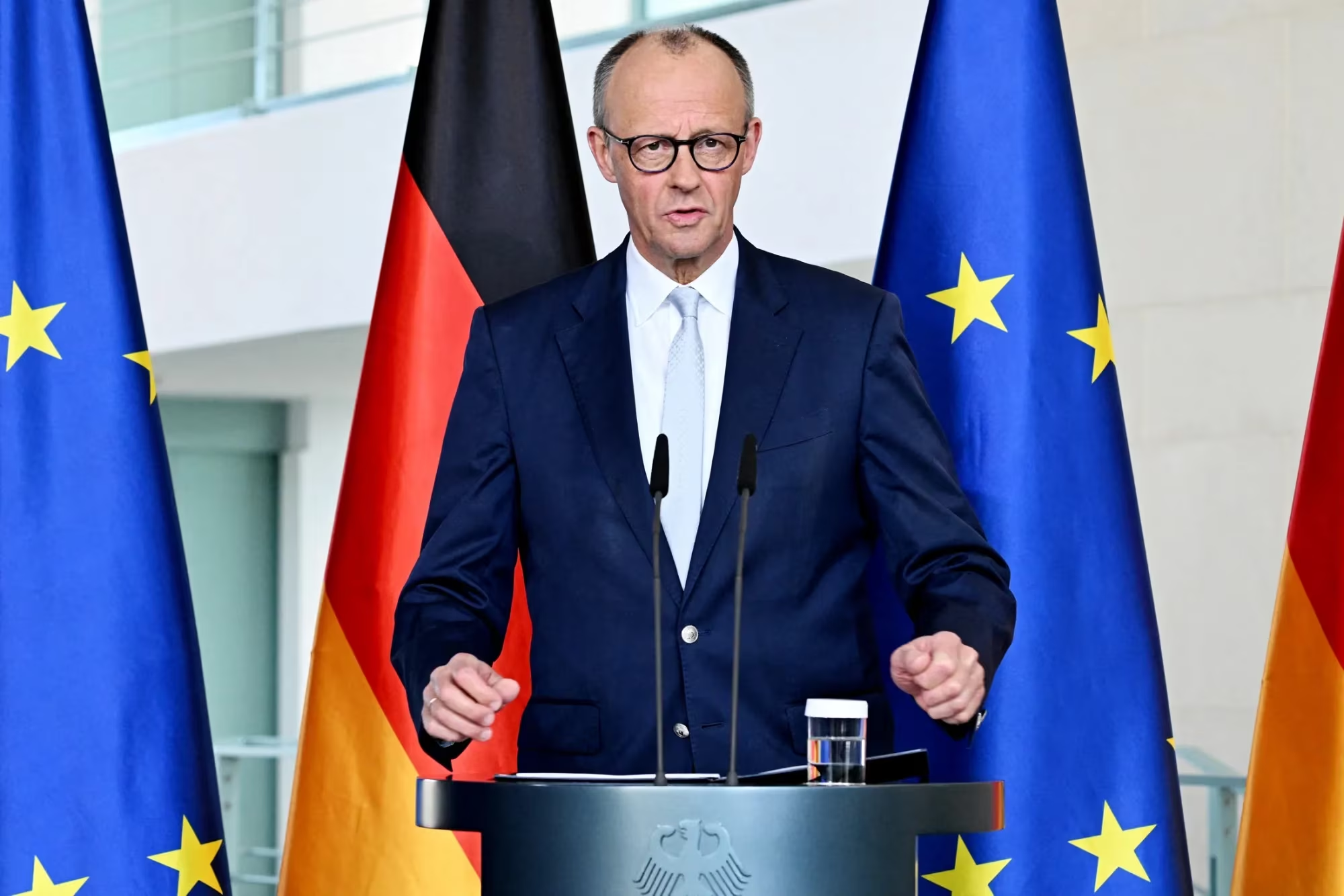
German Chancellor Friedrich Merz said he had reaffirmed to President Donald Trump in a conversation that Berlin is prepared to support a mission to safeguard navigation through the Strait of Hormuz, while stressing that such an effort would require an international mandate.
Speaking to reporters in Berlin on Thursday, April 9, Merz said that, ideally, such a mandate should come from the U.N. Security Council. Russia, one of its permanent members, holds veto power over any resolution.
As we reported earlier, Washington is pressing its European allies for concrete commitments on taking part in efforts to secure the strait once hostilities in Iran have ended, and hopes to receive detailed plans within the next few days.
“I told President Trump again yesterday during our conversation that we are ready to help—for example, by helping safeguard navigation through the Strait of Hormuz once a peace agreement is reached,” Merz said.
A coalition of more than 40 countries led by Britain—including many European states as well as Japan and Canada—has already said it is prepared to help restore operations in the strait once the active phase of the conflict is over. Roughly 20% of global oil and natural gas supplies pass through it.
The closure of the strait triggered a sharp rise in global energy prices and deepened fears of an imminent fuel shortage.
Merz added that any German participation in such a mission would also require the approval of the Bundestag, the lower house of parliament.
“The U.S. president is aware of that and is understanding of it,” he said.
Earlier this month, Trump lashed out at NATO allies, saying he was seriously considering pulling the United States out of the alliance after several countries denied American military aircraft access to their bases and airspace. He called the allies “cowards” and described the alliance itself as “a paper tiger.”
Last month, Secretary of State Marco Rubio said that once the war with Iran is over, the United States may reconsider its relationship with NATO, calling what he described as the alliance’s inadequate support during the Middle East conflict “deeply disappointing.”
Merz said he also discussed NATO’s future with Trump and proposed holding an additional conversation on the subject ahead of the alliance’s summit in July.
“I am firmly determined to do everything I can to preserve NATO’s protective role for Europe,” he said. “At least for now, there is no substitute for this alliance.”