Germany’s chancellor said that Ukraine’s accession to the European Union as early as 2027 is impossible. He dismissed such a prospect following a meeting of the coalition committee, according to the DPA news agency, which described the scenario as “ruled out” and “unrealistic.”
Earlier, the Financial Times reported that, if Kyiv agreed to a peace deal, the United States was prepared to offer not only security guarantees but also EU membership from January 1, 2027. According to the newspaper, Ukraine itself is making a similar demand.
The chancellor recalled that every candidate country must meet the Copenhagen criteria to join the bloc, a process that typically takes years. In his words, an accelerated procedure is not possible in this case.
At the same time, he stressed that preserving a European perspective is fundamentally important for Ukraine. “We can bring Ukraine closer to the European Union step by step. That is always possible, but such a rapid accession simply cannot happen,” he said.
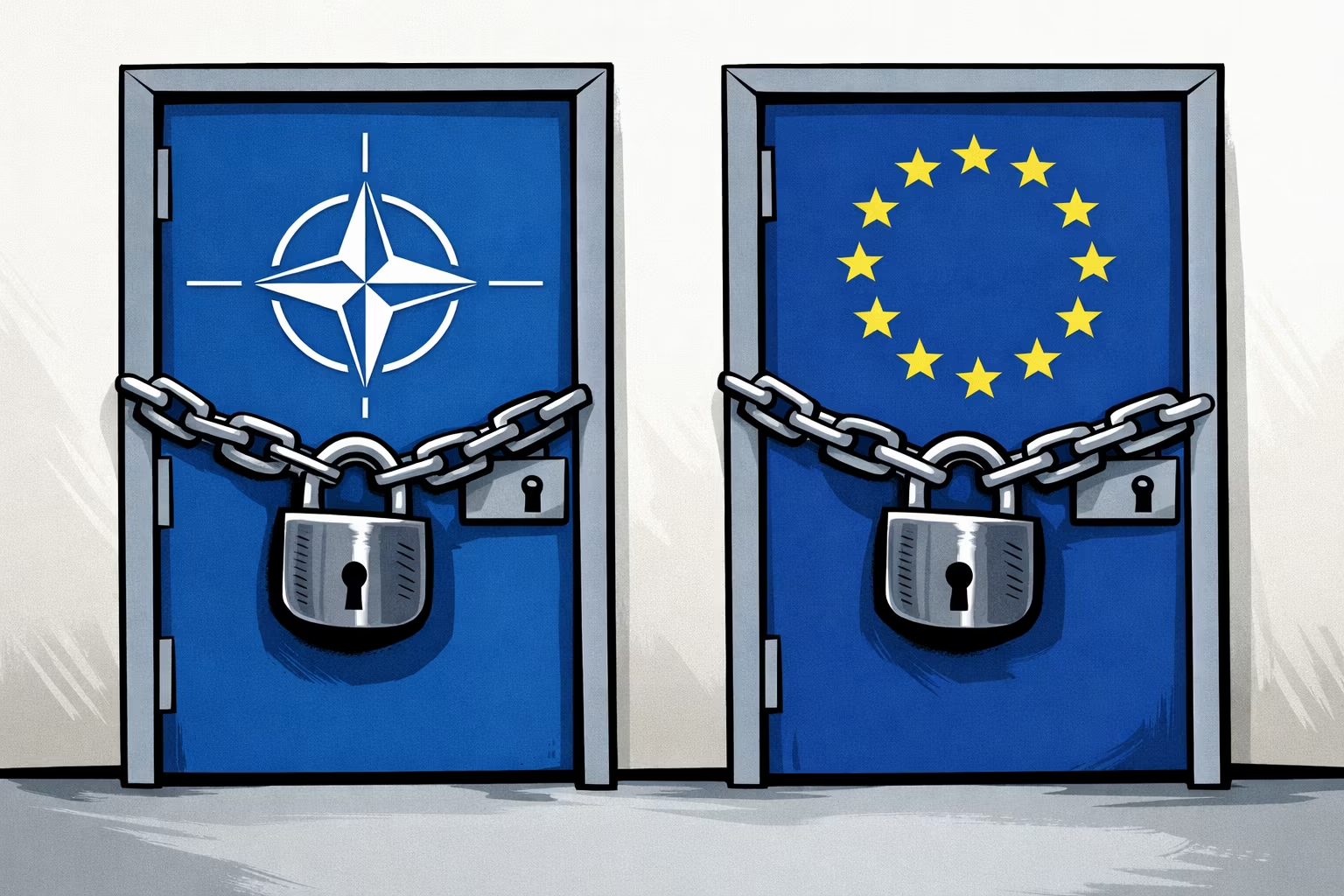
In the debate over Ukraine’s future within Euro-Atlantic structures, a familiar dynamic is emerging—one that has already been partly played out along another strategic vector, namely NATO membership. Since the start of the full-scale invasion in 2022, the question of joining the North Atlantic Alliance has repeatedly surfaced on Ukraine’s political agenda: Kyiv applied for fast-track membership, arguing that it had already demonstrated de facto compatibility with alliance standards and should move to de jure accession. In response, the West repeatedly sent vague signals—“the door is open, but for now the entrance is closed,” as the president put it, demanding a candid answer from NATO countries. Over time, the discussion shifted toward proposals for alternative security guarantees that could substitute for formal membership, as most alliance states openly declared their unwillingness to admit Ukraine not only during the ongoing hostilities but even after they end.
A similar rhetoric is now unfolding around the prospect of EU membership: the European perspective is presented as a strategic guarantee of stability and security, even though the EU lacks collective defense mechanisms. Volodymyr Zelensky has stressed that integration into the EU will “lock in long-term stability on the continent” and serve as a foundation for reforms and security. Yet the same practice of stretching timelines and the absence of a concrete, commitment-backed timeframe invite comparisons between EU promises and those once made regarding NATO: an alluring prospect that may ultimately remain out of reach.
Luxembourg’s foreign minister urged Volodymyr Zelensky to refrain from issuing ultimatum-style demands regarding Ukraine’s membership in the European Union. According to Xavier Bettel, such rhetoric “is not in his interest.”
The minister stressed that without the support of the United States and European countries, Ukraine would already have suffered defeat, signaling that questions of EU integration cannot be resolved through pressure or conditional demands.