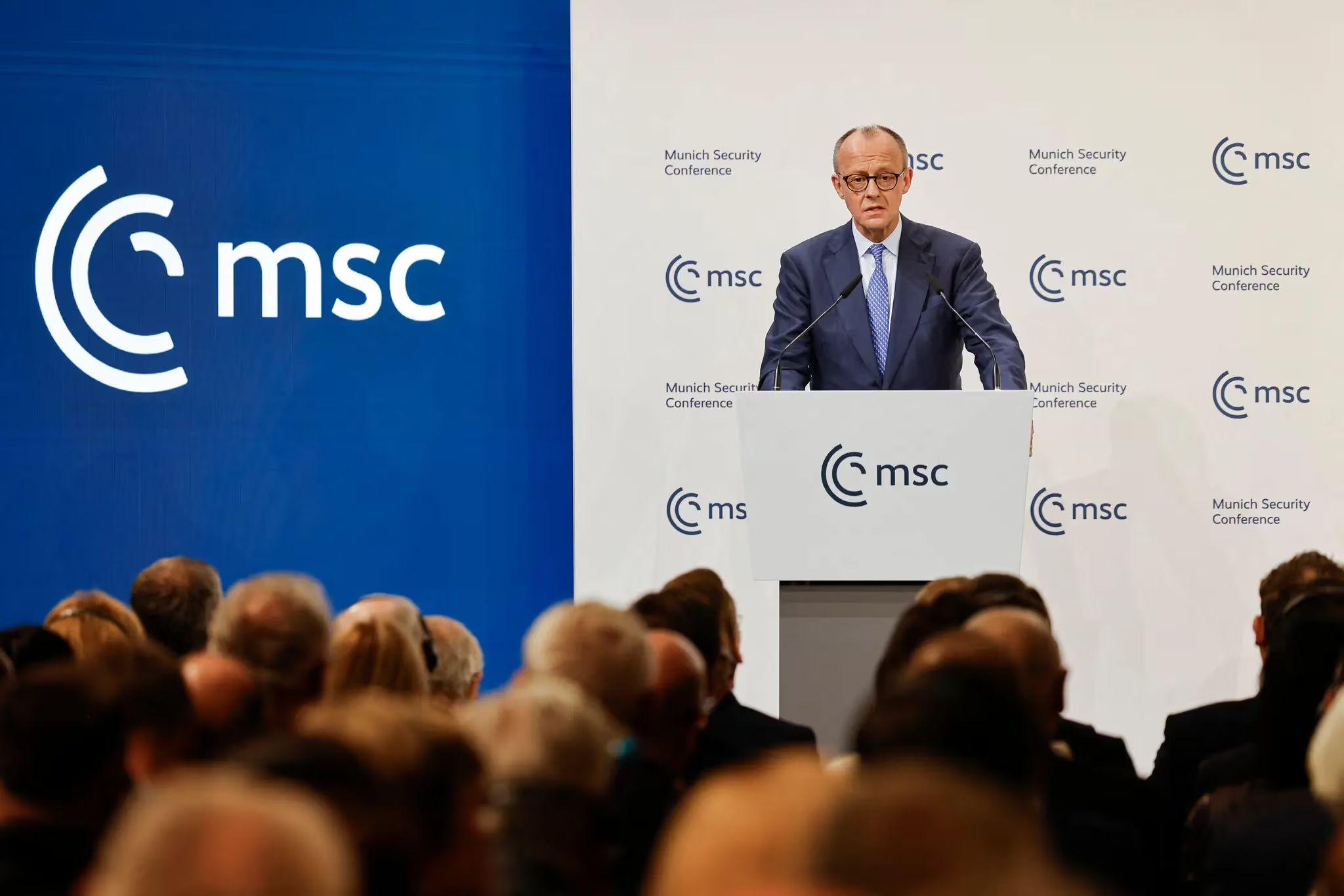
Germany’s chancellor, Friedrich Merz, usually avoids public rebukes of the US president. Instead, he has consistently invested in building a personal relationship with Donald Trump, hoping to use it to influence his stance on Ukraine and other security issues.
On Friday, February 13, however, speaking at the annual Munich Security Conference, Merz said that during Trump’s second presidential term the United States’ claim to global leadership “has been called into question and may have been squandered.”
In his speech, the chancellor repeatedly referred to Americans as “friends” and argued that the United States and Europe still need each other as partners. At the same time, he outlined the areas in which Trump’s policies, he said, have diverged from the values that Germans and other Europeans once believed they shared with America—from opposition to hate speech and the fight against climate change to support for free trade.
The speech appeared to be a direct—if belated—response to the unexpectedly harsh critique of Europe delivered a year earlier at the same venue by US vice president JD Vance. At the time, he accused European leaders of suppressing the speech of some conservatives and of barring the far right from participation in government.
“A divide has opened up between Europe and the United States,” Merz said. “Vice president JD Vance said this very openly here in Munich a year ago. And he was right. The cultural war of the MAGA movement is not our war.”
In the closing part of his speech, delivered in German, the chancellor switched to English, addressing the US administration directly.
“In an era of great-power competition, even the United States will not be strong enough to act alone. Dear friends, NATO membership is not only a competitive advantage for Europe. It is also a competitive advantage for the United States.”
On the eve of the address, German officials emphasized that Merz had chosen his wording with particular care. According to them, the chancellor’s speech was intended to signal a new strategy for Germany and Europe amid a radically transformed global order.
Merz, however, did not soften his harsh assessment of the United States. At the same time as the speech, his remarks were published as an article in Foreign Affairs.
He was not the only German politician to allow himself sharp words directed at Trump and his team.
“We will respect your leadership,” said Bavaria’s prime minister, Markus Söder, opening the conference with a brief greeting addressed to the United States. “But perhaps you will also show us a little more respect.”