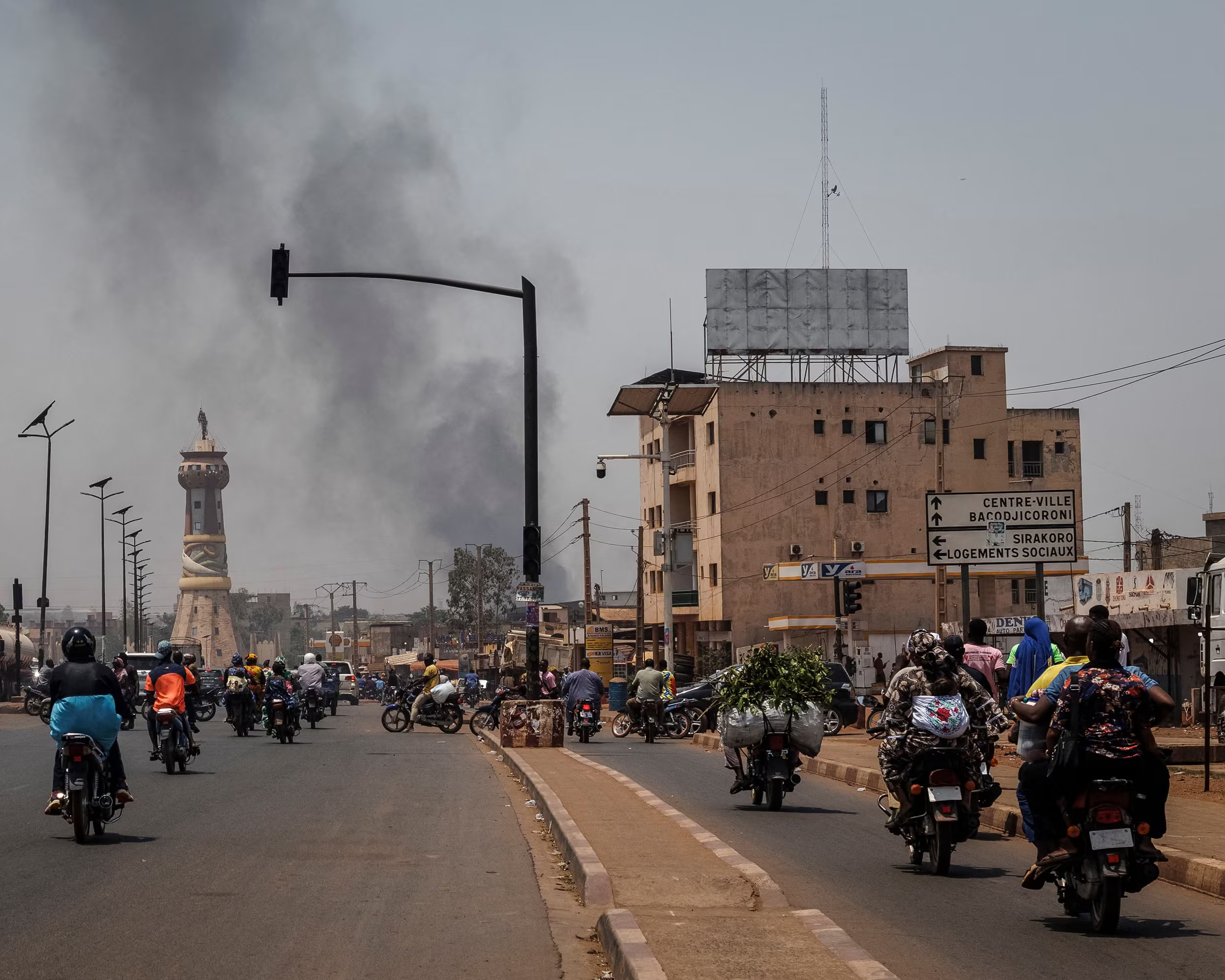
Mali has been hit by a large-scale wave of attacks in which jihadist and separatist groups seized several towns and military bases and, according to authorities, killed the defence minister and the head of military intelligence.
The coordinated offensive was carried out by the al-Qaeda-linked Jama’at Nusrat al-Islam wal-Muslimin (JNIM) and the Tuareg separatist movement Azawad Liberation Front (FLA—forces that had previously opposed one another and pursued different objectives.
Defence minister Sadio Camara was killed in an attack on his residence in the garrison town of Kati, the transitional military authorities said. According to officials, a vehicle packed with explosives and driven by a suicide attacker rammed the building, after which a firefight broke out. Camara was wounded and later died in hospital.
The head of military intelligence, Modibo Kone, is also reported to have been killed.
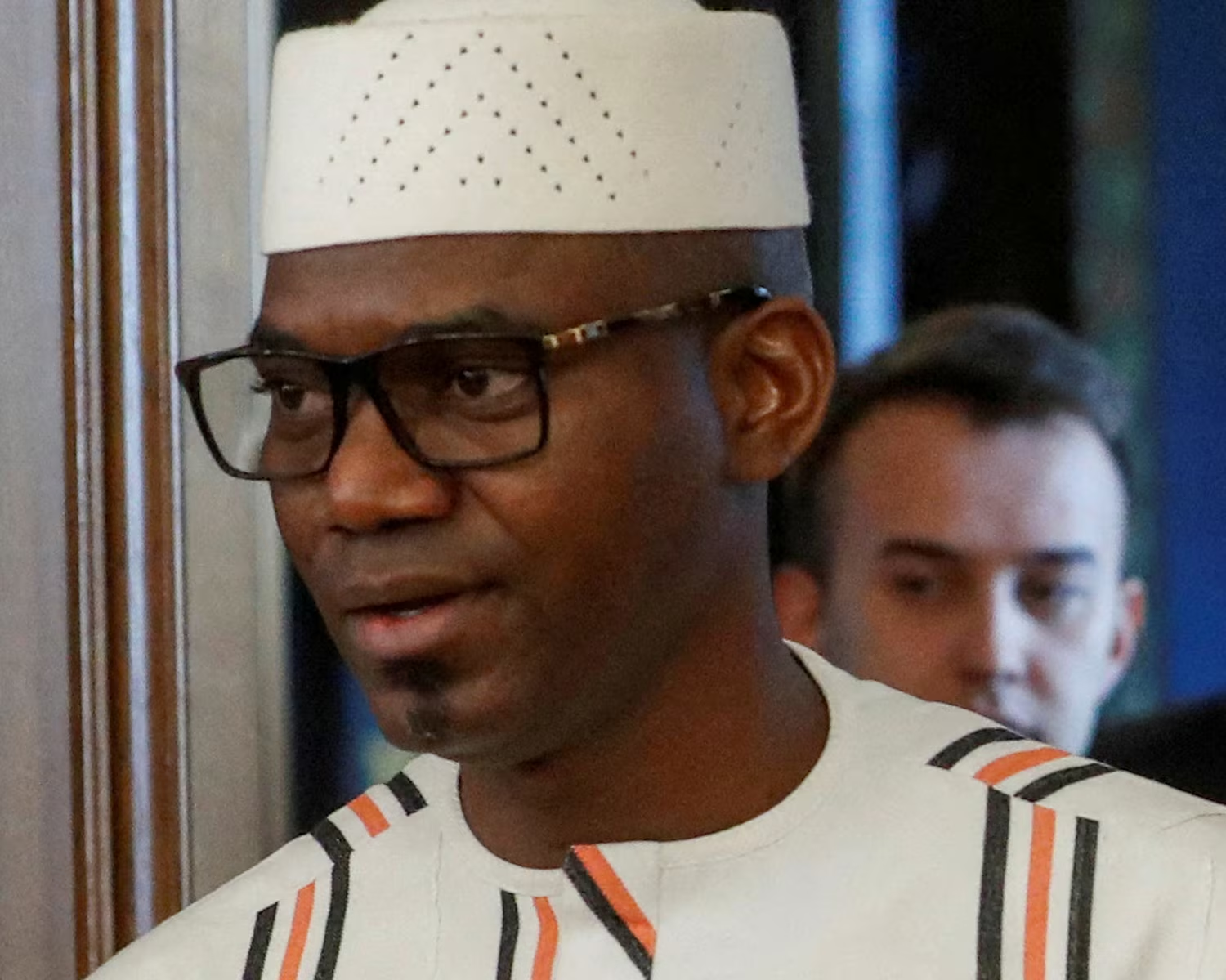
Sadio Camara.
The attacks involved the use of car bombs and armed drones. Strikes targeted Kati—a key stronghold of military power near the capital, Bamako—as well as the eastern city of Gao and the central towns of Mopti and Sevare.
Explosions and heavy gunfire were reported near Modibo Keita international airport and the main military base in Kati. The airport temporarily suspended operations.
Videos circulating on social media appear to show armed fighters inside the governor’s residence in Kidal—a city 400 km south of the Algerian border. The authenticity of the footage has not been independently verified.
JNIM and FLA played a key role in the overthrow of the civilian government of Ibrahim Boubacar Keita in 2020. After another coup in May 2021, power passed to Captain Assimi Goita, under whom the previous peace agreement with the rebels was abandoned.
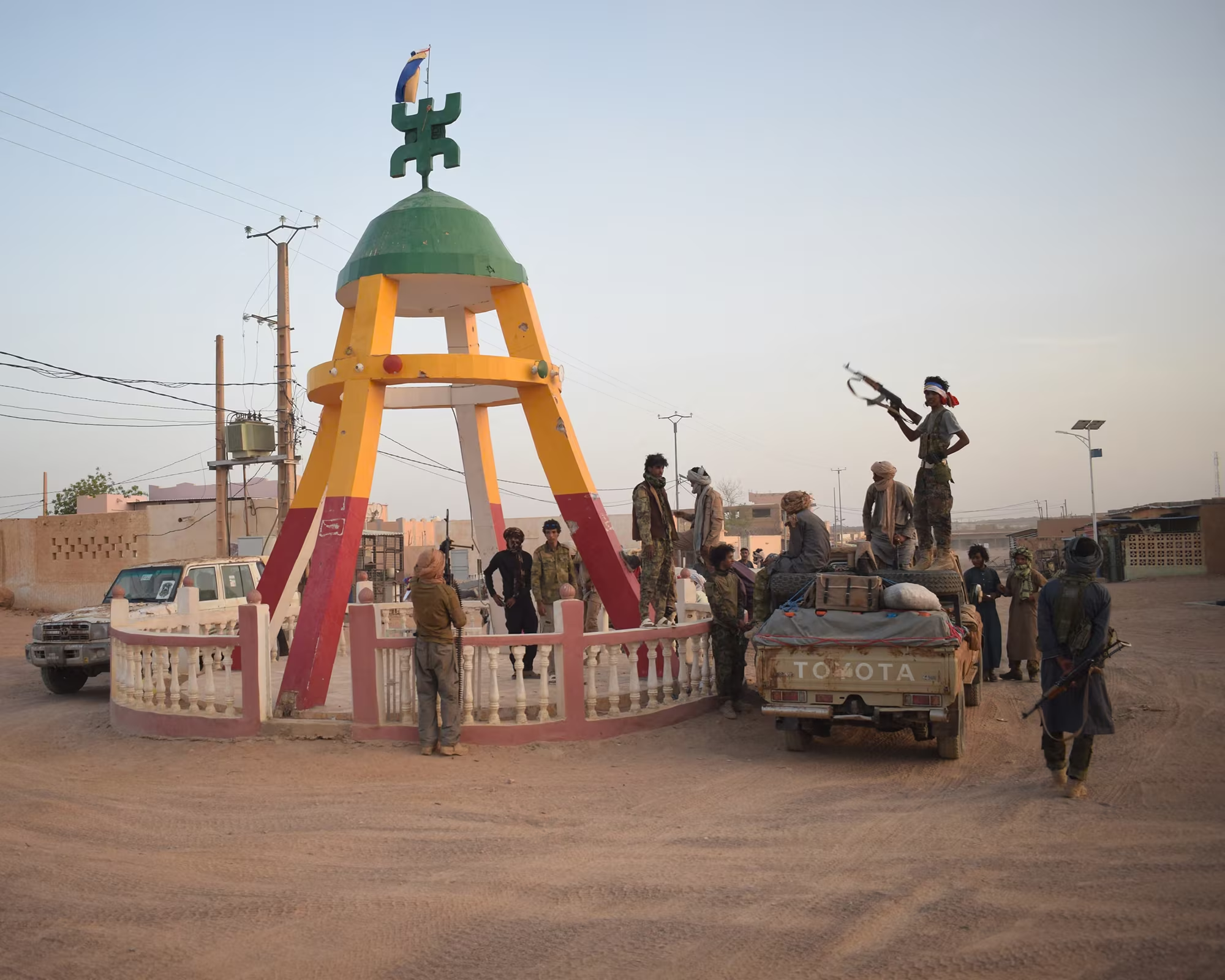
Fighters of the Azawad Liberation Front in Kidal. April 26, 2026.
Goita himself, who according to sources is protected by a private military structure from Turkey, has not yet commented on the latest events.
Authorities have not given an exact death toll but said the active phase of the attacks has ended. The chief of the general staff, General Oumar Diarra, said on state television that the army had withdrawn from Kidal, but that security forces had “neutralised” more than 200 militants across the country and seized ammunition.
FLA spokesman Mohamed El Maouloud Ramadan said that units of Africa Corps—the successor to Russia’s Wagner group—had left Kidal after reaching an agreement on a peaceful withdrawal. The city had long been regarded by separatists as their prospective capital.
For years, Mali has faced threats from groups linked to al-Qaeda and Islamic State, as well as a separatist movement in the north.
Units of Islamic State in the Sahel Province (ISSP), however, were not mentioned in connection with the latest attacks.
After breaking off co-operation with western countries, Mali’s authorities entered into a security agreement with the Wagner group, founded by Yevgeny Prigozhin. Following his death in August 2023, Camara oversaw the transition to the Africa Corps format.
However, this partnership has failed to deliver lasting results. Last year, JNIM blocked fuel supplies from Côte d’Ivoire and Senegal for several months, dealing a serious blow to the capital’s supply lines.
In the latest fighting, a Mi-8AMTSh helicopter belonging to Africa Corps was reportedly shot down near Gao. All those on board were killed.
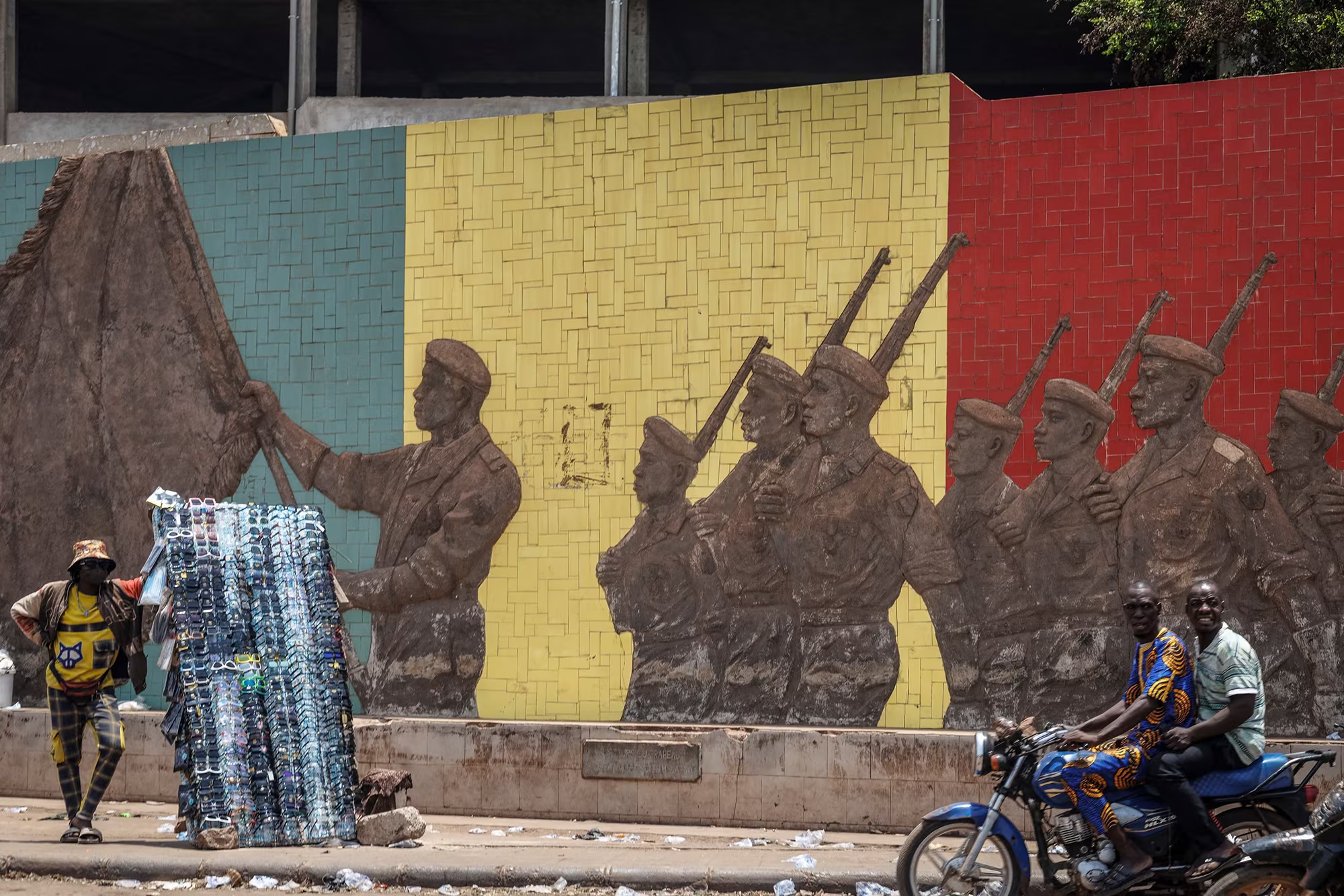
A motorcyclist rides past a monument in support of the Malian army in Bamako.
According to Ulf Laessing, head of the Sahel programme at the Konrad Adenauer Foundation, the developments represent a major blow to Russia’s position in the region. “For Russia, this is a disaster. They failed to prevent the fall of symbolically important Kidal and are now forced to leave the city,” he told Reuters.
At the same time, there were reports of surveillance flights by Côte d’Ivoire near the border. Mali’s authorities view the country, like Nigeria, as an ally of France, while Abidjan, according to sources, is developing co-operation with the United States for cross-border operations in Mali and Burkina Faso.
The Economic Community of West African States (ECOWAS) has called on countries in the region to co-ordinate their efforts in combating armed groups.
Mali left ECOWAS in 2025 and, together with Burkina Faso and Niger, formed the Alliance of Sahel States. Its chairman and Burkina Faso’s leader Ibrahim Traore said the attacks in Mali were “backed by enemies of the struggle for the Sahel’s liberation”, without providing evidence.
UN secretary-general António Guterres expressed deep concern over the situation, noting that around 5 million people in Mali are in need of humanitarian assistance.