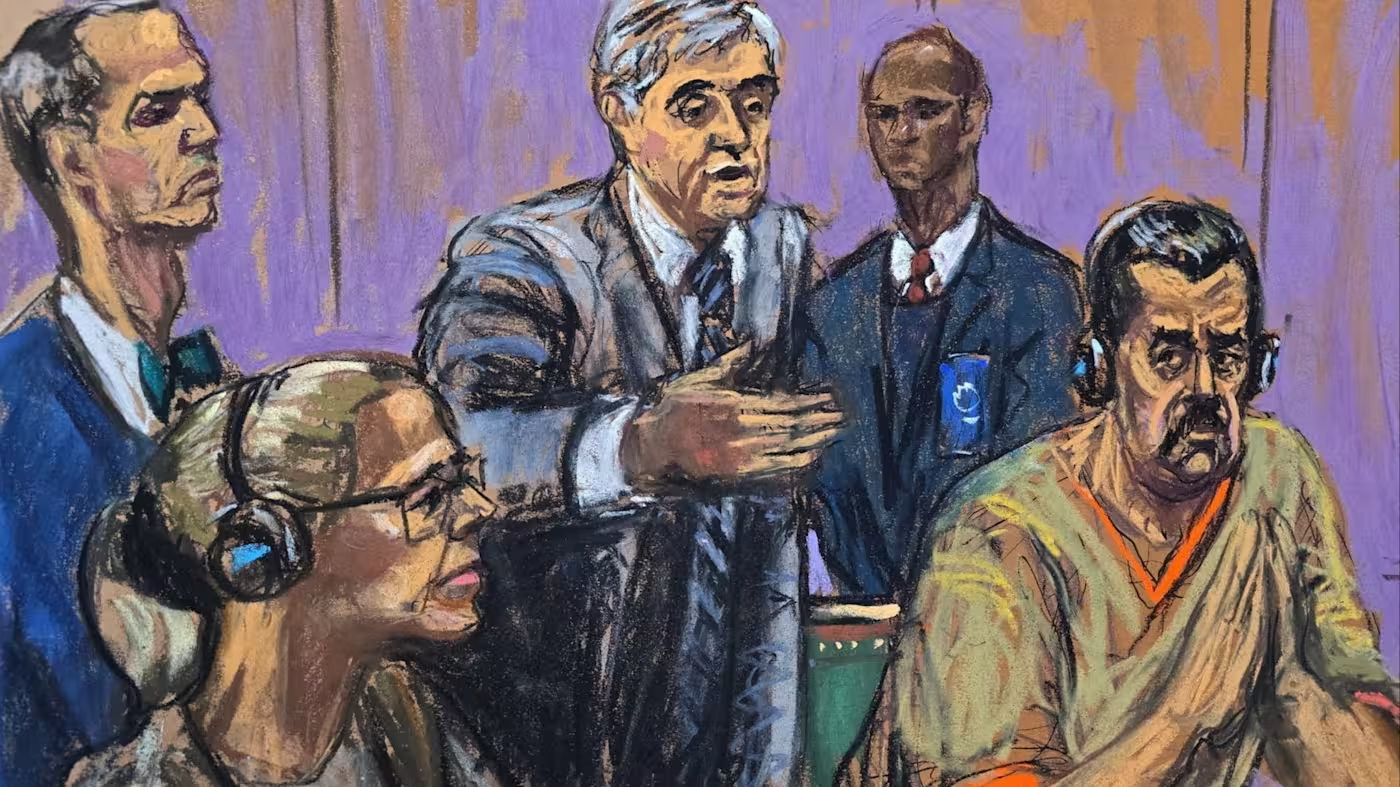
Nicolás Maduro and his wife, Cilia Flores, appeared in a Manhattan courtroom on Thursday, March 26, where their defence moved to dismiss charges of drug trafficking and conspiracy.
Their lawyers said the defendants lacked the means to fund their legal defence from personal resources, while the use of Venezuelan state funds was barred by US sanctions. Since their detention in Caracas and subsequent transfer to New York in January, they have been held in a Brooklyn jail. The US Office of Foreign Assets Control has not granted a licence that would allow the use of state funds and, according to attorney Barry Pollack, this “has consequences for this case”. “The court should terminate the proceedings,” he said.
Judge Alvin Hellerstein asked prosecutors why they were blocking the use of Venezuelan funds, noting that “the situation has changed”. “We are doing business with Venezuela,” he said, adding that Venezuelan oil had become “vital—particularly amid shortages caused by the situation in the Strait of Hormuz”.
Prosecutors insisted the restrictions were driven by foreign policy and national security considerations, and rejected the claim that Maduro and Flores were unable to pay for their defence themselves.
The judge did not issue an immediate ruling, but signalled reluctance to dismiss the case at such an early stage, calling it “an extremely serious step”. At the same time, he underscored concern over the defendants’ right to choose counsel. “The right at issue here, which takes precedence over others, is the right to a lawyer,” he said.
When prosecutors argued that Maduro and Flores could not have expected to use state funds in the US even before their transfer to New York, the judge replied: “They did not expect to find themselves in this court.”
During the hearing, both defendants were present in the courtroom wearing beige prison uniforms and did not speak. It was their first court appearance since a brief session in early January, at which Maduro said he was “a decent man” who had been “kidnapped”, while Flores’s lawyer reported injuries sustained during her detention.
Maduro faces charges of participating in a narco-terrorism conspiracy, while both he and Flores are charged with conspiracy to import cocaine, as well as two counts related to the possession of machine guns. Both have pleaded not guilty.
In filings submitted ahead of the hearing, prosecutors noted that paying for legal services with funds from a sanctioned state would be “a highly unusual practice”.
In Venezuela itself, Maduro’s son, Nicolás Maduro Guerra—who is also charged in the US case—called for protests demanding the release of his father and stepmother. “This is a process that has been illegitimate and unlawful from the very beginning,” he said at a rally in Caracas. “We are not criminals at all—we are decent, hard-working people.”
Following Maduro’s detention, Vice-President Delcy Rodríguez secured Donald Trump’s backing for opening the country’s natural resources to foreign investment.
Billboards featuring images of Maduro and Flores and the slogan “bring them back” have appeared across Venezuela, even as the country’s political life continues without their involvement.
Speaking via video link to investors in Miami on Wednesday, Rodríguez made no mention of Maduro or Flores, focusing instead on investment opportunities in the oil sector. At the same time, the state broadcaster VTV has stopped describing their detention as a “kidnapping”, beginning instead to characterise them as prisoners of war.