As the war with Iran drags on and oil prices rise, a narrative has taken hold across many media outlets and social networks: “Trump saved Putin.” The argument suggests that Russia’s budget had been under pressure, but received significant relief following the outbreak of hostilities and the surge in oil prices. This interpretation regularly appears in Western media.
Far less attention is given to who within the American leadership helped draw Trump into the conflict, thereby indirectly playing to Moscow’s advantage. In fact, the role is attributed to the neoconservatives—an influential current within the Republican Party that has consistently advocated for an expansionist U.S. foreign policy.
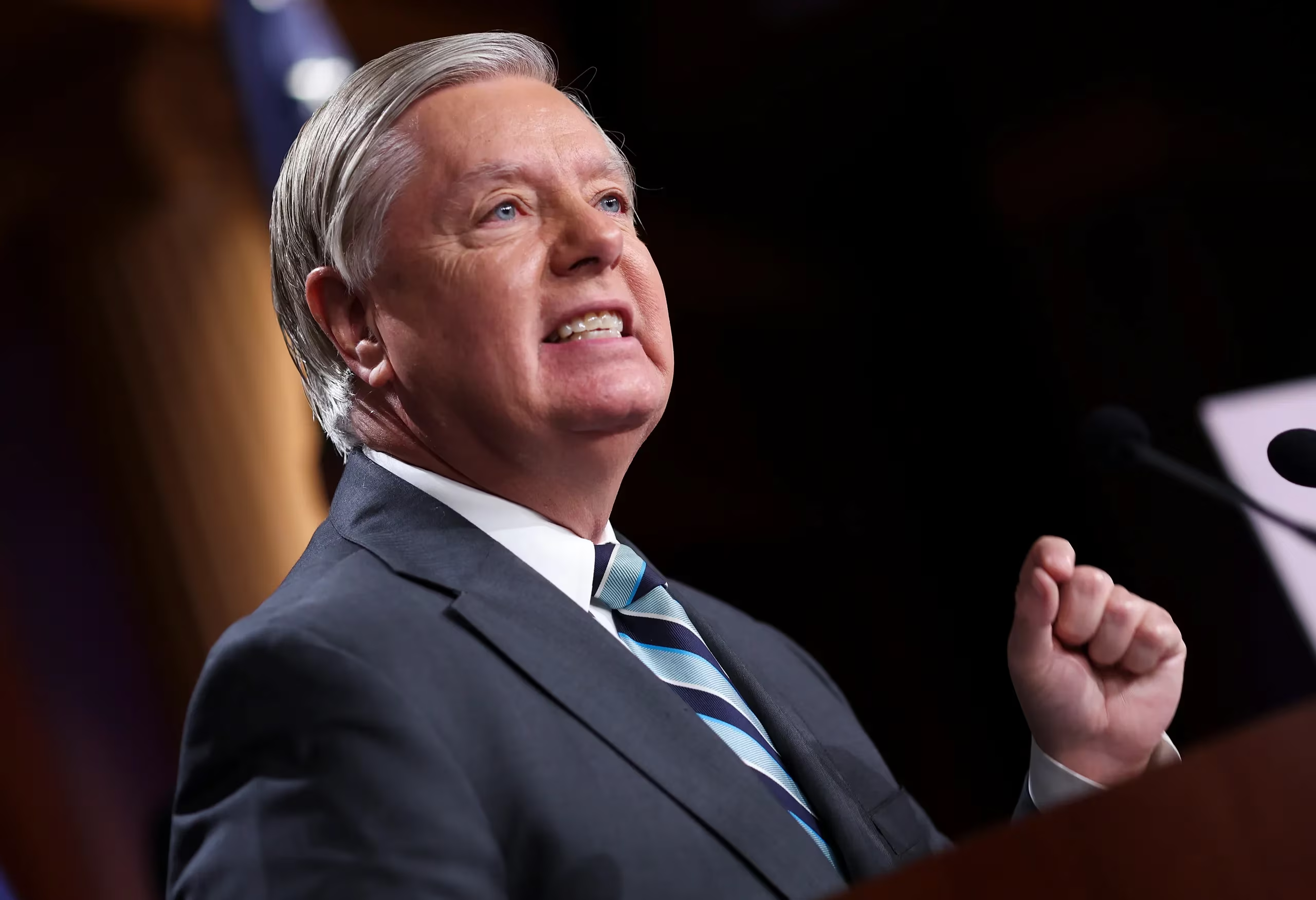
One of the central figures of this camp is widely seen as Senator Lindsey Graham, whom media outlets describe as the chief architect behind the strike on Iran. “How Lindsey Graham convinced Trump to say ‘yes’ to Iran: the senator pushed the U.S. toward war with Tehran for decades,” Politico wrote shortly after the conflict began. The publication noted: “Trump’s decision to go to war was further evidence that the hawkish voices he once publicly resisted—and none was louder than Graham’s—now dominate his second-term decision-making. For the veteran Republican, it also marked a full-circle moment: for decades he had sought to persuade administrations to take military action against Iran, but only now did he succeed.”
According to media reports, the invasion was also actively supported by Secretary of State Marco Rubio and CIA Director John Ratcliffe, both closely aligned with neoconservative circles, while Vice President J.D. Vance and Director of National Intelligence Tulsi Gabbard opposed it.
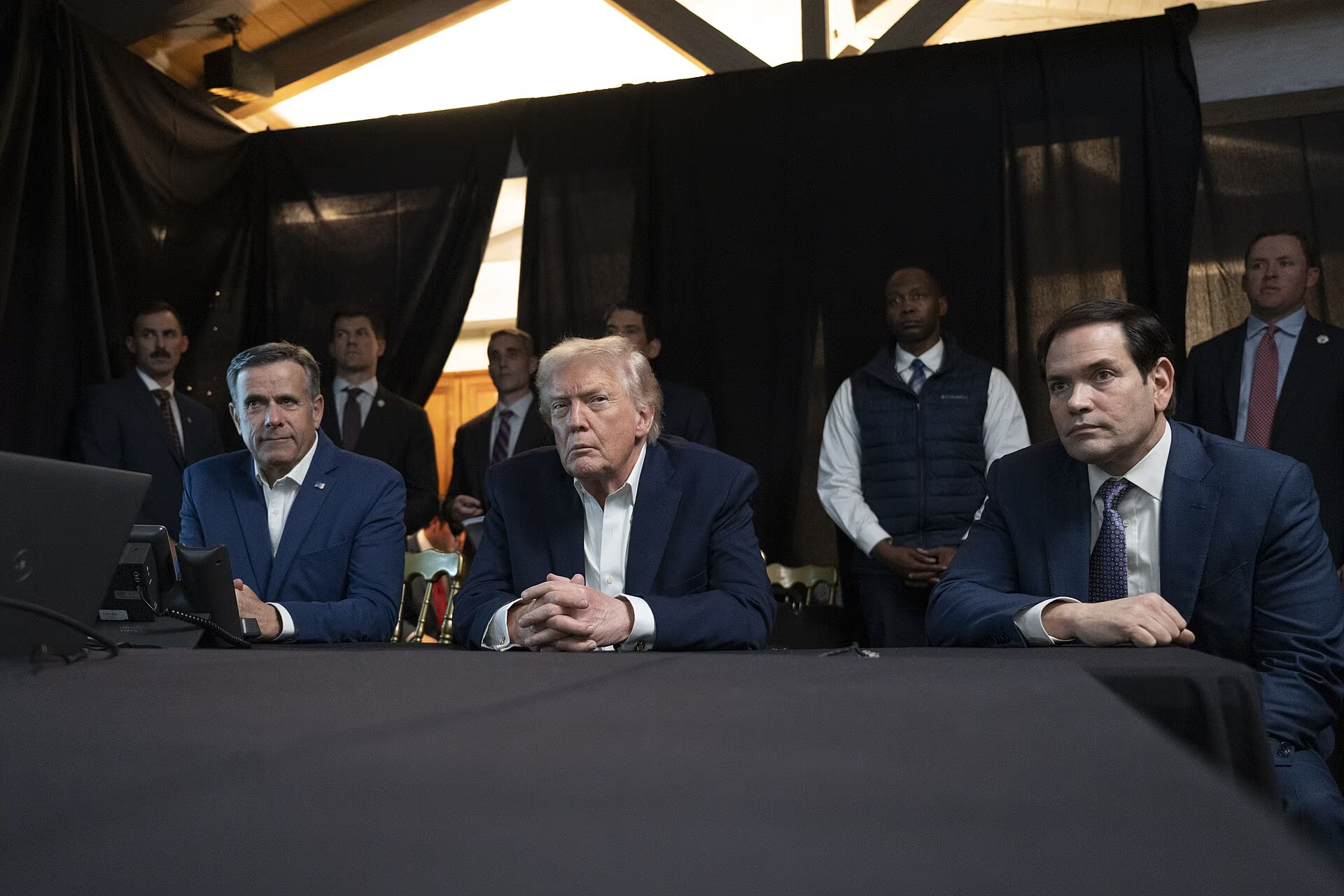
Donald Trump, CIA Director John Ratcliffe and Secretary of State Marco Rubio.
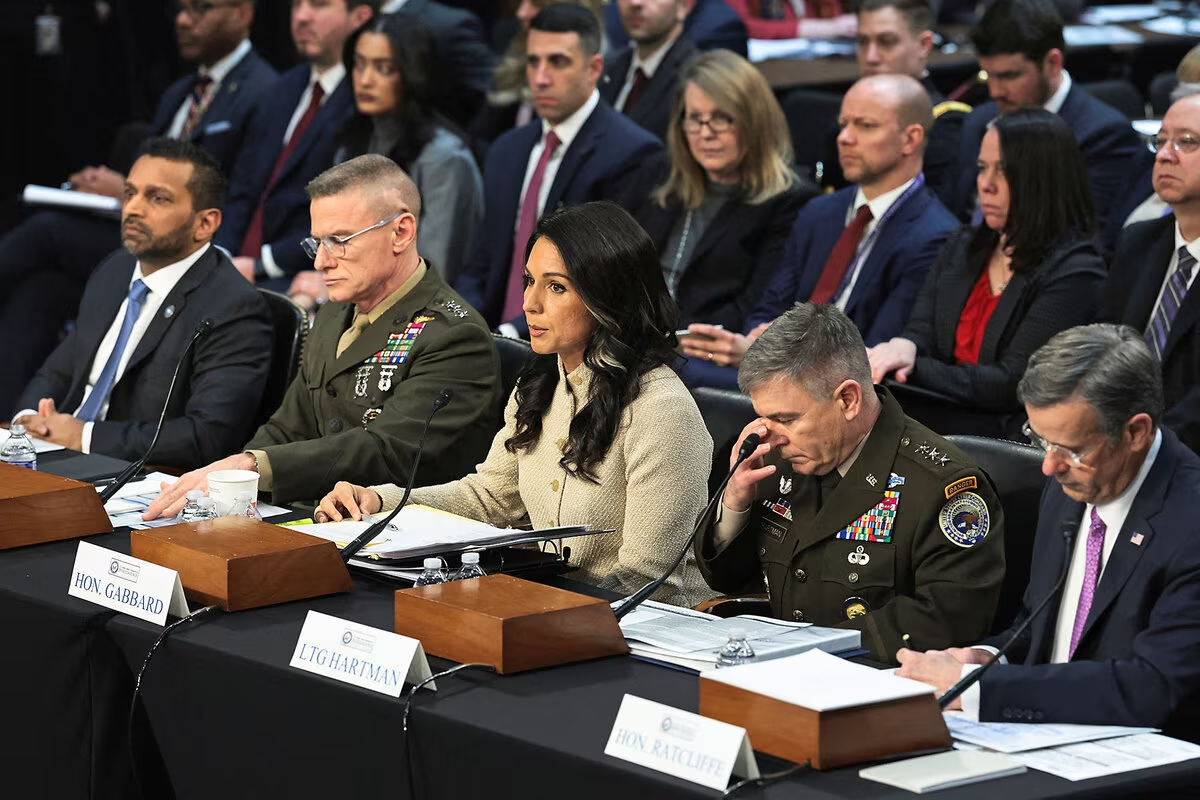
Director of National Intelligence Tulsi Gabbard
This turn of events appears atypical, given that within Trump-aligned circles, attitudes toward neoconservatives had long been sharply critical: they were often viewed as reckless and ineffective policymakers who draw the United States into prolonged and costly wars. Similar assessments have also been voiced among Democrats, particularly on the party’s left flank, where concerns have been raised about the country’s limited resources for sustaining large-scale military campaigns abroad—a point emphasized by Joe Biden during the withdrawal from Afghanistan.
Just a year ago, following Trump’s election victory, it seemed that the influence of neoconservatives had definitively waned. Yet in the end, it was they who regained access to the decision-making process and persuaded the president to take a step that the administration of George W. Bush had once rejected. In the mid-2000s, at the height of American power—with 170,000 troops deployed in Iraq and Iran possessing far more limited capabilities—the White House nonetheless deemed an invasion excessively risky and chose not to proceed.
Trump, by contrast, agreed to escalate. It is widely argued that Israel played a decisive role, yet Washington’s decision is difficult to explain without considering its own strategic calculations. As previously noted, the conflict with Iran fits into a broader course aimed at preserving U.S. global dominance through control over energy flows and a shift away from international law toward the use of force. This framework is closely associated with the neoconservative agenda.
In order to steer Trump toward this approach, he was reportedly presented with a series of operations designed to create the impression of swift and decisive success—including high-profile actions against foreign leaders and Israel’s earlier operations against Iran. As a result, the president came to believe that a military campaign could end in the rapid defeat of Tehran.
The conflict, however, has dragged on. The United States is gradually becoming more deeply involved in hostilities whose outcome remains uncertain, while the consequences are already reverberating across global markets, including through rising oil prices that are boosting Russia’s budget revenues.
Against this backdrop, responsibility for the unfolding situation is increasingly attributed not only to Trump or the Israeli leadership, but also to the architects of the strategy within the U.S. administration—Graham, Rubio and Ratcliffe.
It had been assumed that, should the initial scenario fail, the influence of the neoconservatives would diminish, while more restrained figures such as Vance would gain ground. Nevertheless, steps are being taken to prevent such an outcome.
On the one hand, representatives of this camp are seeking to reduce their public visibility, allowing Trump and Defense Secretary Pete Hegseth to shape the main line of commentary. Ratcliffe has made almost no statements on the issue, Rubio has confined himself to brief formulations, and Graham has markedly reduced his media presence. At the same time, U.S. press coverage is increasingly emphasizing that it was Israel that convinced Trump of an imminent “collapse of the regime” in Iran, thereby shifting the focus of responsibility.
On the other hand, aligned media outlets are promoting a line in favor of continuing the war—advancing arguments about the need to “finish off Iran” and the inadmissibility of its victory. In this context, the possibility of a ground operation is being discussed, as well as an expansion of the conflict through the involvement of regional actors—including Saudi Arabia, a move publicly advocated by Graham.
The logic behind these actions is tied to the fact that ending the war without achieving the stated objectives, including control over energy resources, would call into question the entire strategy of maintaining U.S. global leadership through military means. Moreover, neoconservatives have traditionally been closely linked to the defense industry and the energy sector, for which a prolonged conflict translates into rising revenues.
At the same time, the risks for U.S. allies in the Persian Gulf, as well as the indirect strengthening of Russia’s position through higher oil revenues and complications in arms supplies to Ukraine, are treated as secondary effects, insufficient to outweigh the economic gains. Even the potential decline in Trump’s approval ratings amid a protracted war does not appear to be a determining factor for them.
At the same time, a prolonged conflict with significant losses and mounting economic consequences could trigger serious internal destabilization within the United States itself, limiting its capacity to sustain external campaigns. However, such a scenario is, for now, seemingly regarded as a distant risk, while the financial benefits of the current situation are already materializing.