Fear of Angela Rayner replacing Keir Starmer has long been one of the main reasons many Labour MPs avoided openly turning against the prime minister, amid concerns inside the party that she would be too risky a figure at a time of rising support for Nigel Farage. That is according to the Financial Times.
According to the newspaper, when Labour figures speak about an “orderly transition,” they often mean buying time—either for an alternative candidate to emerge or for Manchester mayor Andy Burnham to return to Westminster, where many view him as a stronger option.
For part of the party, it also means waiting for the fallout from Rayner’s tax scandal to fade. In September, she stepped down from all three senior party roles after admitting she had incorrectly handled stamp duty payments linked to the purchase of an £800,000 apartment in Hove.
In recent weeks, however, Rayner’s standing within Labour’s soft-left wing has begun to weaken, the FT notes. Interest in finding another candidate is growing inside the party.
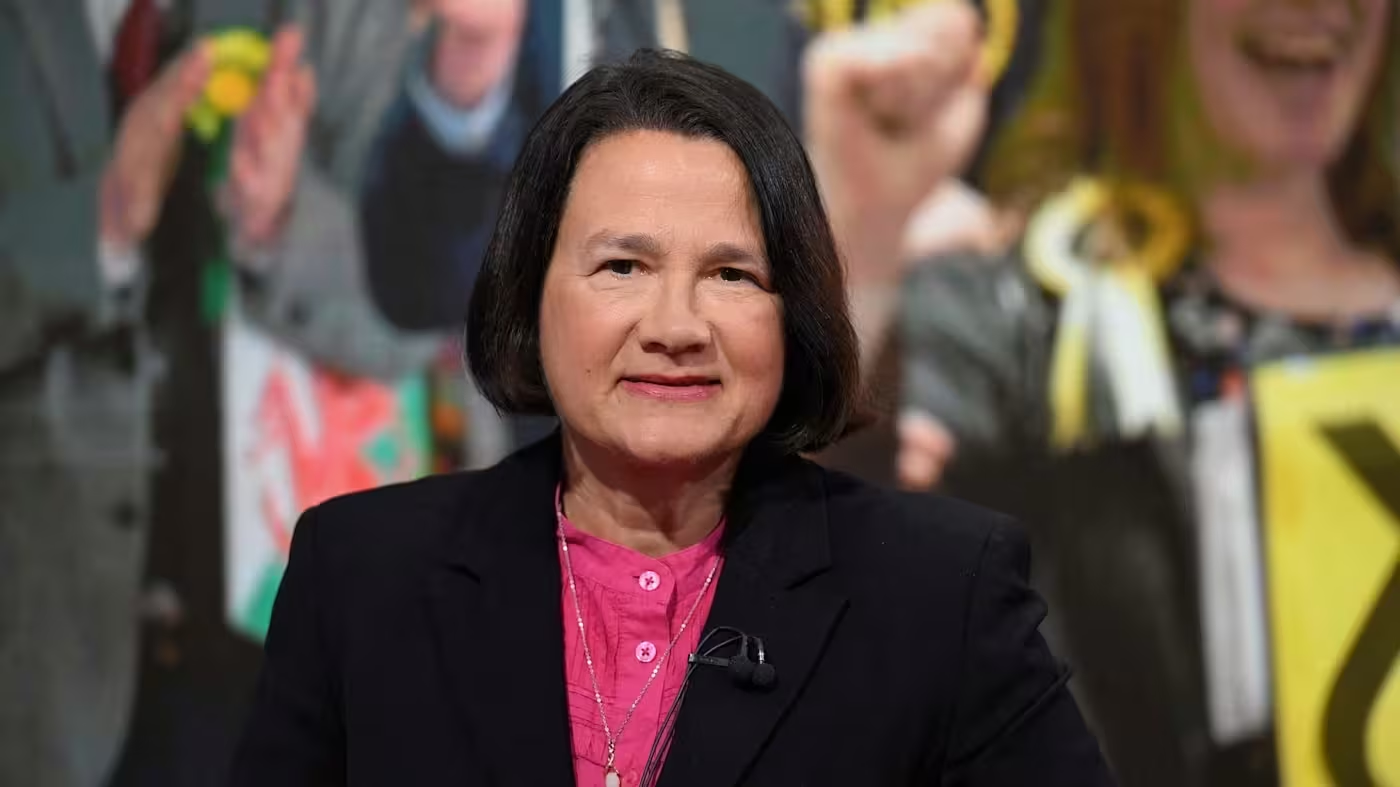
The newspaper links that shift to the growing activity of minister Catherine West, who is increasingly viewed as a signal of changing sentiment within the centrist Labour establishment. Like Rayner, West belongs to the party’s soft-left faction and entered parliament in 2015, but her political base is rooted primarily in London’s party network rather than Manchester’s political structures.
In an interview with New Statesman, West said new candidates could “emerge” during a future leadership transition process, including MPs from Labour’s 2024 intake.
The Financial Times sees this as evidence of a broader shift inside the party—from waiting for “the right candidate” to eventually appear on their own to actively trying to create the conditions for a new figure to emerge.
Although Labour’s final losses in the local elections were not as catastrophic as some analysts had predicted, the results were still historically poor for a governing party at this stage of the parliamentary cycle. The FT notes that no British government with comparable numbers has later gone on to win a general election.
The newspaper writes that West’s initiative could eventually lose momentum and that Starmer may remain in office for some time yet. But the discussion itself has already forced many MPs to think seriously about how a leadership change would actually happen—and how unlikely it is that Starmer would voluntarily initiate an “orderly transition.”
Against that backdrop, divisions are widening between the cabinet, which continues to publicly back Starmer, and the mood among rank-and-file MPs, where frustration is becoming increasingly visible.
According to the FT, the longer Labour’s leadership delays confronting the question of Starmer’s future, the more likely it becomes that MPs from the party’s newest intake will begin promoting one of their own generation as an alternative to the current prime minister.