
North Korea sent troops to conduct mine-clearing operations in Russia’s Kursk region earlier this year, Kim Jong Un said in a speech carried by state media on Saturday. The remarks amounted to a rare public acknowledgement by Pyongyang that soldiers deployed abroad had been assigned deadly missions.
According to South Korean and western intelligence agencies, North Korea has dispatched several thousand troops to support Russia’s nearly four-year invasion of Ukraine.
Analysts say that in return Moscow has been providing Pyongyang with financial assistance, military technology, as well as supplies of food and energy—allowing the diplomatically isolated country to circumvent tough sanctions imposed over its nuclear and missile programmes.
Welcoming the return of an engineering regiment, Kim said the soldiers had written “letters to their hometowns and villages during breaks between hours of mine-clearing”, the Korean Central News Agency (KCNA) reported.
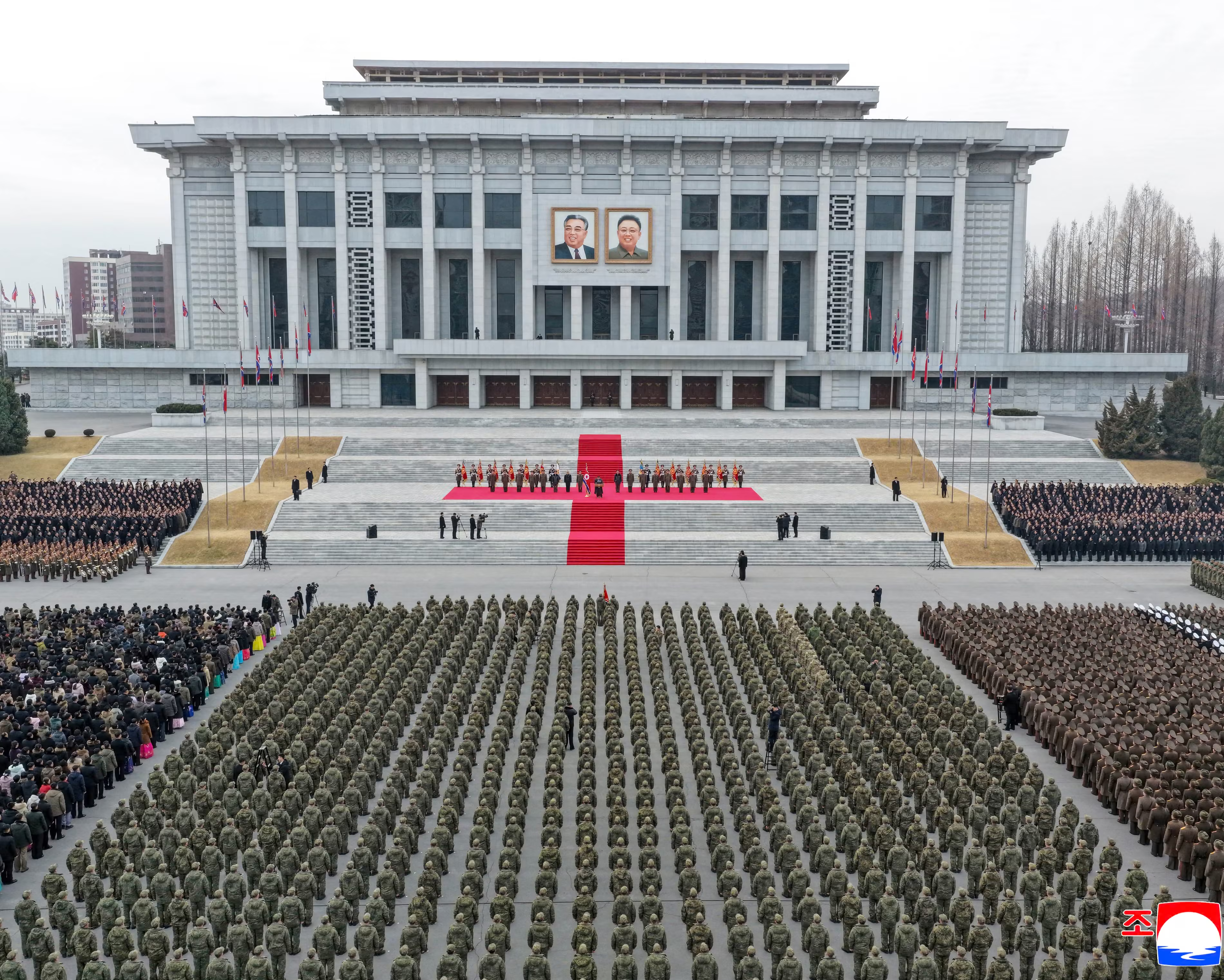
Kim Jong Un at the podium during the welcoming ceremony at the April 25 House of Culture in Pyongyang.
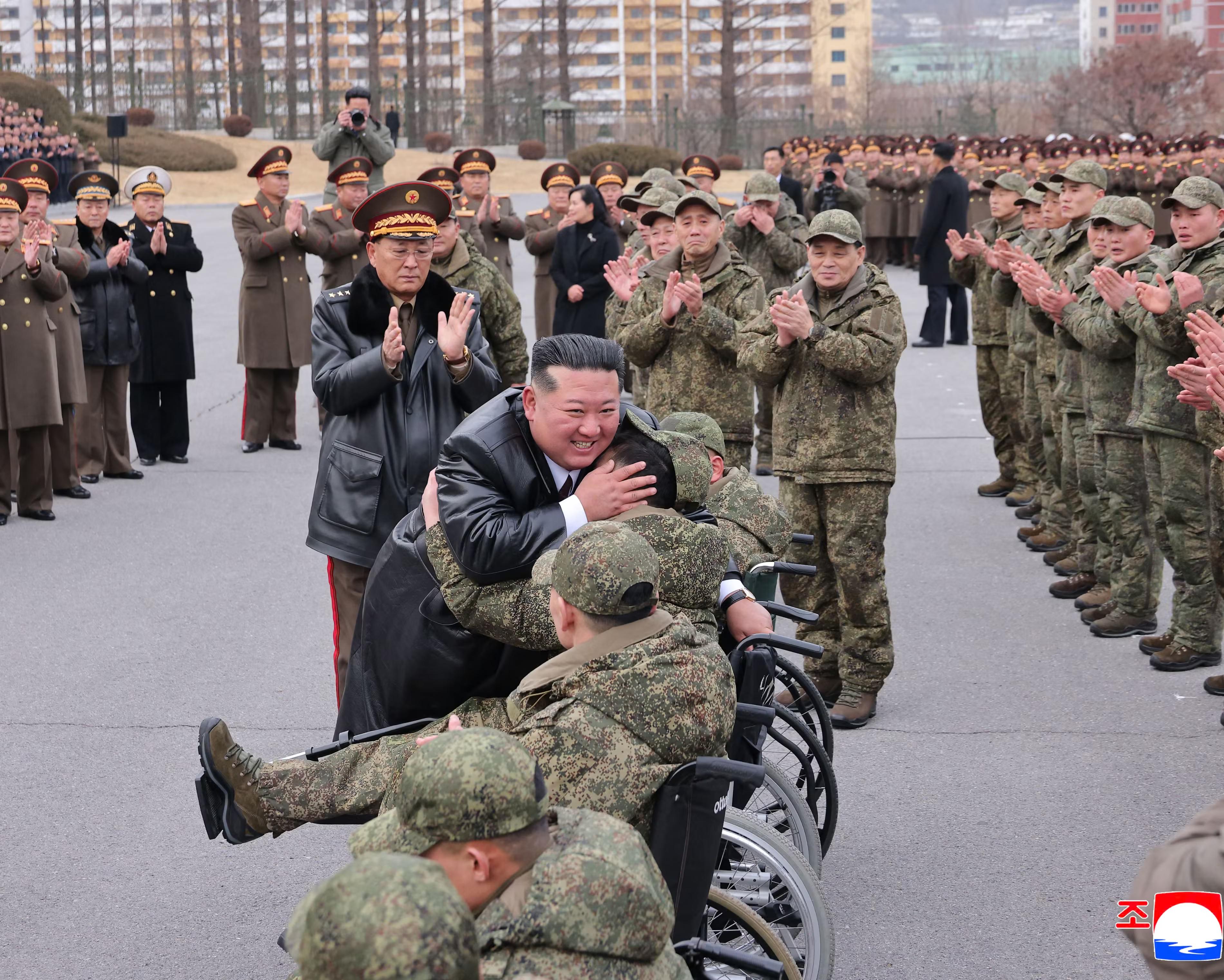
The North Korean leader with returning soldiers from the engineering regiment.
Kim said that nine members of the regiment were killed during the 120-day deployment that began in August. He made the remarks on Friday at a ceremony welcoming the unit back, KCNA reported.
The fallen soldiers were posthumously awarded state honours to “eternally commemorate their valour”.
“All of you—both officers and soldiers—displayed collective heroism almost every day, overcoming unimaginable mental and physical burdens,” Kim said.
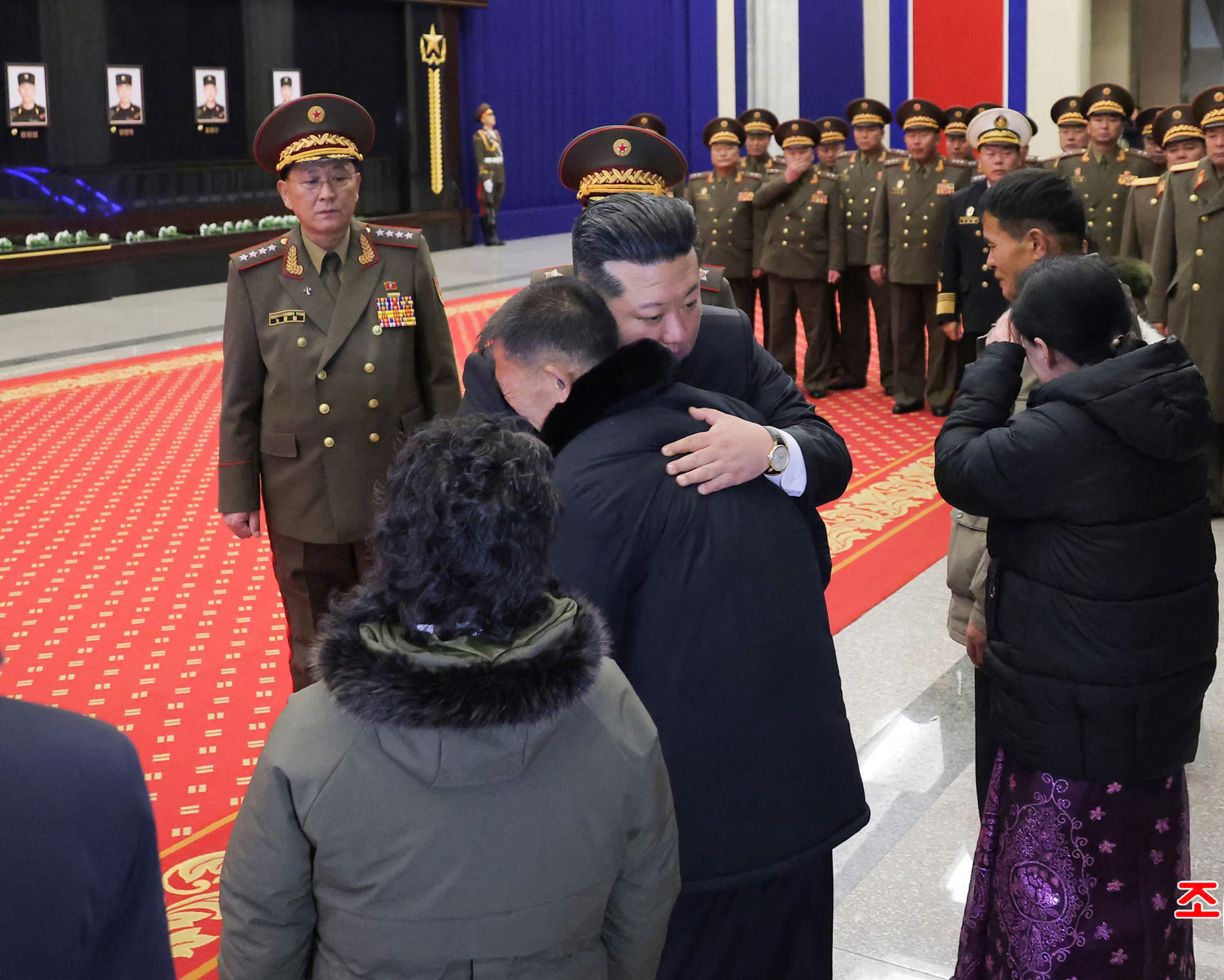
Kim Jong Un with the families of fallen soldiers.
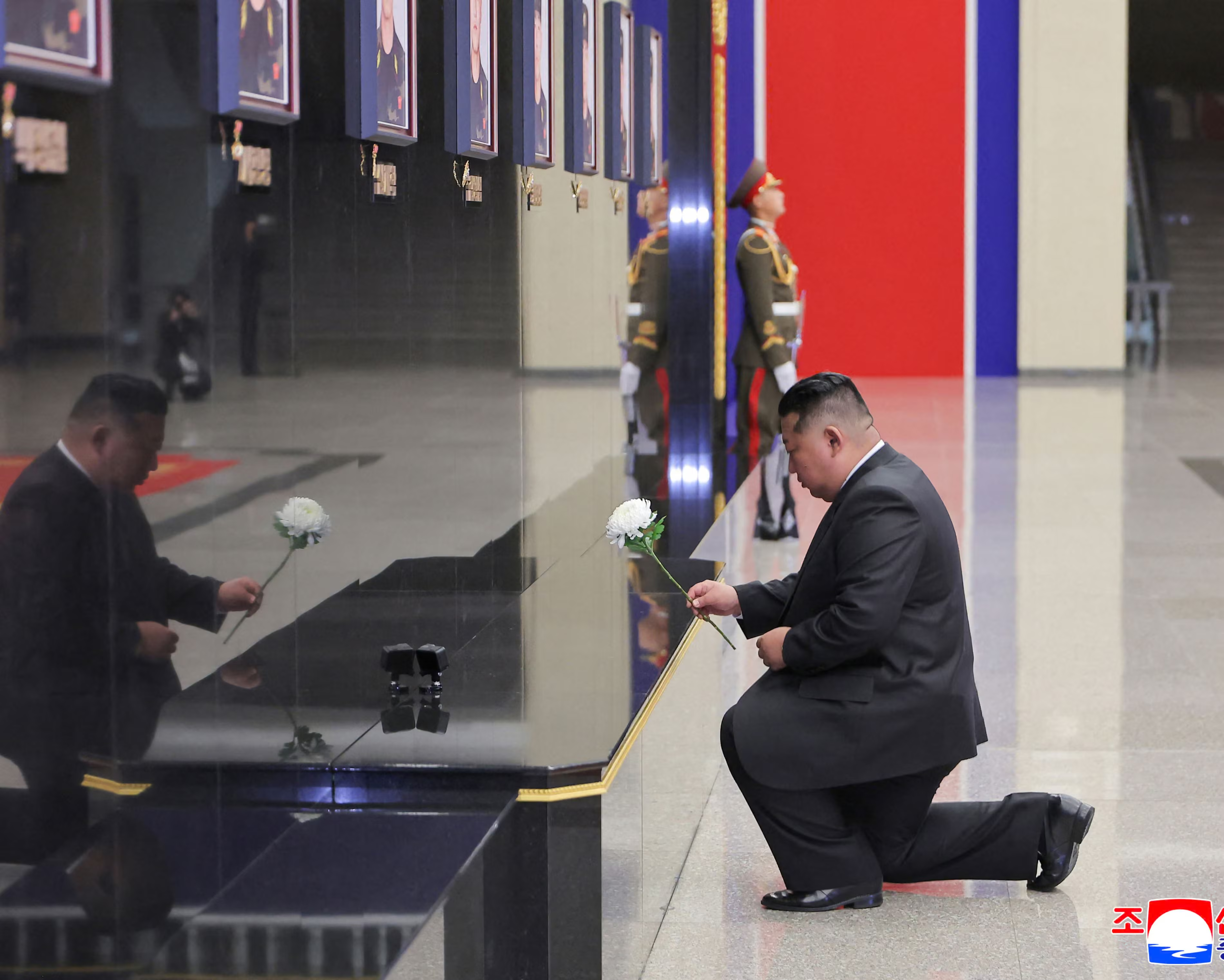
Kim Jong Un paying his respects before portraits of fallen North Korean soldiers at the April 25 House of Culture in Pyongyang.
He said the troops had managed to “work a miracle, transforming a vast zone of deadly danger into a safe and secure area in less than three months”.
Photographs released by KCNA show a smiling Kim embracing returning soldiers at a ceremony in Pyongyang on Friday. Some of them appeared wounded and were moving in wheelchairs.
In one image, a soldier appears visibly moved as Kim holds his head and hand while he sits in a wheelchair wearing military uniform.
Other images show the North Korean leader consoling the families of the dead, as well as kneeling before the portrait of a fallen soldier and placing what appear to be medals and flowers beside the images of the deceased.
Kim also spoke of the “pain of waiting over the 120 days, during which he did not forget his beloved sons for a single moment”.
In September, Kim appeared alongside Chinese President Xi Jinping and Russian President Vladimir Putin at a large-scale military parade in Beijing.
He did not respond to an offer from Donald Trump to meet during the US president’s trip to Asia in October.
Only in April did North Korea officially confirm that it had sent troops to support Russia and that its soldiers had been killed in combat.
At an earlier ceremony in August, KCNA footage showed an emotional Kim embracing a returning soldier who appeared distressed, pressing his face against the leader’s chest.
In early July, state media showed a visibly moved Kim paying tribute to flag-draped coffins that appeared to contain the bodies of fallen soldiers returned to the country.