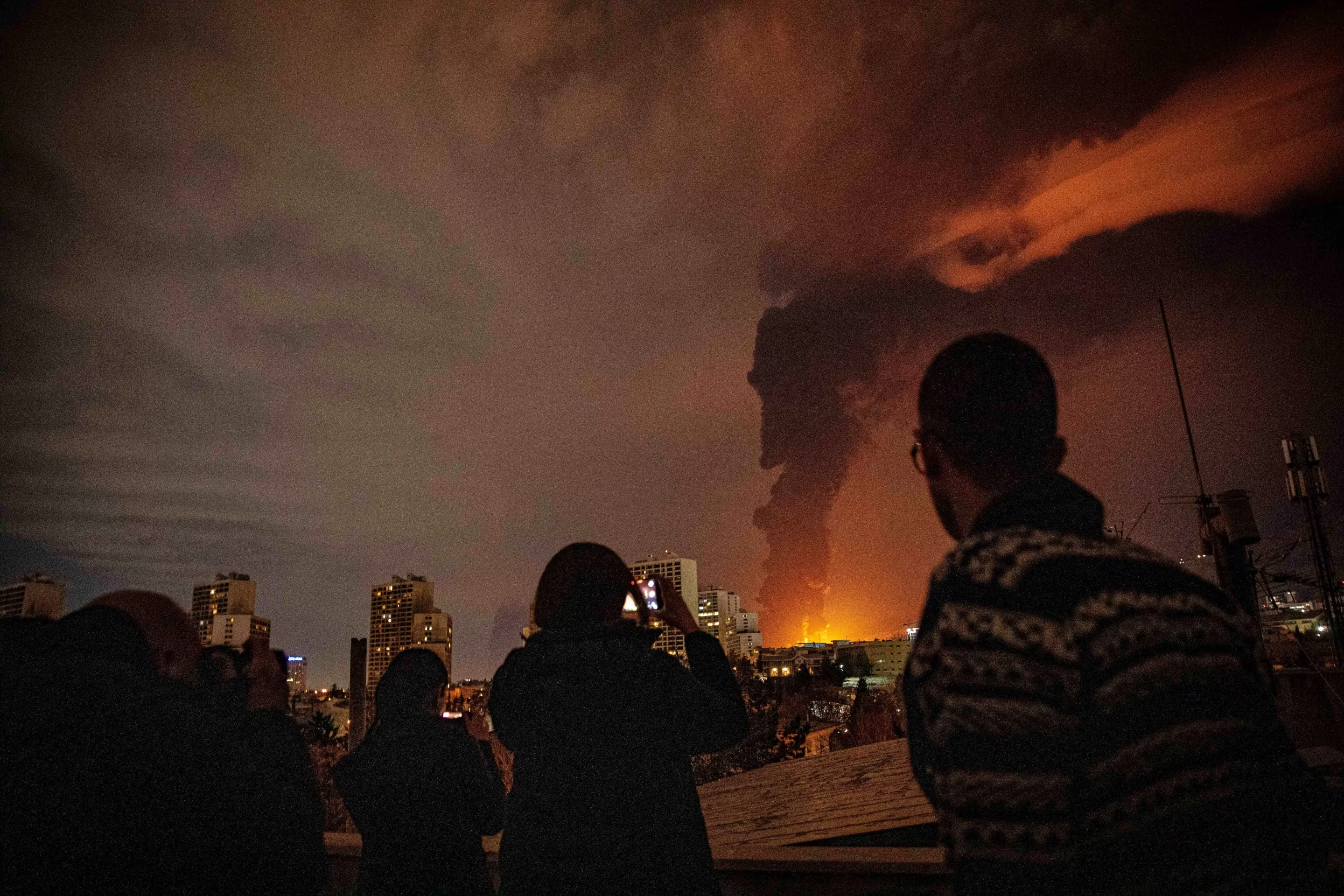
Global energy markets have been severely destabilized by the U.S. war with Iran—the flow of oil through the Strait of Hormuz has effectively come to a halt.
One strategic facility, however, has so far remained untouched—the island of Kharg, located about 16 miles off Iran’s coast and roughly 300 miles from the Strait of Hormuz.
GZERO Media founder Ian Bremmer noted last week that between 80 and 90 percent of Iran’s oil exports pass through Kharg. It is there, he said, that Iran’s “super” tankers are serviced.
“That dependence means that if the Americans take control of this facility, they could exert enormous pressure on any Iranian regime without needing to send troops into Tehran,” Bremmer said in a video published on the social network X.
“If you control oil exports, the leverage over the regime becomes far stronger in the long run,” he added later.
Neither Washington nor Jerusalem has publicly declared plans to seize the island, but as Axios reported, officials within the Trump administration have discussed the possibility.
Israel’s opposition leader and former prime minister Yair Lapid also wrote on X on Saturday that Israel “must destroy all of Iran’s oil fields and energy infrastructure on Kharg Island,” stressing that such a step would “paralyze the Iranian economy and bring about the fall of the regime.”
Former White House Situation Room director Mark Gustafson said last week that President Donald Trump “may be tempted” to seize the island.
In a post on LinkedIn, Gustafson pointed to several factors that could push toward such a decision: Iran’s navy, he wrote, had been “completely destroyed” by U.S. and Israeli strikes, while the president himself “is seeking to strengthen U.S. dominance in the global oil market.”
However, Gustafson, now a senior director of analytics at Eurasia Group, noted that an operation to seize Kharg would require ground troops. Trump and Defense Secretary Pete Hegseth have not ruled out the possibility of sending land forces into Iran, but have not done so yet. The deployment of American troops on Iranian territory would trigger intense political debate and could leave the administration politically exposed in an election year.
According to Gustafson, the presence of U.S. forces on the island could lead to a “weeks-long campaign of Iranian drone strikes,” while the seizure itself could push global oil prices even higher.
The disruption of the Strait of Hormuz has already rattled the oil industry and driven up fuel prices for American consumers.
By Monday afternoon, the price of the North American benchmark crude, West Texas Intermediate, had climbed above $84 per barrel. The surge has fed directly into gasoline costs: the national average price for a gallon of regular gasoline rose above $3.47 on Monday, according to data from AAA.
That is nearly $0.50 higher than a week ago and almost $0.60 more than a month earlier.