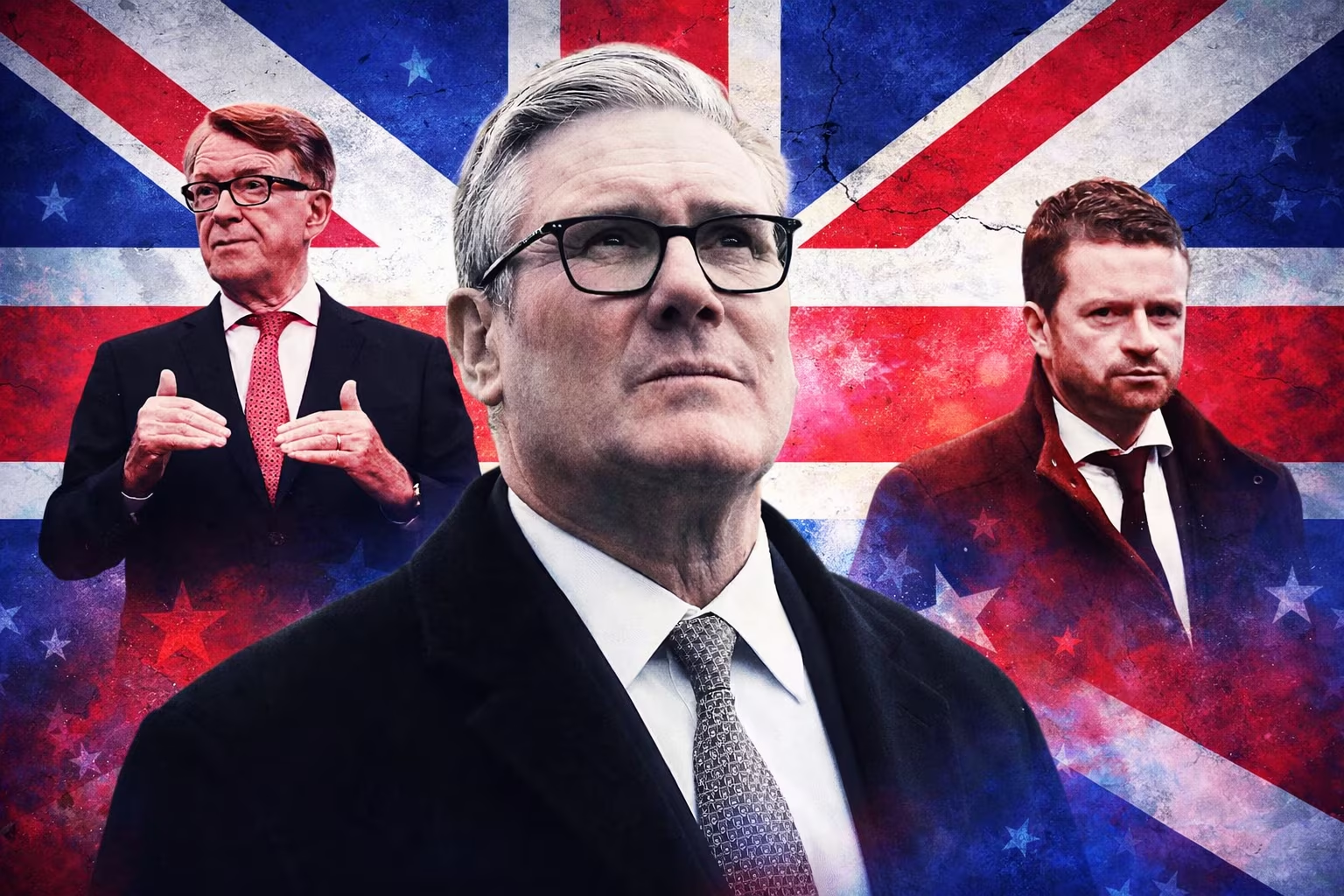
Keir Starmer is struggling to hold on as prime minister after the dramatic resignation on Sunday of his most trusted aide, Morgan McSweeney. Labour MPs and officials warn that his position remains critical.
McSweeney’s resignation statement, in which the Downing Street chief of staff took responsibility for the decision to appoint Lord Peter Mandelson as ambassador to Washington, triggered demands that Starmer himself accept comparable responsibility.
On Monday, February 9, the prime minister is expected to try to seize back the initiative. His allies say he has “instructed officials to move at pace to deliver change”. But the key aide who was meant to carry out those changes will no longer be at his side.
One person close to the prime minister said that McSweeney’s departure had left Starmer “acutely exposed”, adding: “Morgan is effectively saying he advised Keir to take a bad decision—and Keir took it.”
The fragility of Starmer’s position was underscored by an episode involving Pat McFadden, the work and pensions secretary, who was sent on Sunday to defend the prime minister on the BBC. One of his answers began with the words: “If the prime minister remains in office.”
Against this backdrop, borrowing costs for the UK rose on Monday. Yields on 10-year government bonds climbed by 0.02 percentage points—to 4.54 percent—while the pound fell 0.4 percent against the euro, as investors braced for another week of political turbulence.
McSweeney’s departure was the culmination of 48 tense hours of discussions on Downing Street. Internally, the question was whether the chief of staff should step down immediately or wait until the by-elections in Gorton and Denton on February 26, which Labour risks losing.
People close to Starmer said they feared further damage from the possible publication of documents linked to Mandelson’s work last year as an American emissary. McSweeney was widely seen as his protégé.
A sign of growing bitterness inside government came in a remark from one of McSweeney’s allies: “Without Morgan, there would be no Labour government. The way he has been made the fall guy has left a sour taste among those who worked with him.”
McSweeney’s resignation satisfied many Labour MPs who viewed him as a leading figure in the party’s internal factional battles—he was associated with the ruling party’s right wing. For Starmer, however, it means the loss of an ally who had been at the heart of his team for six years.
“They cut off a gangrenous limb, but Morgan was his right hand,” said one source close to Downing Street.
Vidhya Alakeson and Jill Cuthbertson, McSweeney’s deputies, were appointed acting chiefs of staff on Sunday. Selecting a permanent head of the team capable of shaking a lethargic government agenda into motion has become an urgent task for Starmer.
One minister remarked: “Morgan makes decisions and gets things done.” A usually loyal Labour MP said McSweeney’s resignation likely marks “the final stage for Starmer”.
A Labour frontbencher said that Downing Street is planning a “four-day sprint before recess”, hoping MPs will calm down during the parliamentary half-term break that begins on Thursday.
Despite McSweeney’s departure, a question continues to circulate among his colleagues—who else was involved in the failed decision to hand Mandelson the prestigious post in Washington.
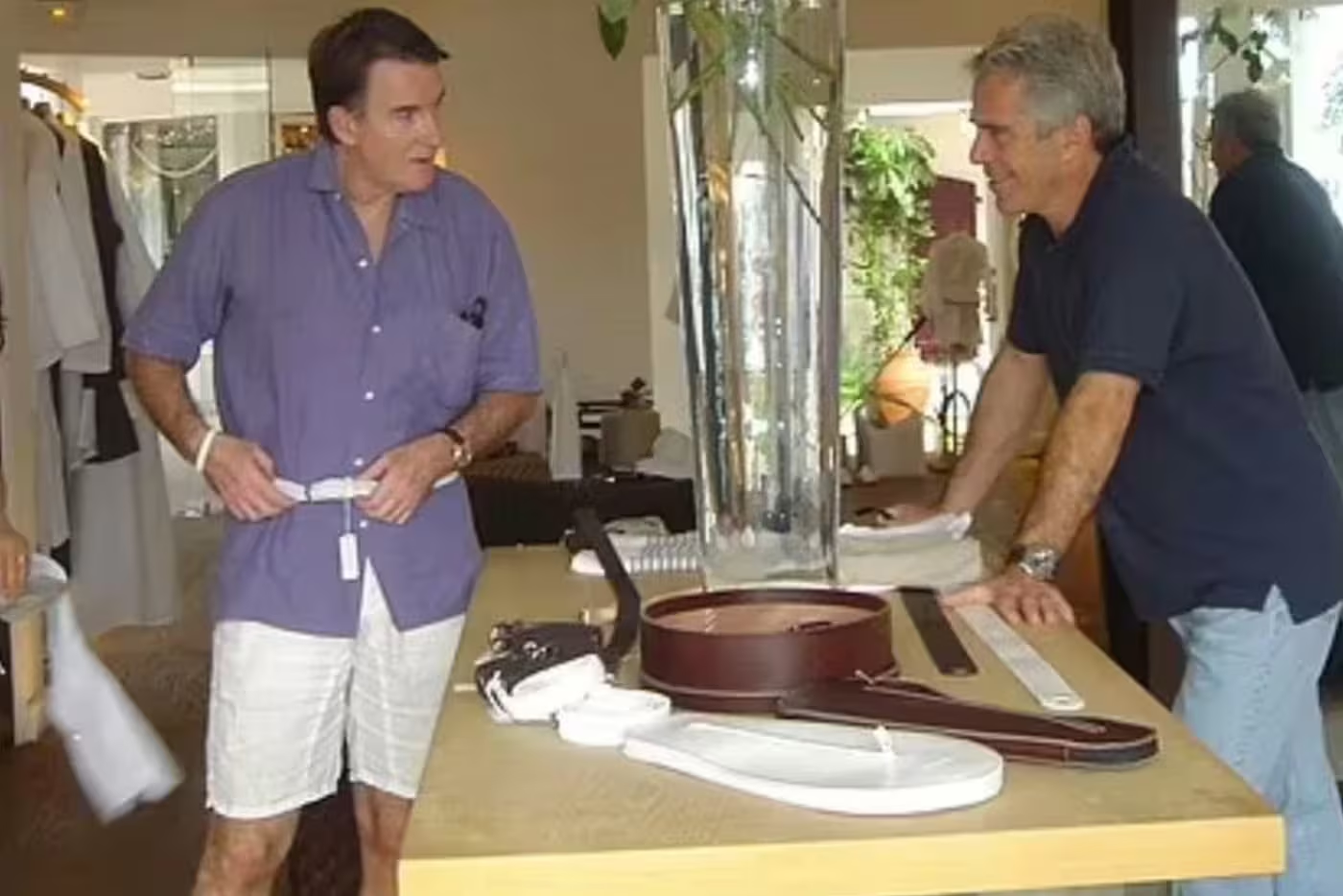
Lord Peter Mandelson was forced to step down in September after the publication of letters indicating that in 2008 he had expressed support for Jeffrey Epstein when the latter was facing charges of sexual offences.
The peer was dismissed in September last year after US government-released emails showed that in 2008 he had offered support to Jeffrey Epstein—shortly before the financier pleaded guilty to charges of soliciting minors for prostitution.
One Labour Party official said: “Morgan did not make the appointment decision, so while he accepted responsibility as a matter of honour, he should not be the one answering for it.”
Labour MPs are also raising questions about the role of national security adviser Jonathan Powell—another veteran of the New Labour era—and whether he could have prevented the appointment. Powell’s allies insist that he voiced reservations about Mandelson’s candidacy.
David Lammy, Starmer’s deputy and former foreign secretary, has sought to distance himself from the scandal. People familiar with the matter told the Sunday Telegraph that he did not initially support the appointment.
That account, however, contradicts reports stating that Lammy ultimately came down in favour of the former cabinet secretary and was “privately rooting for Mandelson”. At the time, a Lammy spokesperson declined to comment, and his team did not challenge the substance of the report.
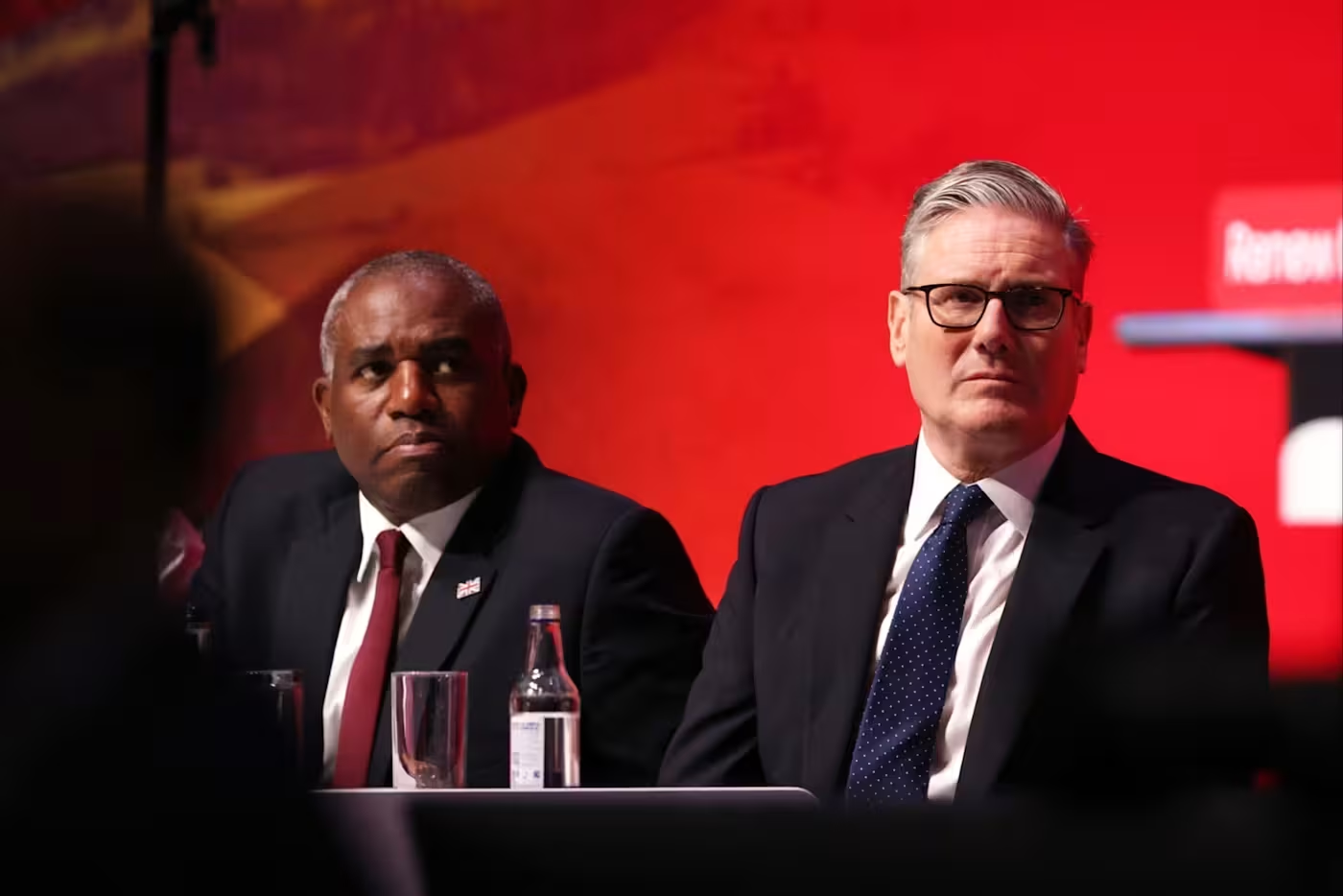
Former foreign secretary David Lammy sought to distance himself from the unfolding scandal.
A tranche of documents released by the US government last month showed that convicted paedophile Jeffrey Epstein transferred $75,000 to Peter Mandelson in 2003 and 2004, when he was a backbench MP.
Mandelson is also under investigation by London police. He stepped down from the House of Lords after the same materials revealed that, while serving as business secretary and effectively as Gordon Brown’s deputy prime minister, he had forwarded market-sensitive government information to Epstein.
The scandal is expected to intensify as early as this week, when parliament’s Intelligence and Security Committee is due to publish thousands of documents relating to Mandelson’s appointment and his correspondence with serving ministers and officials.
One potential turning point will be the by-elections in Gorton and Denton in Greater Manchester later this month. Labour is expected to perform poorly in a constituency it previously controlled.
Labour veteran Graham Stringer said on Sunday: “After the local elections [May 7]—and everything suggests we will suffer a heavy defeat—we will have to think about how to put things right, and in my view that means a new leader.”
Several MPs reported a marked irritation among voters over the Mandelson scandal. “There is a palpable sense on the streets of hostility from the electorate,” said one left-wing Labour MP.
He said that most party MPs wanted McSweeney to resign, while only a “significant minority” were seeking Starmer’s removal. “At the same time, we believe that without McSweeney it will be extremely difficult for Starmer to hold on,” he added.
Dozens of MPs are searching for a figure who could lead a challenge to the incumbent leader. So far, they have failed to agree on a unified strategy for ousting him, while serious doubts persist over the viability of potential candidates.
Health secretary Wes Streeting had close ties to Mandelson himself and is widely seen as a politician equally tainted by the scandal.
Former deputy prime minister Angela Rayner, popular with the party’s left wing and among those in the House of Commons who demanded the release of documents related to Mandelson, has yet to resolve her own tax issues following a scandal over unpaid stamp duty on a property purchase.
Other names are also in circulation, including defence secretary John Healey and an unexpected outsider contender—Al Carns.
Carns had previously been tipped as a possible future chief of the defence staff had he remained in the army. He has drawn support on the strength of a robust career untainted by Labour’s internal feuds.
One senior party official said that “the mood very much resembles the final days of the premierships of Boris Johnson and Liz Truss”.
“This week looks highly unpredictable,” he added. “If a cabinet minister goes, everything could start to unravel for Starmer.”