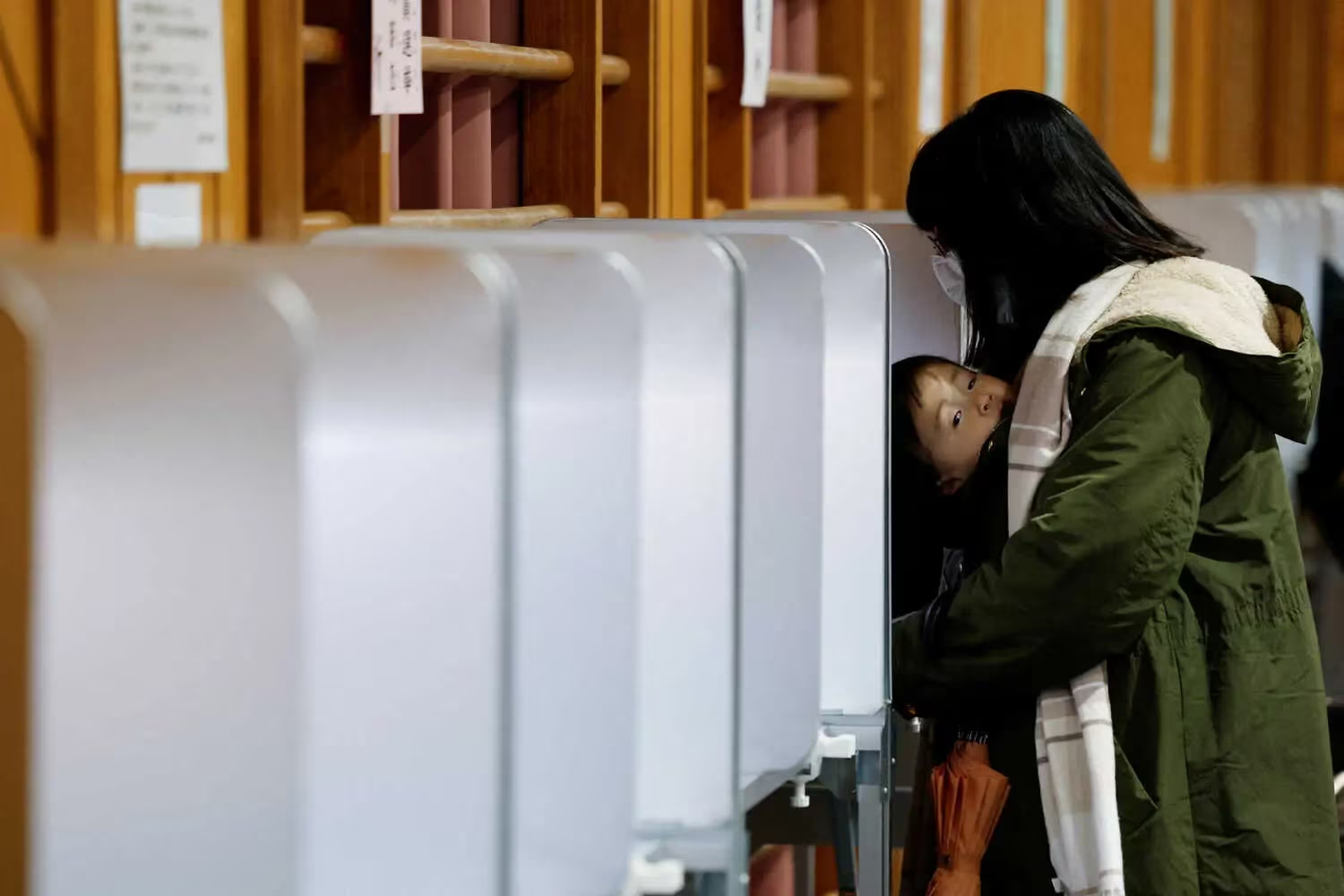
On February 8, Japan is holding an early election to the House of Representatives—the lower chamber of the national parliament. The report comes from Kyodo.
Nearly 1,300 candidates are competing for 465 seats. Of these, 289 will be filled in single-member constituencies, while another 176 will be allocated through proportional representation, based on the number of votes parties receive.
As of 11:00 AM local time, turnout stood at 7.17%—down 3.26 percentage points from the same time in the 2024 election. BBC News suggests that heavy snowfall in parts of the country may have dampened voter participation. These elections are Japan’s first in 36 years to be held in winter.
Prime Minister Sanae Takaichi decided to dissolve parliament and call an early vote on January 19—three months after taking office. At the time, the conservative Liberal Democratic Party she leads held only the slimmest majority in the lower house, relying on the backing of several independent lawmakers, Kyodo News notes. At the same time, Komeito, a centre-right party, left the governing coalition.
Takaichi is framing the snap election as a bid to secure a direct mandate of confidence from voters. According to pre-election polling, the LDP’s coalition with the Japan Innovation Party could win around 300 seats in parliament. Despite the LDP’s weak ratings, the BBC notes that its standing is bolstered by the prime minister’s personal popularity. Opposition forces, even accounting for the formation of a new centrist alliance and rising support for far-right parties, remain fragmented and are not widely seen as a credible alternative, the Associated Press writes. Takaichi has previously said she would step down if her party loses.
Takaichi’s platform includes expanding Japan’s military capabilities, revising the pacifist constitution, and continuing measures to stimulate the economy. Polling suggests she is particularly popular among voters aged 18 to 30. On the eve of the vote, US President Donald Trump publicly endorsed her, calling her a “strong, influential, and wise leader”.
“A positive atmosphere has formed around her—because she became Japan’s first female prime minister, thanks to her diplomatic successes, and because her approval rating has been holding at around 60%—and sometimes 70%,” says Jeffrey Hall, a lecturer at Kanda University of International Studies. In his view, that image is actively amplified by “a large conservative bloc of online users and influencers that provides a solid base of support for Takaichi,” while videos and posts portraying the prime minister in a favourable light go viral almost daily.