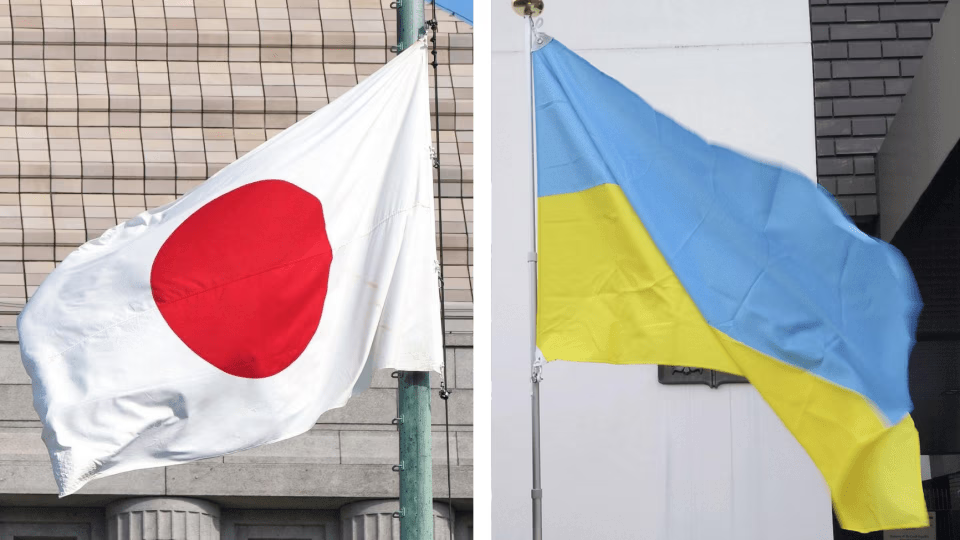
Japan has rejected the European Union’s proposal to join its initiative to use frozen Russian state assets to finance Ukraine—thereby, as reports Politico, undermining Brussels’ hopes of securing broader international backing. During a meeting of G7 finance ministers on Monday, Tokyo effectively declined to replicate the EU’s mechanism, which channels to Kyiv the interest earned on Russian sovereign funds immobilized at Belgium’s Euroclear. According to European diplomats, Japan indicated it is unable to mobilize roughly $30 billion in frozen Russian assets held domestically to extend a loan to Ukraine.
The European Commission is seeking to persuade EU governments to endorse a mechanism for deploying up to €210 billion in frozen assets ahead of the December 18 summit. Belgium, however, is resisting, fearing that if Moscow attempts to claw back the funds, it could be left solely liable for the full repayment. Brussels insists that other G7 countries—beyond the EU—should also issue loans to Ukraine backed by Russian assets located on their territory. Belgian Prime Minister Bart De Wever argues that broader participation by partners would reduce the risk of Russia retaliating exclusively against Belgium. As Politico notes, the United States and Japan have refused to join the European model, effectively leaving the EU to confront the challenge of Ukraine’s long-term financing on its own.
The U.S. delegation told the meeting that once the final tranches are delivered under the 2024 G7 loan package approved by the Biden administration, Washington will scale back its support for Kyiv, a European diplomat said. In 2025, as the war grinds on, Ukraine faces a €71.7 billion budget deficit and will be forced to cut public spending as early as April unless new funding arrives.
The ECB Rejects a Request to Guarantee a Reparations Loan for Ukraine
At the Same Time, EU Countries Dismiss Belgium’s Demand for ‘Blank Check Guarantees’ From Frozen Russian Assets
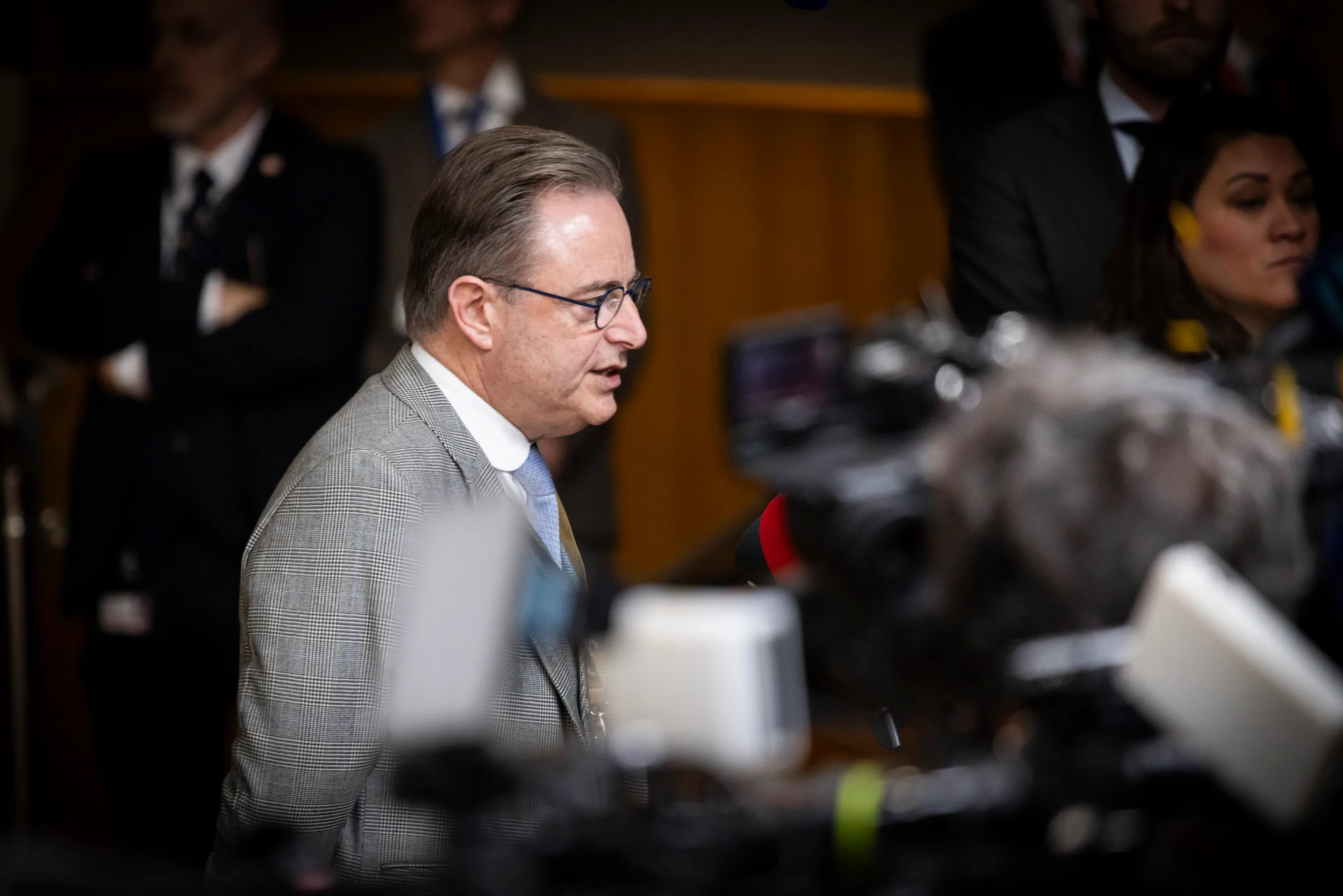
“This Will Undermine Peace Efforts”
Belgium Steps Up Its Opposition to Granting Ukraine a ‘Reparations Credit’ Funded by Frozen Russian Assets
In a joint statement, G7 finance ministers stressed that they would continue examining various options to sustain Ukraine’s funding, including the potential use of the full value of Russian sovereign assets frozen in their jurisdictions, “until Russia pays reparations.” They also noted that any steps must comply with their respective legal frameworks. According to a European diplomat, Japan’s finance minister Satsuki Katayama rejected the idea of using Russian assets, citing legal constraints. However, as Politico reports, several officials believe Tokyo’s stance is rooted in alignment with the United States: Japan does not want to diverge from its key ally. They say U.S. President Donald Trump views the frozen assets as leverage to push Vladimir Putin toward negotiations. Instead of transferring funds directly to Ukraine, Washington proposes partially returning the assets to Russia and using the remainder to finance American investments in Ukraine.
Nevertheless, European Commission President Ursula von der Leyen reiterated her support for channeling Russian assets to Ukraine during a meeting with President Volodymyr Zelenskyy on Monday. According to Politico, she described the EU’s proposed loan backed by future reparations as a complex yet fundamentally important mechanism that raises the cost of war for Russia. “The longer Putin wages war, spills blood, takes lives, and destroys Ukrainian infrastructure—the higher the costs will be for Russia,” she wrote following the talks, which were also attended by U.K. Prime Minister Keir Starmer, French President Emmanuel Macron, and German Chancellor Friedrich Merz. The United Kingdom and Canada have signaled they are prepared to transfer Russian state assets held on their territory to Ukraine if the European plan moves ahead. The issue is expected to be a central topic at Starmer’s meeting with De Wever on Friday.