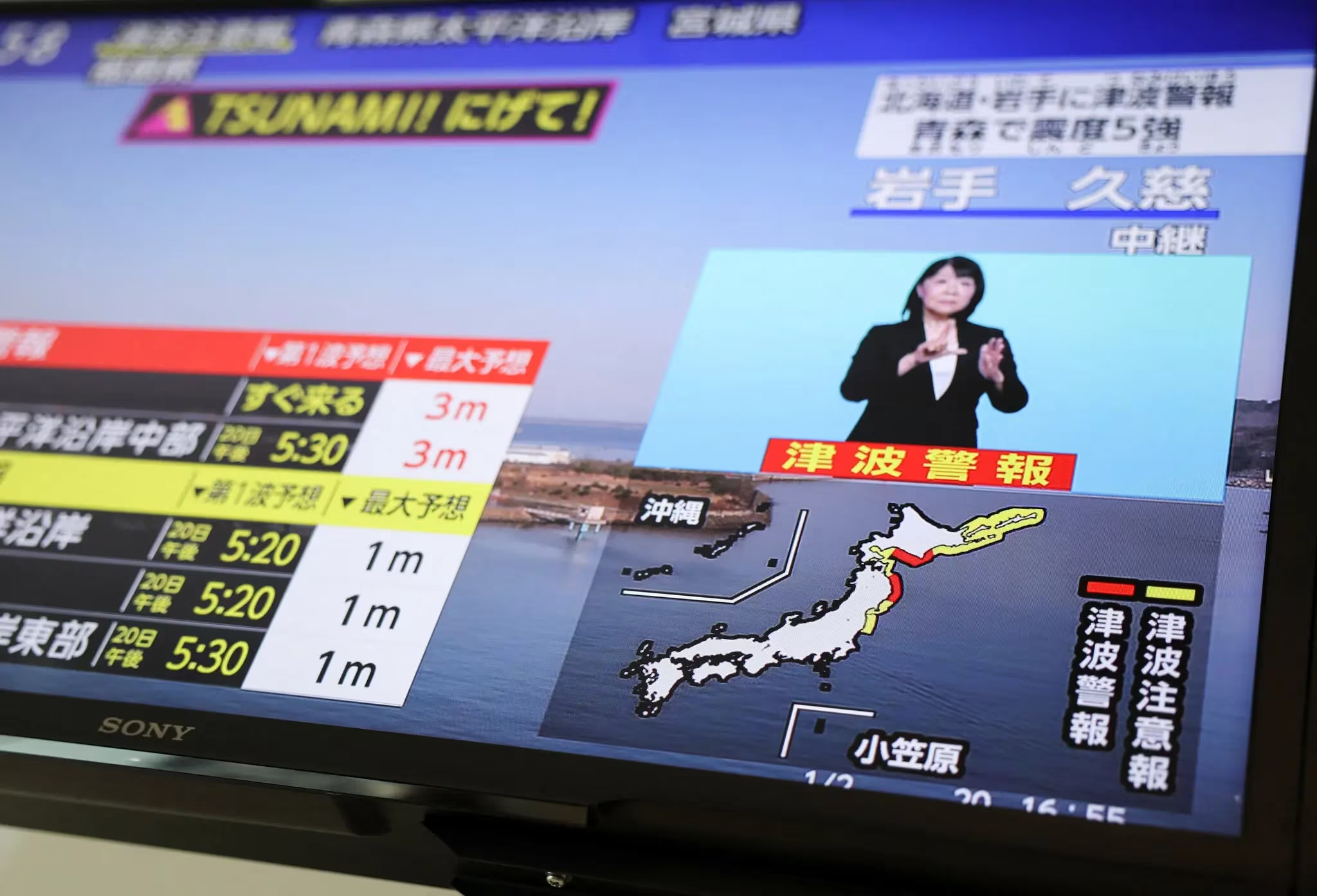
A powerful earthquake struck northeastern Japan on Monday afternoon, prompting authorities to issue a tsunami warning for coastal areas.
According to official sources, the magnitude-7.5 quake was recorded at 4:53 p.m. local time in waters off the country’s northeastern coast, and was felt even in Tokyo, several hundred miles from the epicenter. Warnings of waves up to three meters high—about 10 feet—were issued for parts of Iwate and Aomori prefectures, as well as the northern island of Hokkaido. At the time of the initial reports, there were no immediate accounts of damage or casualties.
Prime Minister Sanae Takaichi wrote in a post on X that residents in areas covered by the tsunami warning should “immediately move to higher ground or to evacuation buildings and other elevated, safer locations.” She said the government had activated an emergency response center—to monitor possible damage, coordinate urgent measures and keep the public informed.
Coastal municipalities in Iwate, Aomori and Hokkaido issued evacuation orders affecting thousands of people. In the port of Hachinohe in Aomori prefecture, the first tsunami waves of about one foot were recorded at 5:44 p.m.
Operators of several nuclear power plants in the region said no irregularities in plant operations had been detected after the earthquake. Rail service between Tokyo and Aomori was suspended.
At 6:00 p.m., the Japan Meteorological Agency scheduled a press conference. The agency had initially estimated the magnitude at 7.4, but later revised it upward to 7.5.
In December, a magnitude-7.6 earthquake struck the same area—off the coast of Aomori prefecture. It did not cause major destruction, though several dozen people were injured.