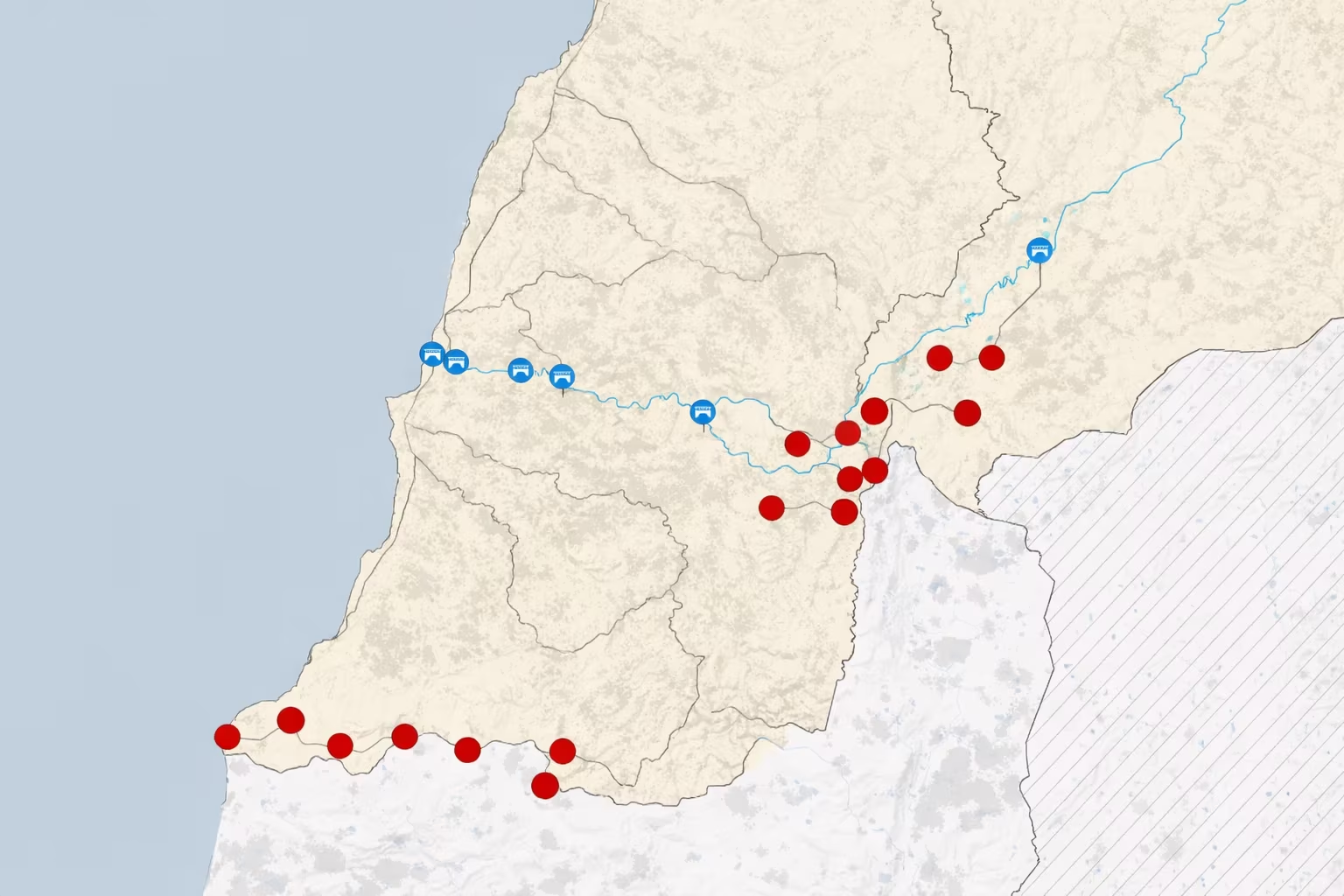
In recent days, Israeli authorities have been describing their plans in Lebanon with increasing clarity. Defense Minister Israel Katz said the Israeli military intends to retain control of the territory south of the Litani River and that “hundreds of thousands of residents of southern Lebanon, who were evacuated, will not return south of the Litani River until the security of northern residents is assured.”
He also reported strikes on bridges across the Litani which, according to Israel, had been used by Hezbollah. Reuters put it even more plainly: the plan is to take control of a strip of southern Lebanon up to the Litani and establish a “security zone” there, covering roughly one-tenth of the country’s territory.
Finance Minister Bezalel Smotrich went further, saying the current campaign should end with “fundamental changes” and that “the Litani River should become our new border with Lebanon.” Taken together, this no longer resembles a limited operation along the border: Israeli officials are speaking about prolonged military control over part of a neighboring state’s territory.
It is against this backdrop that The New York Times’ wording stands out. In both its headline and a post on X, the newspaper framed the development as Israel “planning to control large parts of southern Lebanon”—that is, describing it through the lens of control rather than invasion. One of the accounts underpinning the report also noted that it remains unclear whether Israel would maintain its hold through a dense ground presence or seek to enforce dominance over parts of the area from the air.
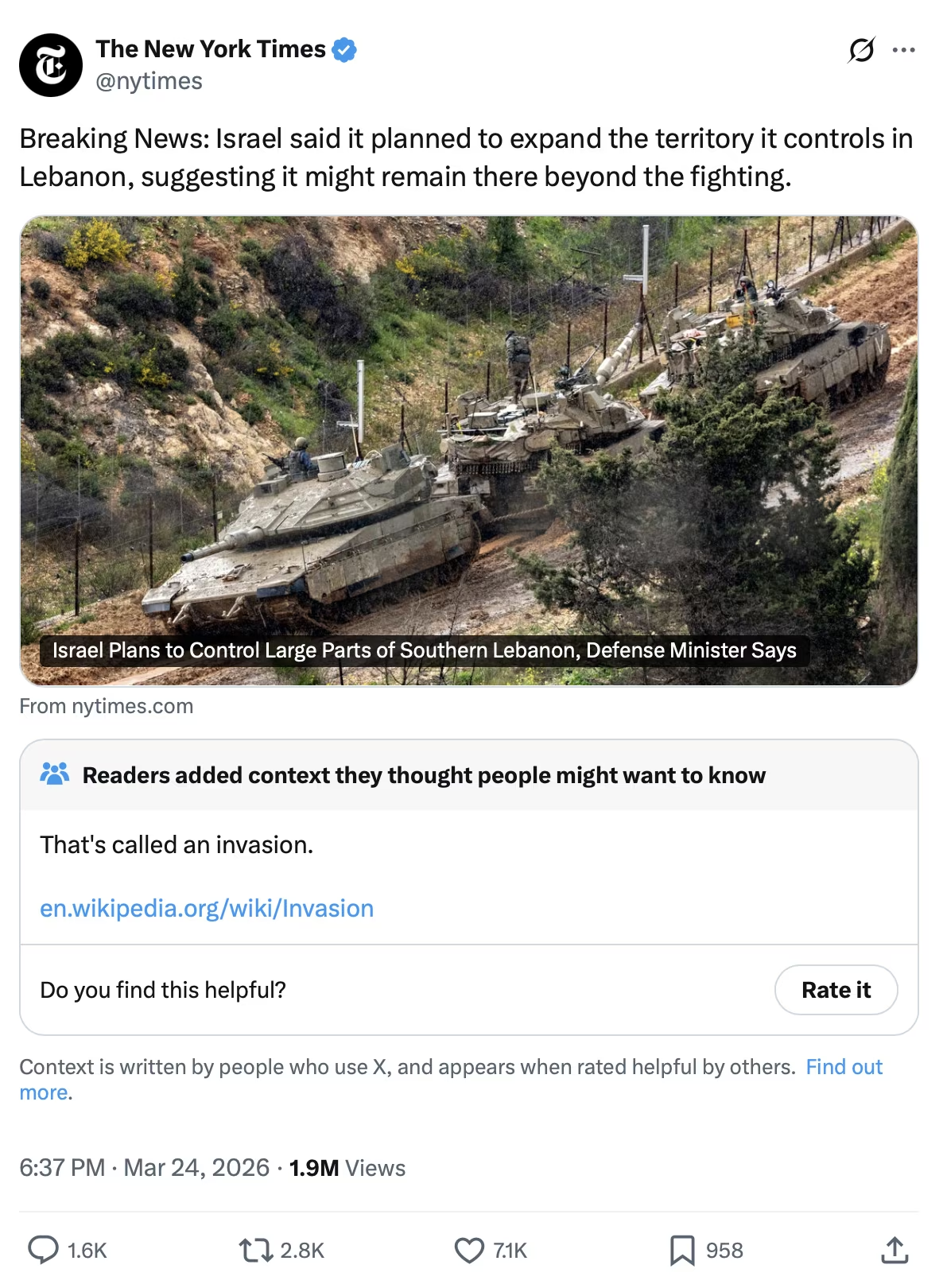
A screenshot of a New York Times publication in which Israel’s planned actions are described as an “expansion of the zone of control” in southern Lebanon. In discussions, users point out that, in substance, this amounts to a military invasion and occupation of territory.
But this distinction concerns the method of conducting the operation, not its substance. If a state declares that it will impose its will by force on the territory of another country, destroy infrastructure there, and prevent residents from returning, then this is not merely an “expansion of a zone of control.” In substance, it is an invasion—regardless of whether it is carried out through infantry and armored forces on the ground or through a combination of airstrikes, firepower dominance, and control over key sites.
It is precisely this gap between meaning and language that users on X seized upon. Under The New York Times publication, a Community Notes entry appeared in which users directly challenged the editorial wording. The note stated: “This is called an invasion,” citing the definition of invasion. The dispute, therefore, is not about details but about how the events themselves are named: Israeli authorities speak of seizing and holding territory in Lebanon, while The New York Times frames it as an expansion of a zone of control. Platform users have publicly pointed to this discrepancy.
From the standpoint of international law, the basic framework here is relatively clear. Article 2(4) of the UN Charter prohibits the threat or use of force against the territorial integrity or political independence of another state. The Rome Statute of the International Criminal Court classifies as an act of aggression, among other things, the invasion of one state’s armed forces into the territory of another and military occupation, even if it is temporary. The International Committee of the Red Cross defines occupation as effective control over foreign territory exercised without consent and without sovereign title. This means that crossing a border and imposing military authority on another country constitutes an invasion; if such control is consolidated and can be exercised in a sustained manner, the situation moves into the realm of occupation.
In this case, therefore, the issue is not which term sounds more cautious, but what the facts themselves describe. If Israel intends to retain control over part of southern Lebanon up to the Litani, prevent the return of local residents, destroy infrastructure, and impose a new order by force, this in substance constitutes an invasion. If such an arrangement is consolidated and maintained, international humanitarian law would classify it as an occupation. The New York Times’ formulation of “controlling large parts of southern Lebanon” softens the nature of the action, whereas statements by Israeli ministers and legal definitions point to a more direct characterization of what is taking place.