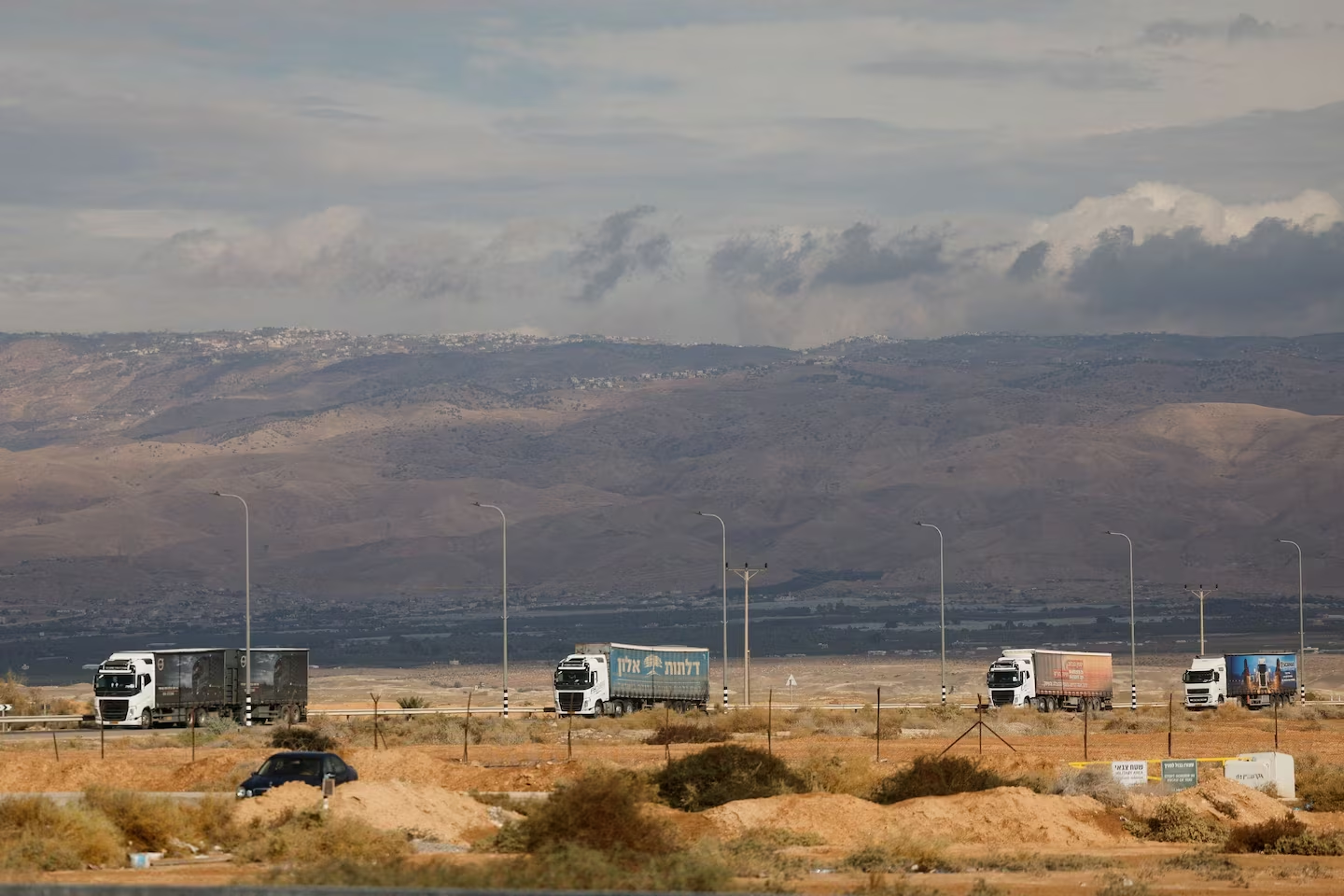
Trucks carrying goods from Jordan entered the West Bank on Wednesday, December 10, for the first time in several months after Israel announced the reopening of a key land crossing with its neighbor, allowing both humanitarian shipments and other cargo bound for Gaza. It remained unclear whether the initial vehicles carried relief supplies or commercial goods, but a spokesperson for COGAT, the Defense Ministry unit overseeing aid flows into Gaza, confirmed that the Allenby crossing is once again operating for humanitarian deliveries.
The resumption of Allenby as an aid corridor comes amid mounting pressure on Israel to move to the second phase of the U.S.-backed ceasefire in Gaza. The U.N. and humanitarian organizations warn that supplies entering the enclave remain entirely insufficient to meet the needs of a largely displaced Palestinian population, much of which is living in improvised shelters or tents. Under the ceasefire agreement between Israel and Hamas, Israeli authorities are required to allow at least 600 trucks of humanitarian aid into Gaza each day. Yet U.N. officials and other groups say deliveries continue to face delays and denials, customs hurdles, and a limited number of routes inside the territory.
The border was closed in September after a Jordanian truck driver killed two Israeli soldiers at the crossing. An Israeli security official, speaking on condition of anonymity because they were not authorized to talk to the press, said drivers from Jordan will now undergo stricter screening and that a separate security unit has been deployed at the terminal.
The reopening coincided with a visit to Israel and Jordan by U.S. Ambassador to the U.N. Mike Waltz, who met with Prime Minister Benjamin Netanyahu on Monday, December 8. In a statement, the U.S. Mission to the U.N. said Waltz “welcomed Israel’s cooperation in expanding access points,” including Allenby. On Sunday, he also met with Jordan’s King Abdullah.
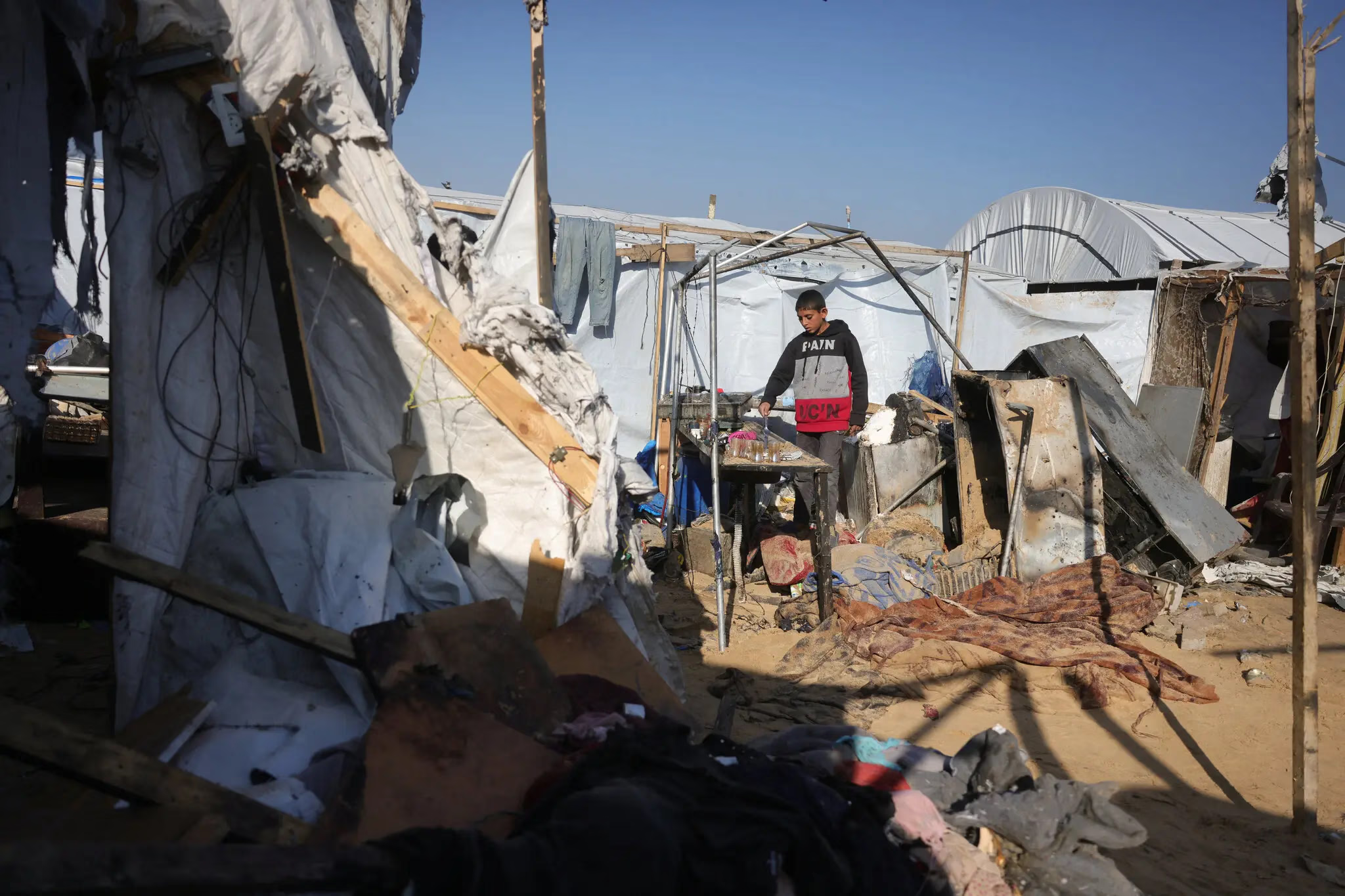
Israel Strikes Gaza After Hamas Attack Reported in Rafah
The New Episode of Violence Once Again Tests the Two-Month Ceasefire
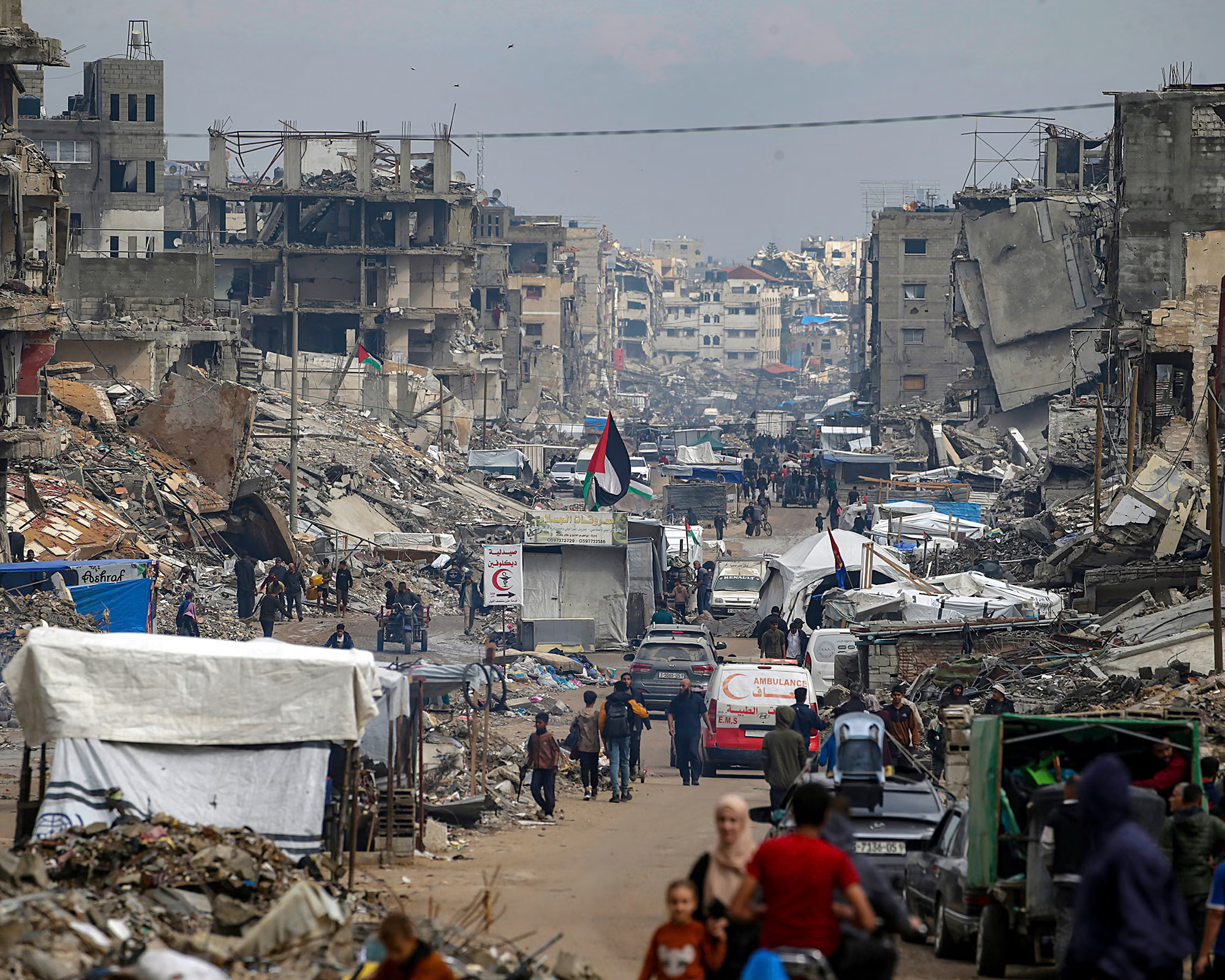
UNRWA Accuses Israel of Violating International Law Over Its Blockade of Humanitarian Aid to Gaza
The Agency’s Deputy Chief, Nathalie Boucly, Warns That Hunger and Winter Are Pushing Residents of the Strip to the Edge of Survival
In recent days, both Israeli and Hamas representatives have stressed that talks on the second phase of President Donald Trump’s ceasefire plan cannot proceed until the first phase is fully implemented. Each side continues to accuse the other of breaching the agreement. Israel maintains that Hamas is delaying the return of the bodies of hostages, one of whom remains in Gaza. Hamas, for its part, points to the continued closure of crossings for medical evacuations and humanitarian deliveries, as well as the daily strikes carried out by Israeli forces inside the territory.
Despite the mutual accusations, pressure from the United States and other mediators to advance to the second phase is intensifying. On Sunday, Netanyahu said the transition could happen “quite soon” and announced a meeting with Trump on December 29. A Hamas representative also told the Associated Press that the movement is prepared to “freeze or store” its weapons as part of a ceasefire arrangement.
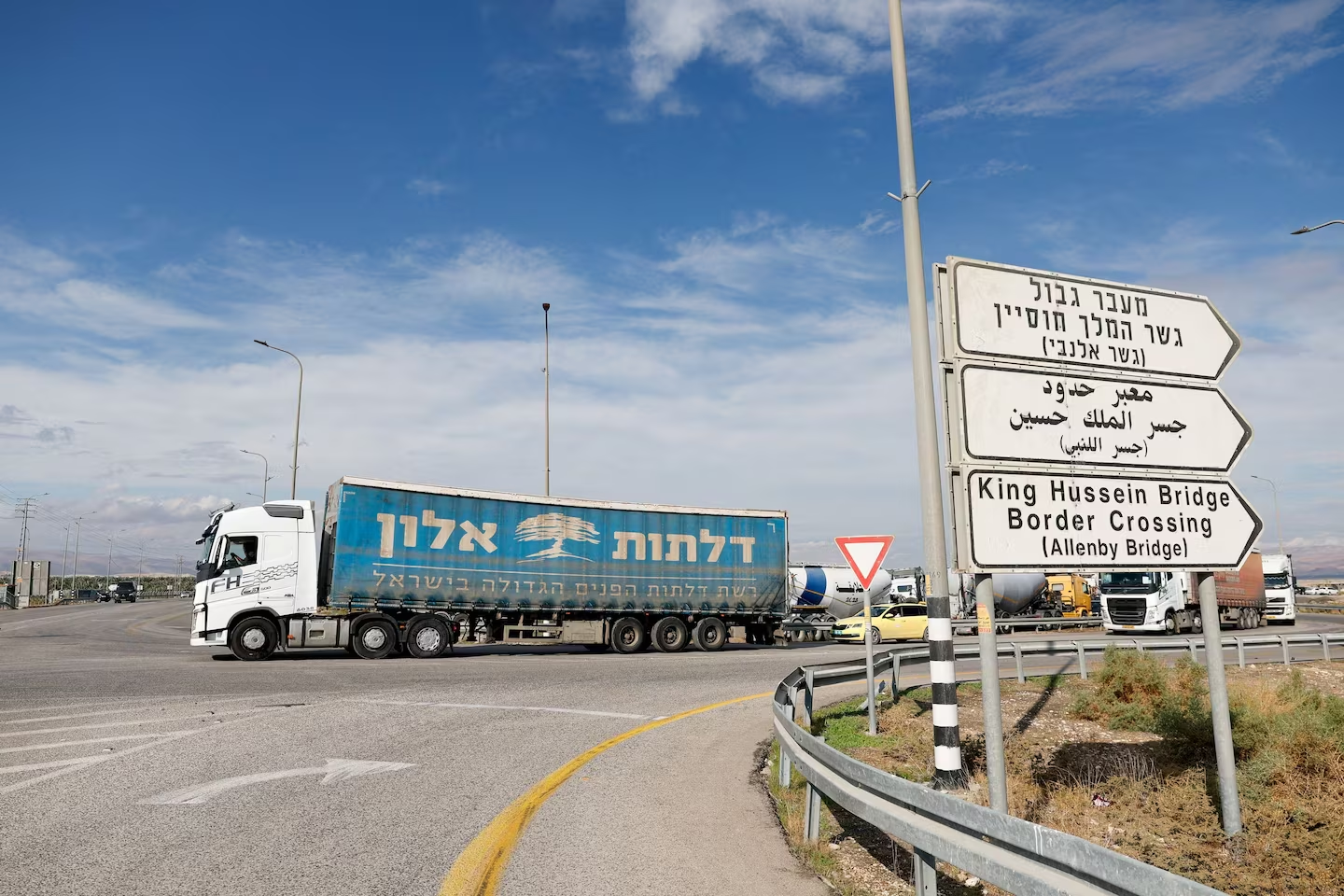
Trucks carrying goods from Jordan move near the Allenby crossing after its reopening, in the Israeli-occupied West Bank. December 10, 2025.
The second phase—which in theory envisions Hamas’s disarmament, the withdrawal of Israeli forces from the territory, and the deployment of an international security presence—is likely to prove even more difficult than the first. Any delay in reaching it risks entrenching a status quo in which Israel continues to hold half of the enclave.
One step remains before the first phase is fully completed—the return of the remains of Ran Gvili, a 24-year-old Israeli police officer killed in Hamas’s October 7, 2023 attack. “Without Gvili, Israel will not begin talks on phase two,” an Israeli official said, speaking on condition of anonymity because they were not authorized to talk to the press.
According to U.N. agencies, the volume of humanitarian aid permitted into Gaza has increased since the ceasefire took effect, yet it remains far below what is required for a population struggling to recover from severe hunger, malnutrition, and disease outbreaks amid a devastated health-care system. Israel has allowed commercial operators and aid groups working outside the U.N. framework to scale up deliveries more rapidly, while major international organizations with long-standing operations in Gaza face far tighter restrictions. In particular, Israel continues to bar UNRWA, the U.N. agency for Palestinian refugees, from delivering aid despite its extensive infrastructure and decades of presence in the enclave.
An “extremely large number” of children continue to suffer from acute malnutrition, said UNICEF spokesperson Tess Ingram, as quoted by Reuters. She also stressed that reopening the Rafah crossing in southern Gaza—which connects the enclave to Egypt—would help reduce the number of children facing starvation. “We really need all forms of assistance to enter Gaza, especially highly nutritious food through commercial channels,” Ingram said. Last week, Israel announced plans to reopen the crossing in the coming days, but only for the departure of Palestinians.
Millions of shelter items remain stuck in Jordan, Egypt, and Israel awaiting clearance for entry, according to a consortium of humanitarian organizations responsible for supplying materials for temporary housing. This week, a powerful winter storm swept into the region, posing a threat to 850 000 people living in 761 sites vulnerable to flooding, according to the U.N. Office for the Coordination of Humanitarian Affairs (OCHA). On Wednesday, reports emerged of flooding across large parts of Gaza, particularly in low-lying areas.
“The entire emergency system is unable to assist displaced people because of heavy rain and flooding,” said Gaza Civil Defense spokesperson Mahmoud Basal. “In some shelters, water levels have risen by more than a meter.” Storm Byron has already hit Greece and Cyprus and is expected to bring up to eight inches of rainfall to Israel and Gaza. “Low-pressure zones pose a serious threat to displaced residents because the infrastructure is destroyed,” Gaza municipality spokesperson Hosni Mkhanna told Al Araby TV.