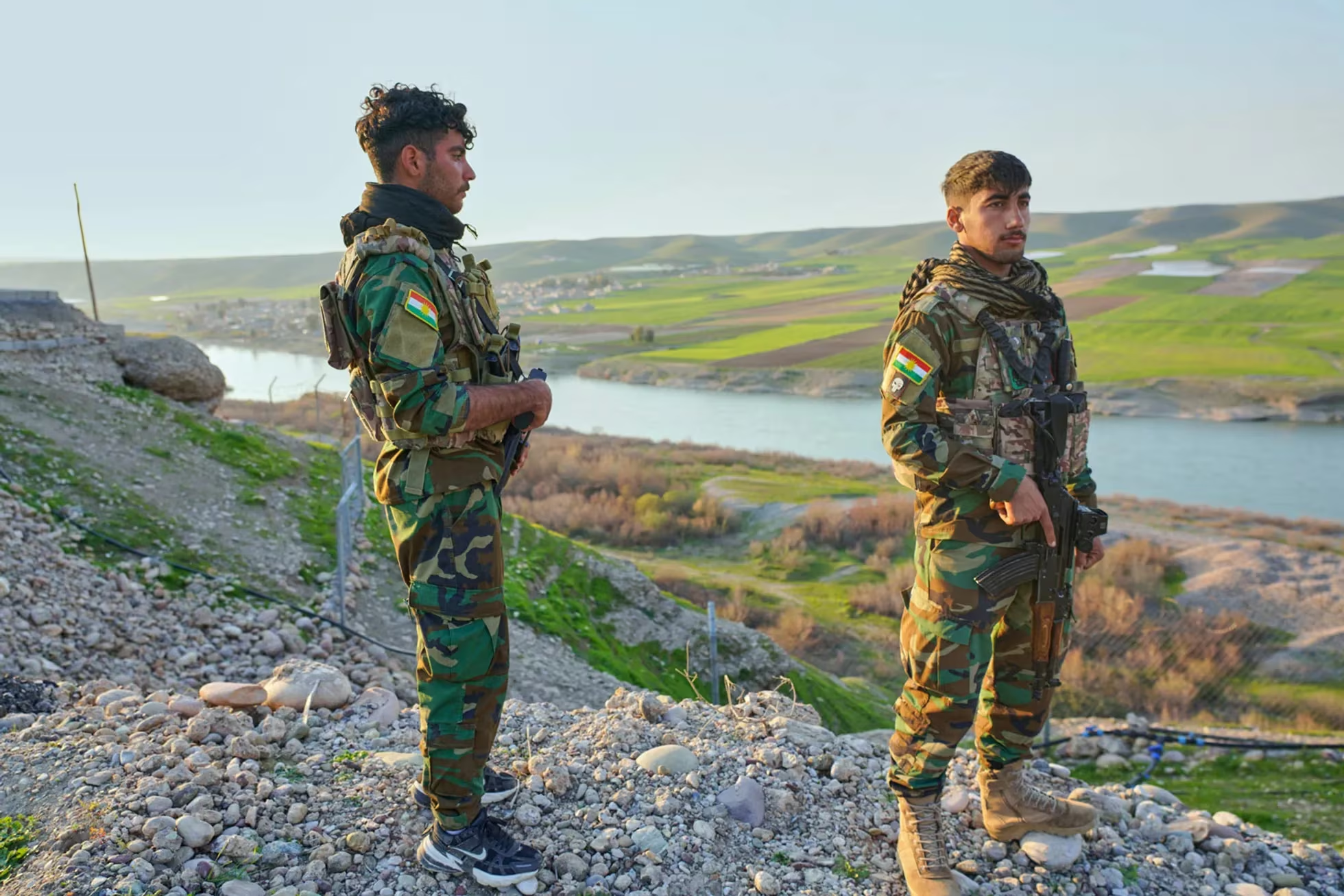
For nearly a year, Israel has maintained contacts with organizations representing Iran’s Kurdish population, seeking to encourage them to rise up against the Islamic Republic. Two sources in Kurdistan and one in Israel told Reuters. Earlier, U.S. media, citing sources within American intelligence agencies, reported that the CIA has been conducting similar outreach.
The contacts involve paramilitary formations of Iranian Kurds based outside the country—on the territory of the Kurdish autonomous region in Iraq. Among them are the Kurdistan Free Life Party, the Democratic Party of Iranian Kurdistan, and the Kurdistan Freedom Party. In February, on the eve of the U.S.-Israeli strikes on Iran, these groups announced the formation of an alliance. Estimates suggest they could mobilize between five and eight thousand fighters.
The presumed objective of any potential uprising would be the seizure of several border towns in Iran where Kurds make up the majority of the population—most notably Piranshahr and Oshnavieh in West Azerbaijan province. Israeli and U.S. aircraft have been striking positions of the Iranian army and the Islamic Revolutionary Guard Corps in the region, preparing the ground for a Kurdish advance. According to Reuters sources, local Kurdish groups are also providing the United States and Israel with intelligence on targets for airstrikes in border areas.
This is not viewed as an attempt by Kurdish forces to overthrow the Islamic Republic. Instead, their role is seen as a way to weaken Tehran’s control over peripheral regions and to draw away forces of the Islamic Revolutionary Guard Corps. The United States and Israel, according to the sources, have promised the Kurds air support, while the Kurdish formations themselves are seeking deliveries of small arms, drones, and air-defense systems.
U.S. President Donald Trump has publicly called on Iran’s Kurds to rise up and has held phone conversations with several Kurdish leaders—from both Iran and Iraq. The leadership of Iraqi Kurdistan, however, says it has no intention of becoming involved in the war between the United States, Israel, and Iran. Nevertheless, Iran has carried out strikes on the territory of Iraqi Kurdistan—where a U.S. military base is located.
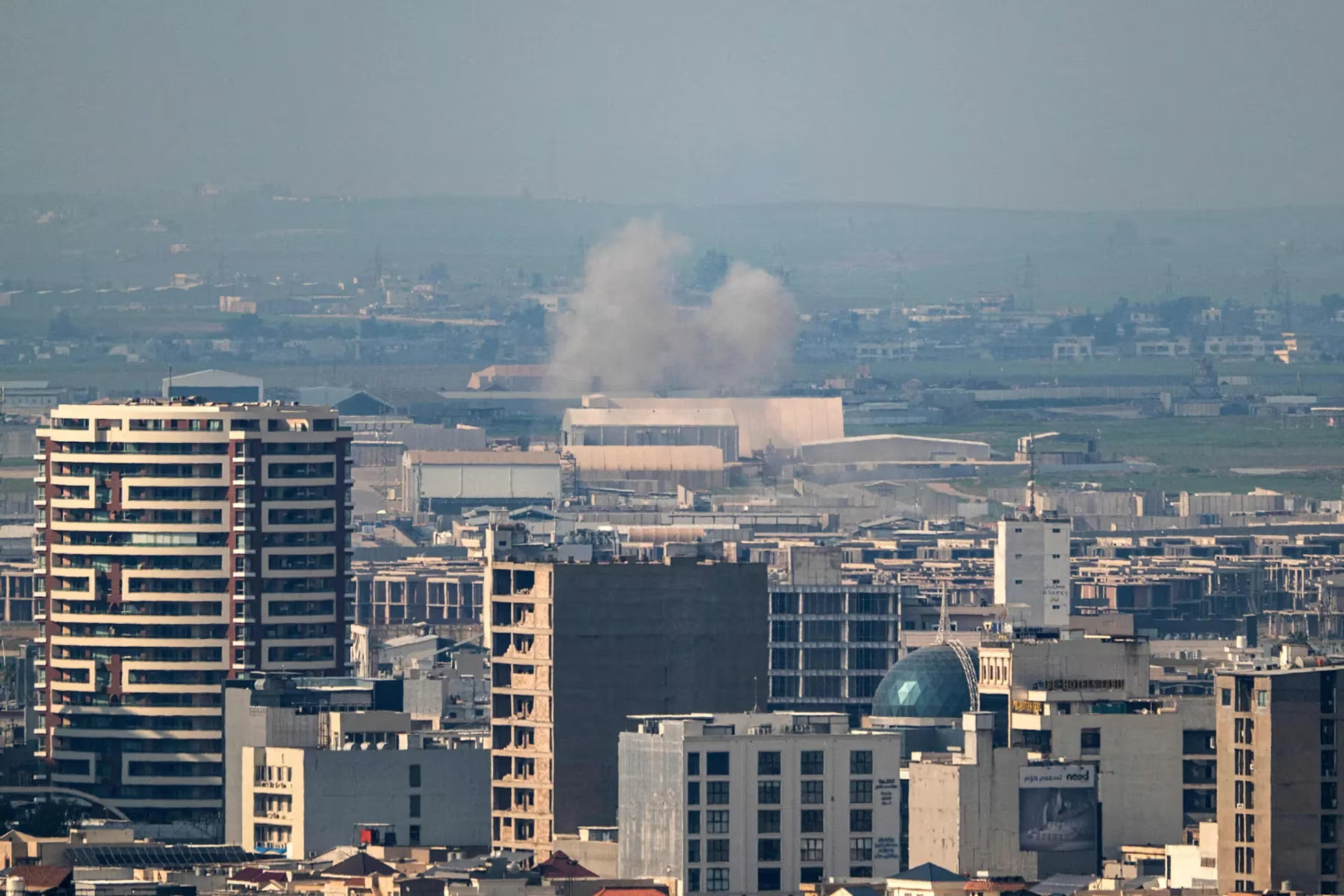
Iranian strike on Erbil Airport.
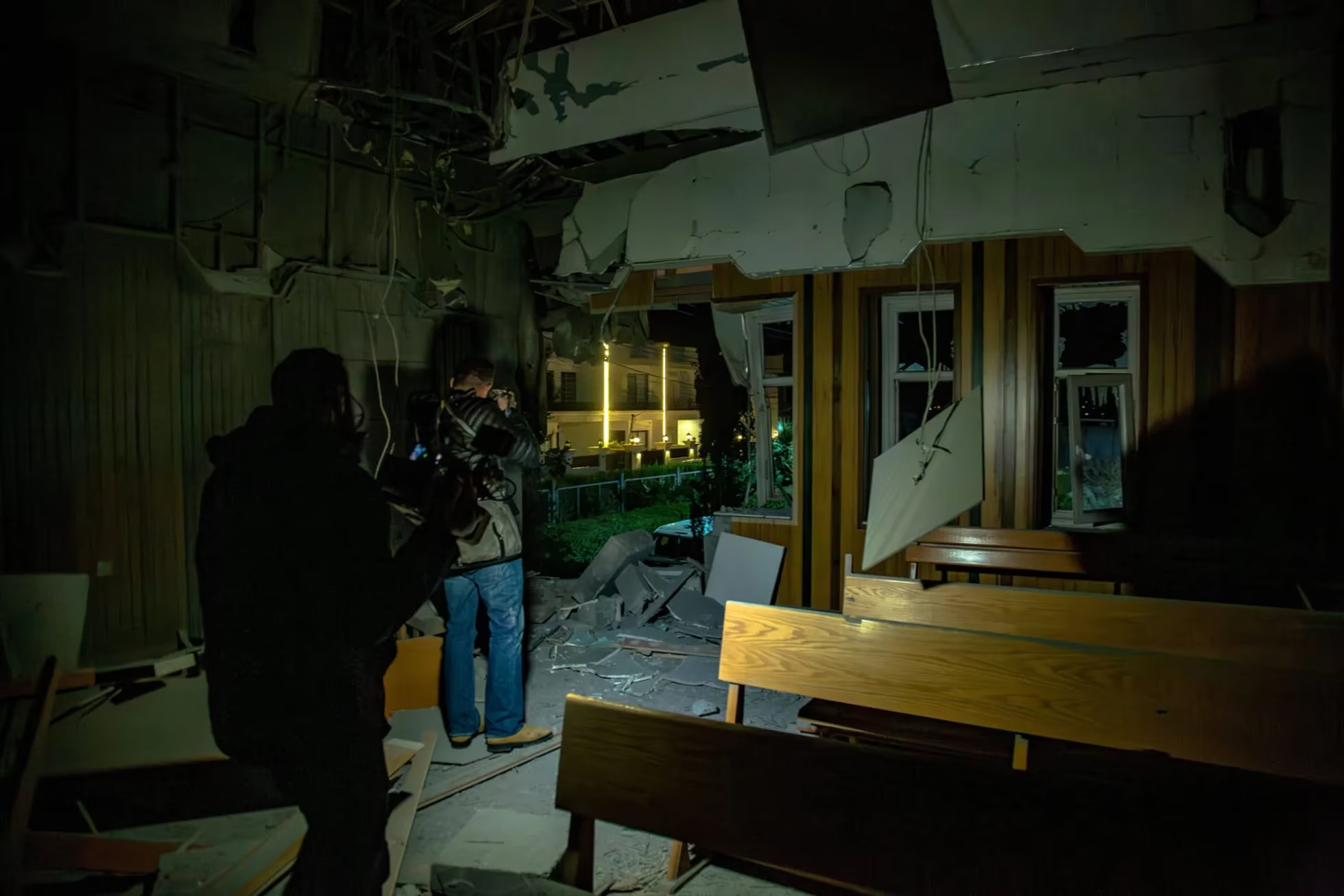
Damage to a residential complex in Erbil in Iraqi Kurdistan after an Iranian missile strike.
Kurdistan—the region traditionally inhabited by Kurds—covers mainly mountainous territories divided among Turkey, Syria, Iraq, and Iran. In each of these countries, Kurdish separatism remains one of the central political challenges. The only officially recognized Kurdish autonomy exists in Iraq. It enjoys considerable independence from the central government in Baghdad and maintains a complex relationship with it—combining elements of cooperation and conflict.
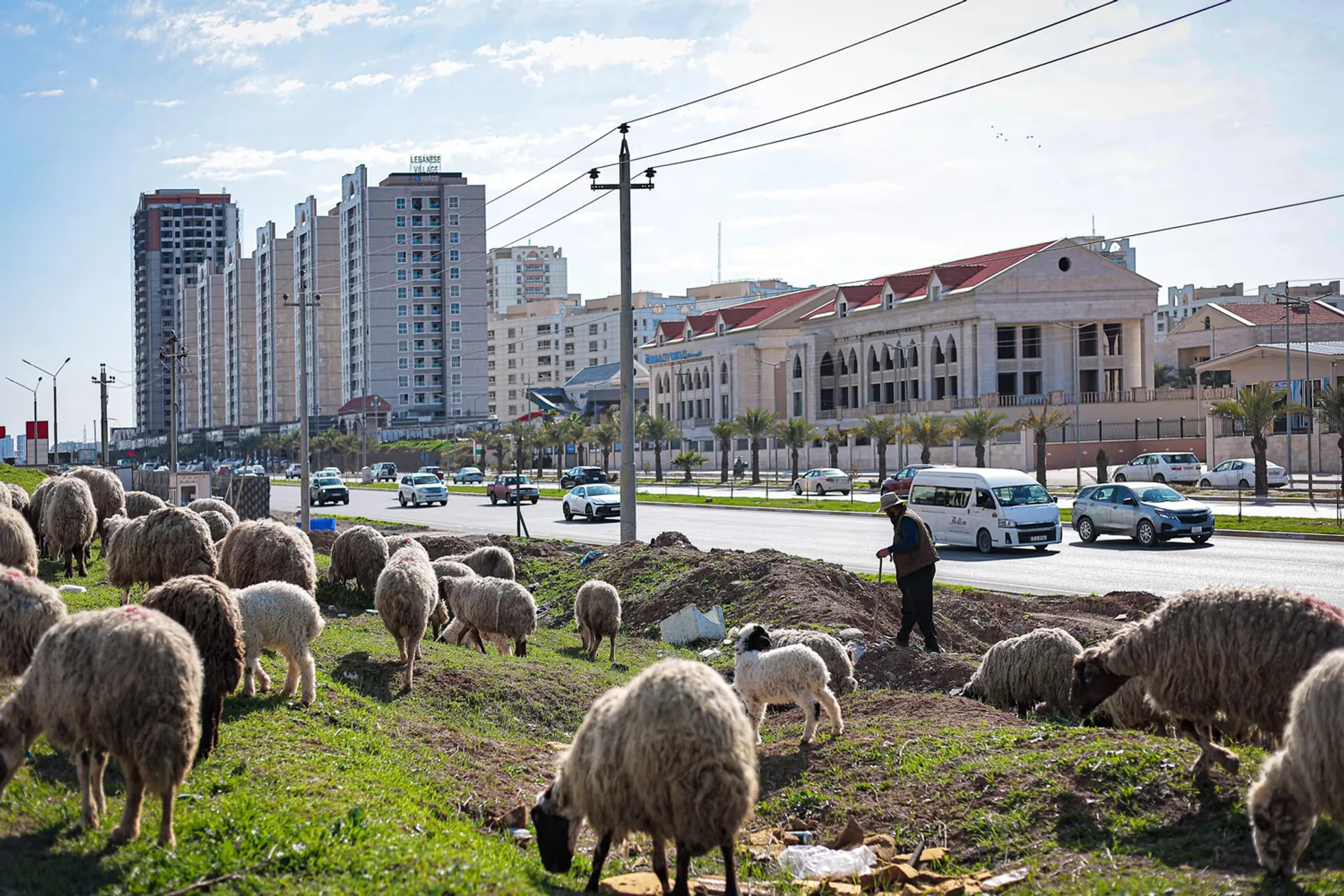
Erbil—the capital of Iraqi Kurdistan.
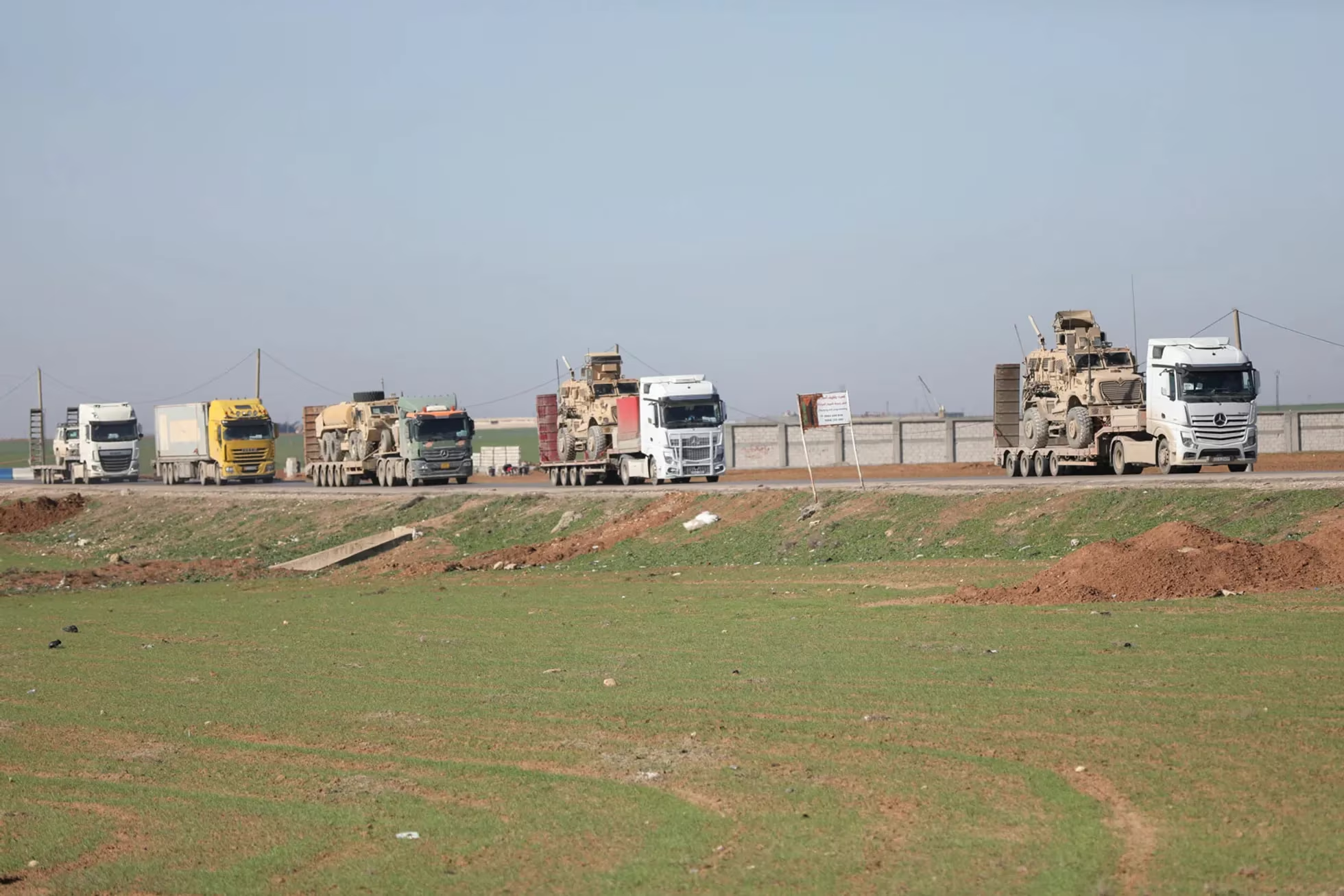
In February 2026, U.S. troops withdrew from their base in Qamishli in Syrian Kurdistan. Equipment from the base is being transferred to a facility in Iraqi Kurdistan.
Until recently, a de facto Kurdish autonomy also existed in Syria—the region known as Rojava. In January, the regime of Ahmad al-Sharaa dismantled it by force after receiving a “green light” from the administration of Donald Trump. The story of Rojava has left many Iranian Kurds skeptical about promises of support from the United States and Israel. Syrian Kurds, too, received such backing when they were needed as a ground force in the war against the Islamic State. But once that need faded, Washington chose to place its bets on Sharaa—and effectively abandoned Rojava.
Iranian Kurdistan—fully or partially encompassing the provinces of West Azerbaijan, Kurdistan, Kermanshah, Ilam, Lorestan, and Hamadan—stretches along roughly half of Iran’s western border. It is largely a poor region where protests against the Islamic Republic have repeatedly erupted in recent years, most often driven by socio-economic grievances.
Beyond the Kurds, Iran is home to several other ethnic groups where separatist sentiment has also taken root. Among them are the Ahvazis—the main population of the oil-rich southwestern province of Khuzestan. Linguistically they are Arabs and, in religious terms, Shiites—like the inhabitants of neighboring southern Iraq. When the Iraqi dictator Saddam Hussein launched war against Iran in 1980, one of his stated aims was the annexation of Khuzestan.
In the country’s northwest, the majority of the population consists of Azerbaijanis—Turkic-speaking Shiites. During the 1980s, the region saw a notable movement advocating the creation of an Azerbaijani autonomy within the Islamic Republic, though it was eventually suppressed. Today, Azerbaijanis are widely regarded as fully integrated into Iranian society. Iran’s slain supreme leader Ali Khamenei was of Azerbaijani descent on his father’s side.
In Iran’s southeast live the Baloch—predominantly Sunni by faith, like most of the population in neighboring Pakistan. Baloch separatist groups regularly carry out attacks in the country—primarily bombings and assaults on police stations and posts of the Islamic Revolutionary Guard Corps.
Speaking at the outset of the war with Iran, Israeli Prime Minister Benjamin Netanyahu called for the overthrow of the ayatollahs’ regime not by the Iranian nation as a whole, but by its principal ethnic groups individually—Persians, Kurds, Azerbaijanis, Baloch, and Ahvazis.