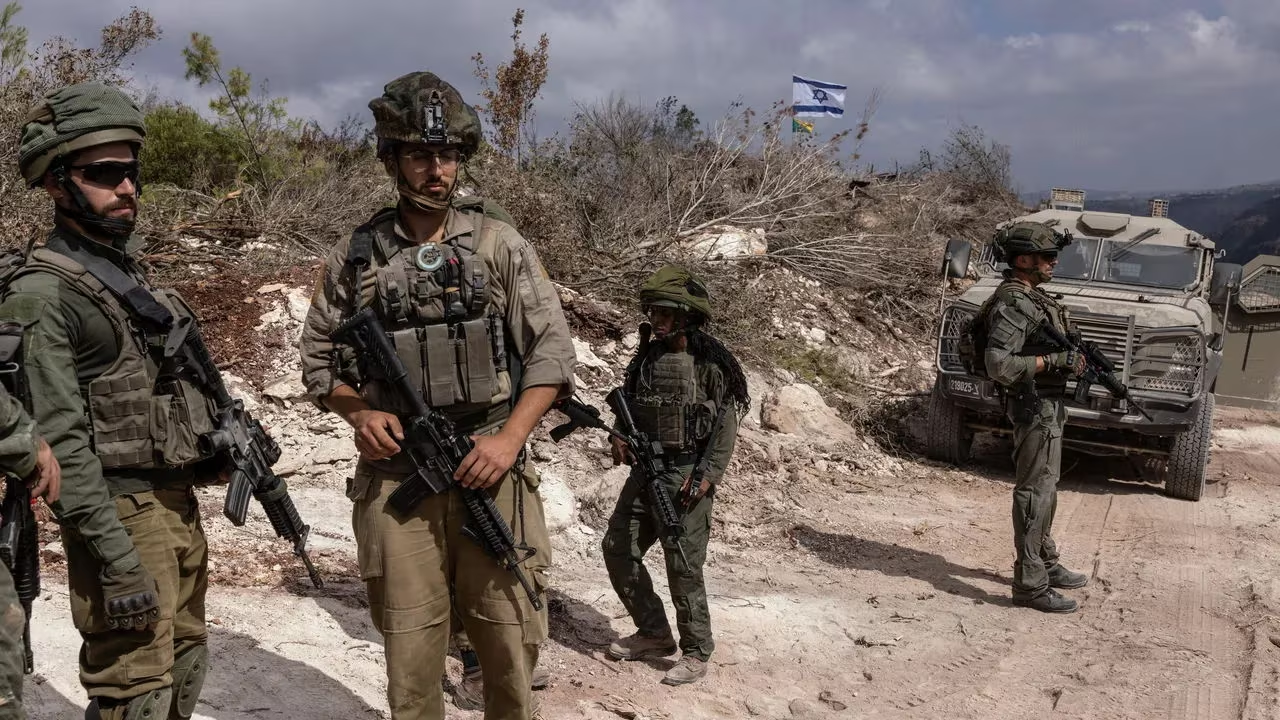
In Lebanon, a ceasefire took effect after Israel had been conducting military operations against Hezbollah since early March.
The campaign once again illustrated how profoundly the nature of war has changed: even armies with overwhelming superiority in manpower and materiel are increasingly unable to secure swift and decisive results, instead being drawn into protracted and exhausting confrontations.
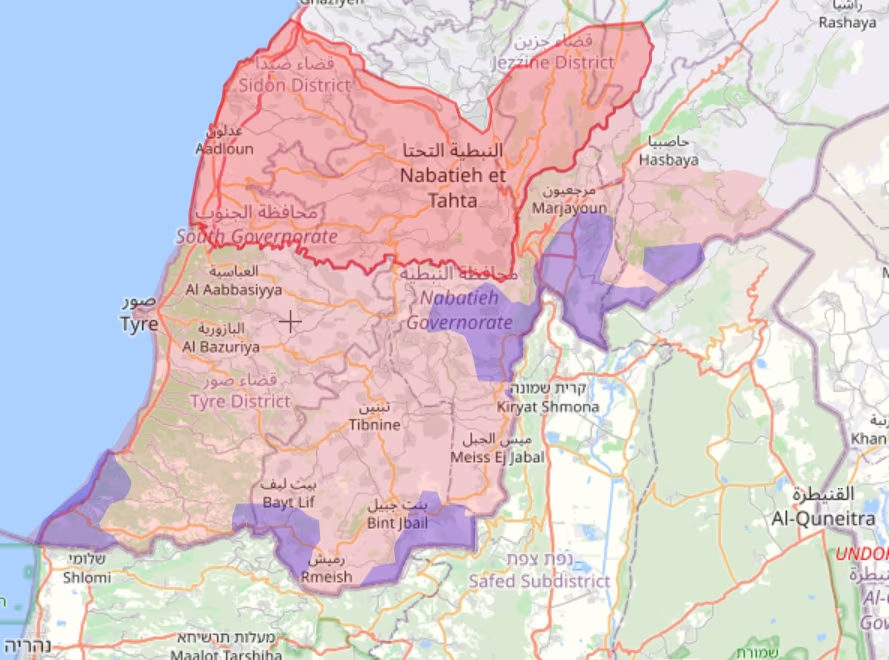
Israel faced ambitious objectives. The aim was to take control of all of southern Lebanon up to the Litani River—an area of roughly 900 square kilometers.
According to media reports, the operation involved substantial forces—up to 70,000 troops backed by large quantities of armored vehicles, including Merkava tanks.
By comparison, Hezbollah’s armed formations are estimated at 40,000 to 50,000 fighters, though only part of that force was directly involved in combat in the south of the country.
Israel also enjoyed complete air superiority, as well as a significant advantage in artillery and armored vehicles.
Even so, the operation did not prove easy for the IDF. In its early phase, Israeli forces advanced, taking control of border villages such as Kfar Kila and Marun al-Ras, and approached Bint Jbeil, regarded as Hezbollah’s key stronghold in southern Lebanon.
Further progress then stalled. Hezbollah regrouped and, by the second half of March, had established sustained resistance, including raids into areas Israel had previously considered secured.
Even the areas between populated places, including major roads, remain dangerous for Israeli units—full control over them has proved elusive.
Israeli equipment regularly ran into ambushes and came under targeted strikes, including attacks with anti-tank missile systems. FPV drones became a decisive factor, inflicting significant damage on armored vehicles and sharply complicating any rapid breakthroughs.
According to Military Watch Magazine, by the end of March the IDF had lost 21 tanks—more than during the entire service history of the Merkava.
Hezbollah’s advantages were reinforced by an extensive system of fortifications, a network of underground tunnels, stockpiles of weapons, and deep familiarity with the terrain.
By the time the ceasefire took hold, Israel had managed to establish only partial control over the territory—by various estimates, between 150 and 200 square kilometers.
For comparison, the pace of Russian advances in Ukraine during the first months of this year, according to Ukrainian data, ranged from 130 to 260 square kilometers—even though the Russian army does not enjoy the same degree of superiority over Ukraine’s armed forces that Israel holds over Hezbollah.
In a broader sense, the fighting in southern Lebanon suggests that slow advances and the positional character of war are no longer an exception but a new norm in modern conflict, where the widespread use of drones turns the front line into a zone of constant destruction.
Ultimately, this calls into question war’s very effectiveness as a tool for solving problems in the 21st century—it appears less to resolve crises than to multiply the risks and costs for all sides involved.