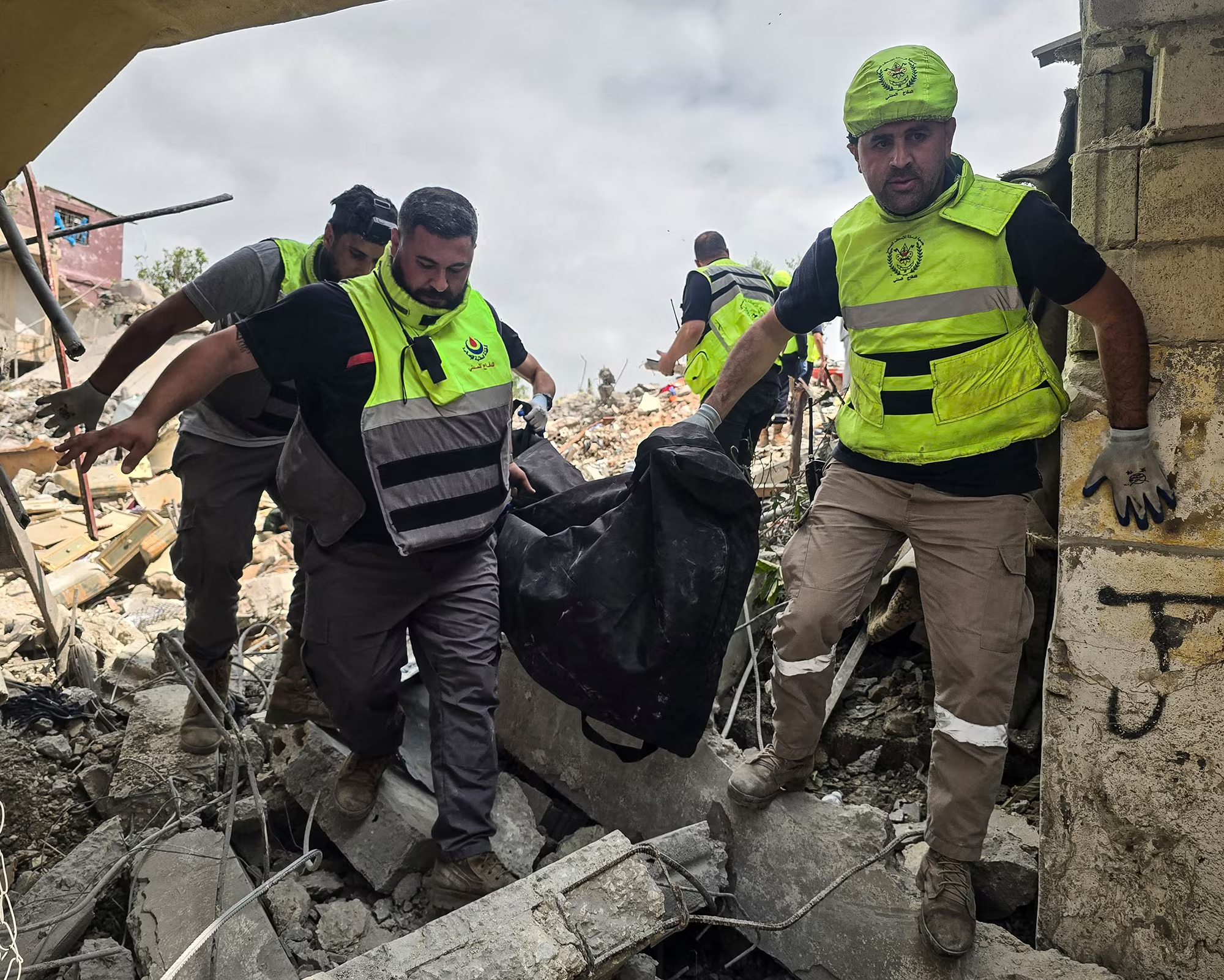
On Tuesday, May 26, Israel carried out more than 120 airstrikes across Lebanon—one of the heaviest days of bombing in recent weeks. Prime Minister Benjamin Netanyahu said the military was intensifying its offensive against Hezbollah.
The ceasefire between Israel and the Lebanese movement, brokered by the United States last month, is now on the verge of collapse. The escalation also complicates negotiations over a possible agreement between the United States and Iran: Tehran has repeatedly indicated that an end to Israel’s operation in Lebanon is one of the conditions for any deal with Washington.
The Israeli military said it struck roughly 100 Hezbollah-linked sites in southern Lebanon and the Bekaa Valley. The targets included warehouses, command posts, and observation positions that Israel says are used to attack the country’s north.
Lebanon’s state-run NNA news agency reported that at least ten people, including women and children, were killed in a strike on the town of Burj al-Shamali. Another 12 people, among them members of the same family, were killed in a strike on the eastern village of Mashghara.
Netanyahu said Israeli forces were “operating with large forces” and “taking control of territory.” He also confirmed the creation of a so-called “security zone” in southern Lebanon, where the Israeli army is holding positions several kilometers from the border.
The Israeli prime minister is under domestic pressure ahead of elections. Critics accuse the government of failing to achieve many of the stated goals of the war against Iran and its allies.
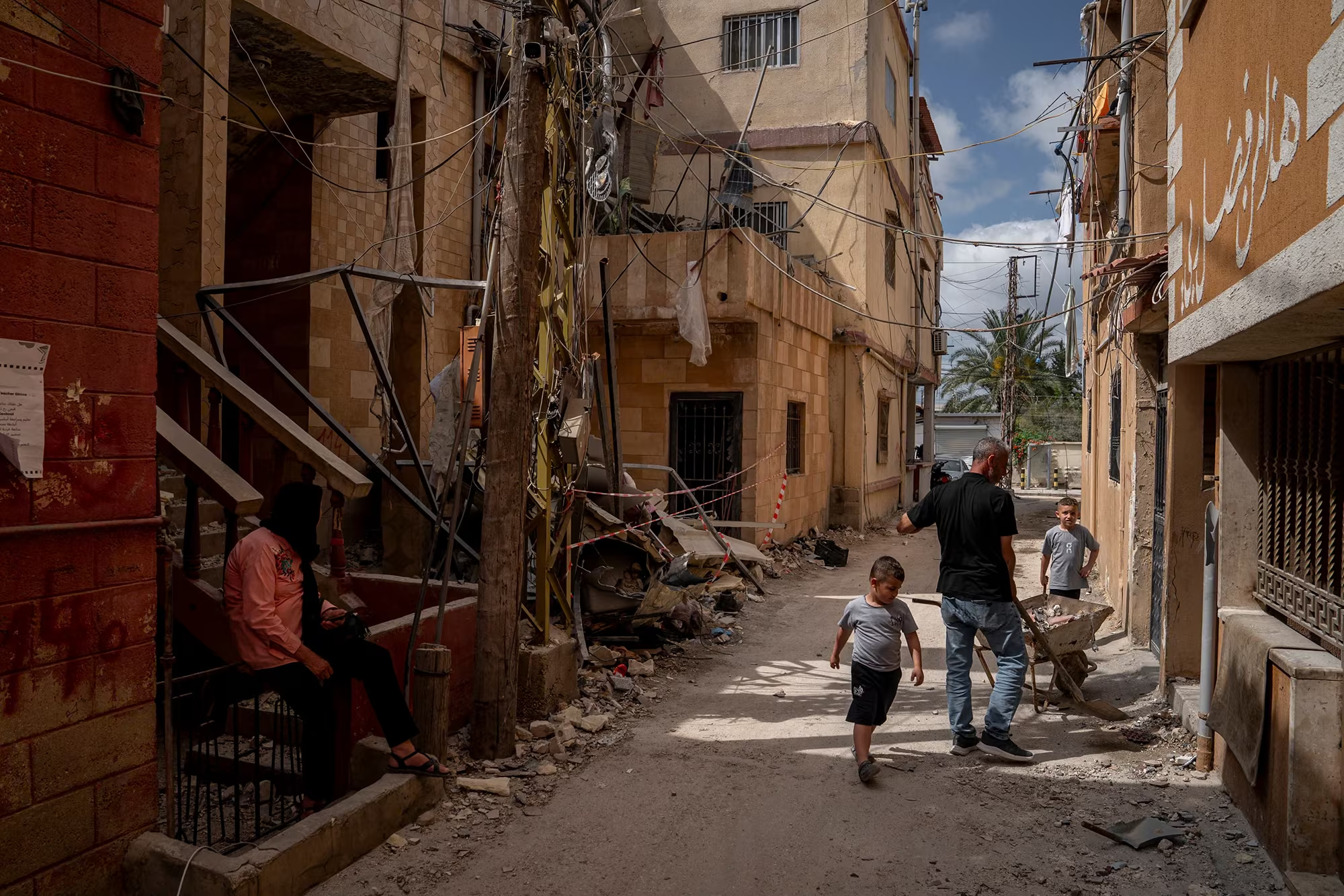
Against this backdrop, some Israeli politicians and commentators are calling for the operation in Lebanon to be expanded regardless of the U.S. position. Avi Ashkenazi, a columnist for Maariv, called in particular for “continuous waves of strikes” involving hundreds of aircraft.
Although Beirut has not been hit since the ceasefire was reached, Netanyahu’s statements have heightened anxiety among residents of the capital.
“The moment he says a few sentences on television, people start panicking and leaving their homes,” Beirut resident Tony Abboud said.
On Wednesday, May 27, reports also emerged of new clashes between the Israeli army and Hezbollah fighters in southern Lebanon, north of the Litani River. Israeli forces had earlier ordered residents of dozens of border villages not to return home in the area where the army is creating a buffer strip five to ten kilometers deep.
In recent weeks, “Hezbollah” has claimed to be using new fiber-optic-controlled FPV drones, which are harder to intercept. Israeli authorities have warned residents in the country’s north to avoid large gatherings. On Wednesday, air-raid sirens sounded in the Shlomi area of western Galilee following reports of a drone infiltration.
Since the latest phase of the conflict began after Israel’s strikes on Iran in March, more than one million people have been displaced from their homes in Lebanon.
According to Lebanon’s Health Ministry, Israeli strikes have killed at least 3,213 people and wounded more than 9,700.
Israel says 23 soldiers and one defense contractor have been killed in the southern Lebanon area, along with two civilians in the country’s north.
The Israeli military also said Mohammed Oudeh, the new head of Hamas’s military wing, was killed during strikes on Gaza. According to local hospitals, at least five people were killed in the attack and another 12 were wounded.