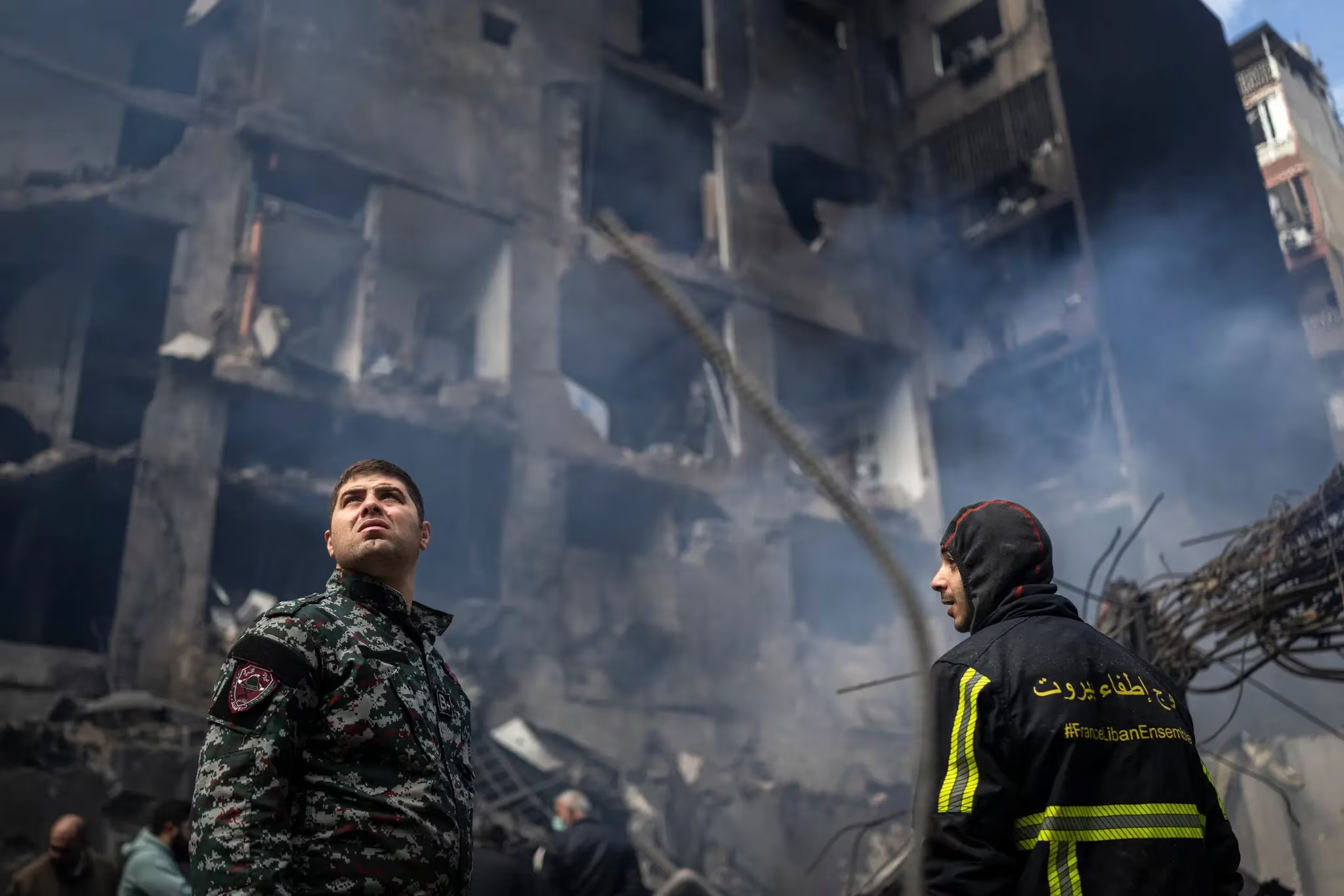
Lebanon declared a national day of mourning on Thursday—the day after the Israeli military launched a wave of massive strikes across the country in what became the deadliest episode of the war with Hezbollah.
According to Lebanon’s health ministry, at least 182 people were killed in the attacks on Wednesday, April 8, and about 900 others were injured. The strikes hit both the capital, Beirut, and the country’s southern and eastern regions.
The bombardment—the Israeli authorities said more than 100 airstrikes were carried out in ten minutes—marked a sharp escalation in the conflict after Prime Minister Benjamin Netanyahu said that Lebanon was not covered by the ceasefire with Iran.
Densely populated neighborhoods of Beirut came under fire—thick plumes of acrid black smoke rose over the city as rescue crews tried to reach people trapped beneath the rubble of residential buildings.
On Wednesday evening, 50-year-old Haniya Faraj was outside the American University of Beirut Medical Center, searching for a relative who had been at a cafe near the strike site in Mazraa, a neighborhood in central Beirut.
“Nine of my relatives were injured in that attack—my two uncles, their wives, my son,” she said. “I don’t know whether there are more victims. My head is about to explode right now. I can’t reach all my family members.”