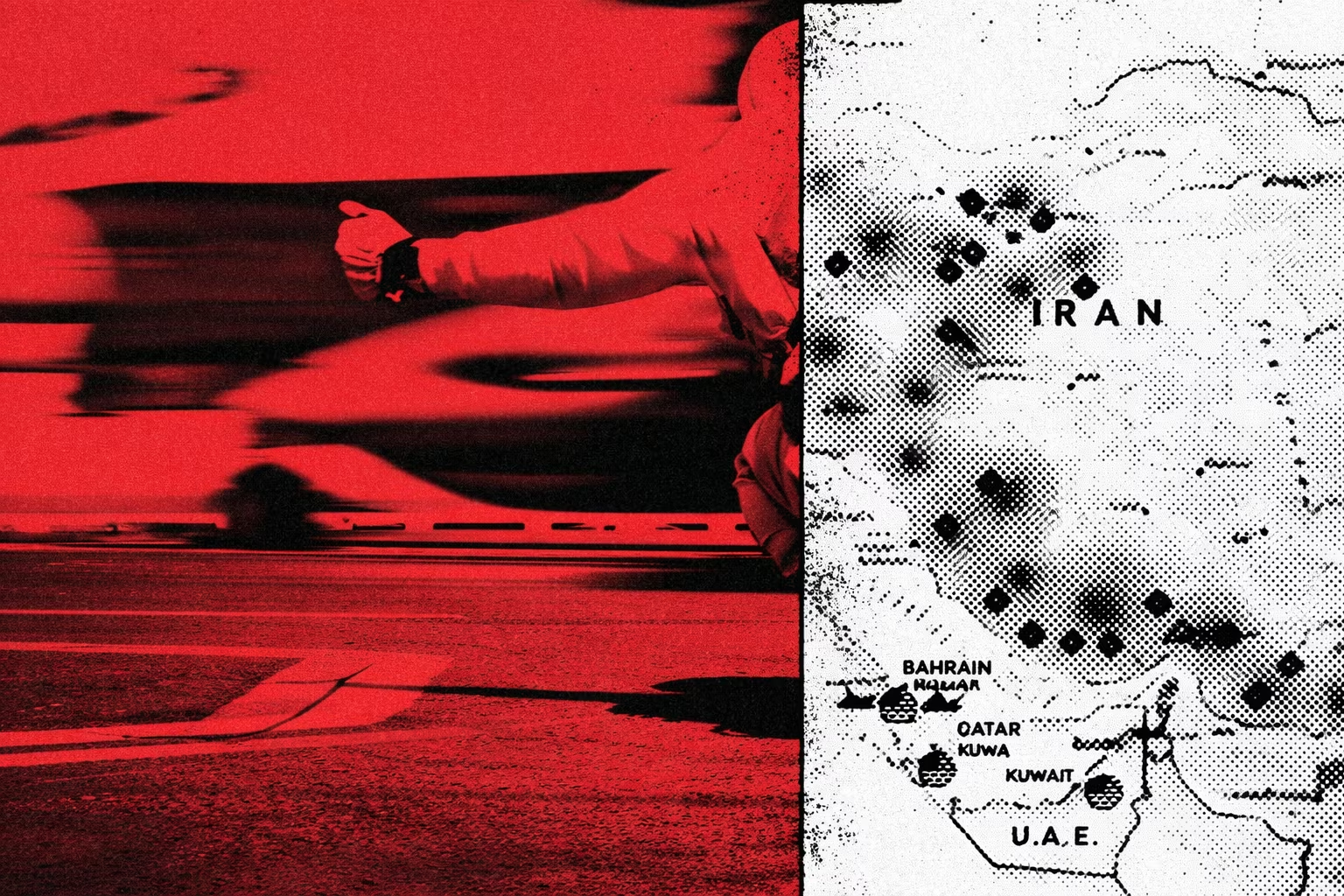
On Saturday, Pakistan will host U.S. and Iranian delegations for their first official talks since the start of the war between them on February 28—another diplomatic episode in which the country has emerged as an unexpected intermediary. Pakistan itself played a pivotal role in securing the ceasefire announced on Tuesday, shortly before the deadline set by President Donald Trump, who had earlier threatened to “erase Iranian civilization.”
In Islamabad, authorities have blocked roads with shipping containers and barbed wire and deployed thousands of security personnel ahead of the talks between the American and Iranian delegations. The two sides are being led by U.S. Vice President JD Vance and Iranian Parliament Speaker Mohammad Bagher Ghalibaf.
Even pedestrian routes in the green hills above the capital have been closed to visitors. As part of the preparations for the meeting, the authorities declared Thursday and Friday public holidays.
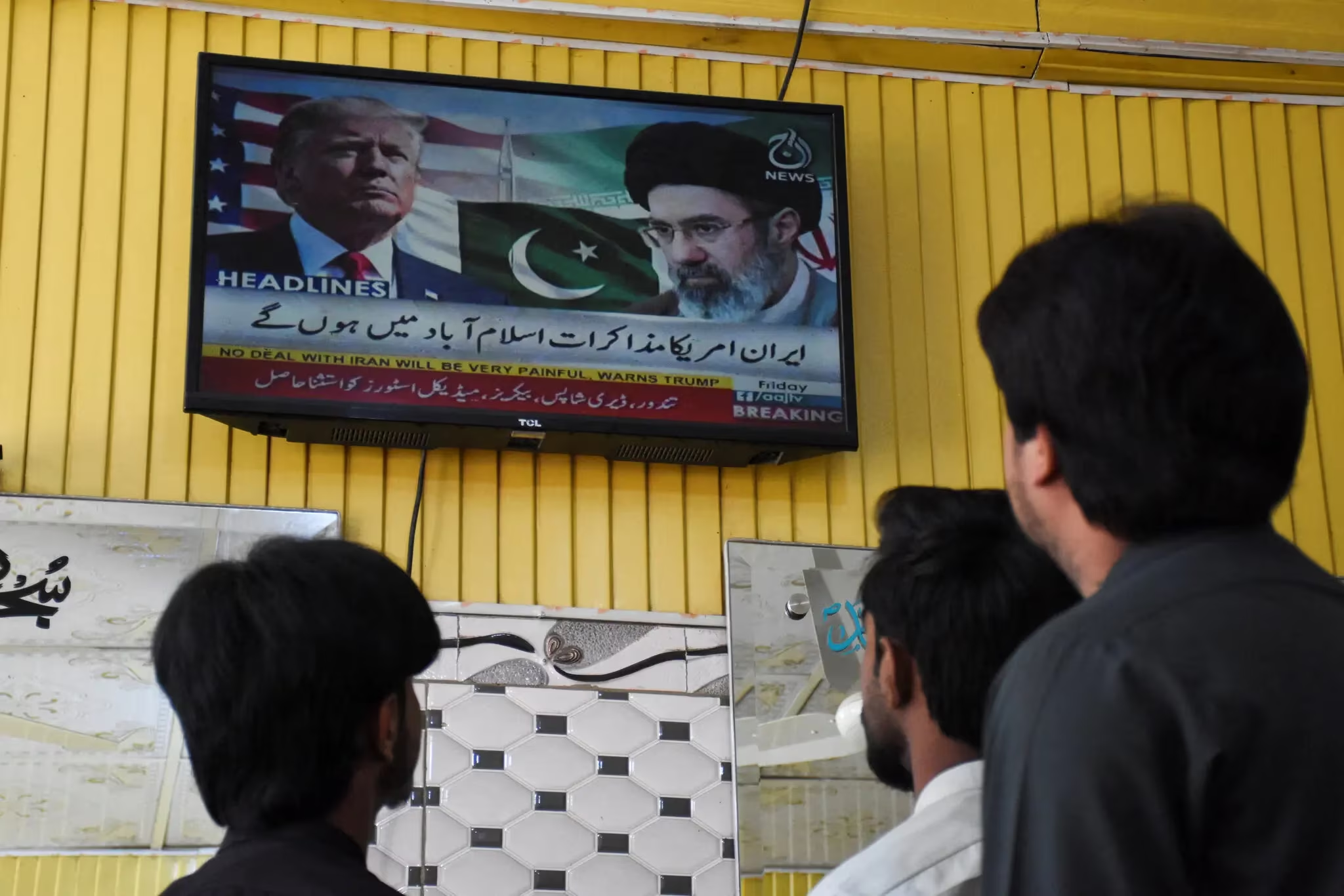
Visitors at a barbershop in Islamabad, Pakistan, follow news of the war with Iran. April 10.
Officials, however, have disclosed virtually no details—neither the venue nor the timing of the talks, nor how long they are expected to last. They say this is due to security considerations and to the view that the course of the negotiations should be determined by the U.S. and Iranian representatives themselves.
The ceasefire was the product of efforts by Pakistani Prime Minister Shehbaz Sharif and army chief Syed Asim Munir, who has built close ties with Donald Trump. China—an ally of both Iran and Pakistan—provided an additional last-minute diplomatic push.
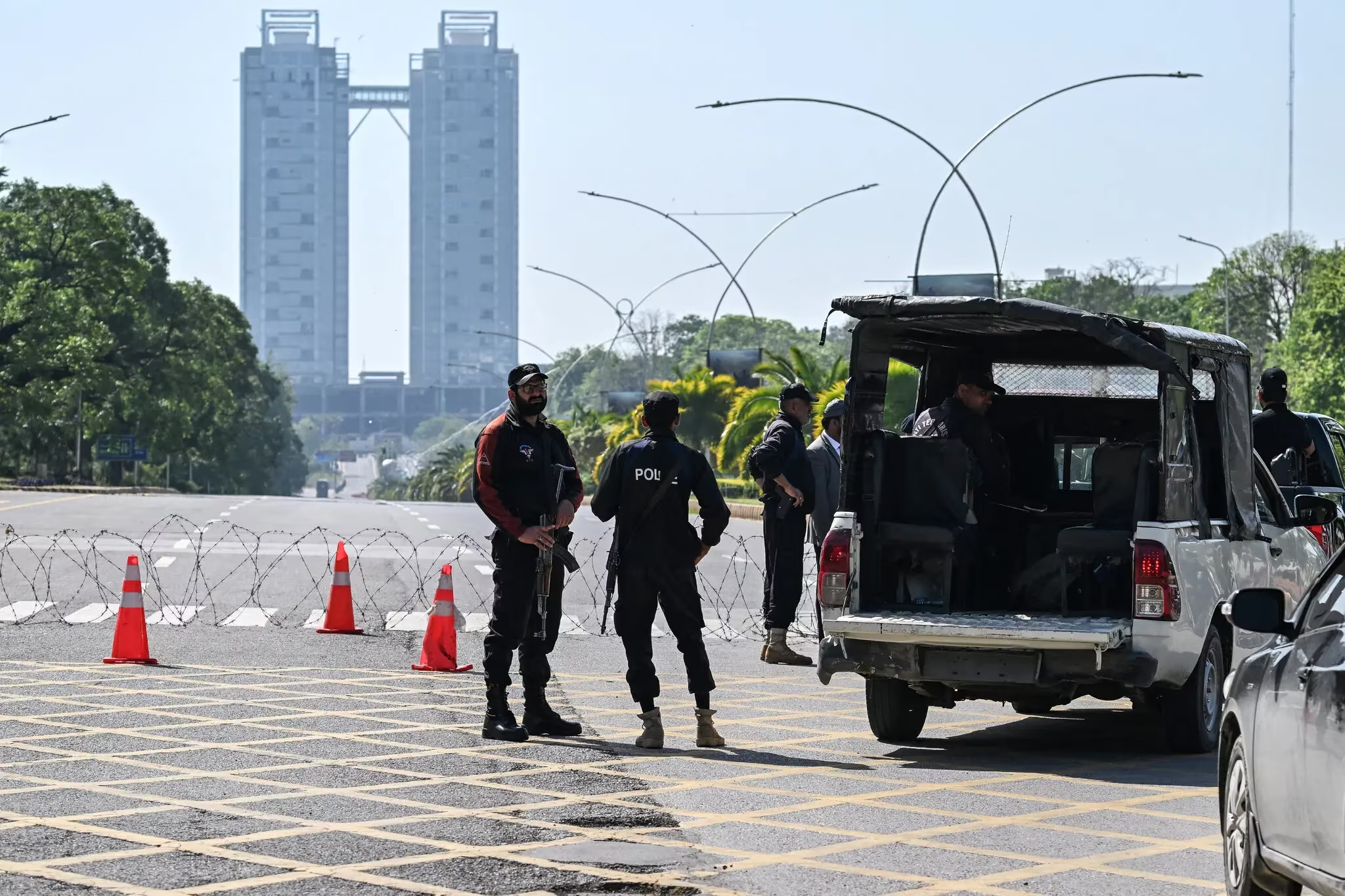
Security has been tightened in Islamabad, particularly around the hotel where the talks are expected to take place.
The ceasefire, however, remains highly fragile. Iran still retains control of the Strait of Hormuz despite Donald Trump’s demand that it be opened. And although JD Vance was already on his way to Pakistan, Mohammad Bagher Ghalibaf said the conditions for talks had not yet been created. As the reason, he pointed to continuing Israeli strikes on Lebanon, which, according to Lebanese authorities, have killed more than 1,800 people since the war began.
On Tuesday, Shehbaz Sharif said the two-week ceasefire also extended to Lebanon. JD Vance and Israeli Prime Minister Benjamin Netanyahu later denied that claim.
Sharif and European leaders have called on Israel to halt its strikes on Lebanon. Trump, for his part, said he had urged Netanyahu to scale back the attacks on that territory.
“Pakistan enjoys the trust of both sides and is playing the role of facilitator, conciliator, and mediator,” said Inam Ul Haq, a retired Pakistani general. “But, like many participants in this conflict, it is walking a very fine line.”
Pakistan’s role has drawn approval from leaders around the world—and that marks a notable reversal for a debt-burdened country that is at war with one neighbor, Afghanistan, and in a state of постоянной tension with another—India.
In recent years, Pakistan has posted some of the most sluggish economic growth in South Asia—the figure barely rose above 3 percent last year. The country is gradually emerging from the 2022 crisis, which brought it close to financial collapse. Loans from China and the Gulf states proved to be its lifeline.
Both Pakistan’s allies and its adversaries have often described it as an unreliable partner. During the U.S. war in Afghanistan, Islamabad played a double game—backing Washington while at the same time providing sanctuary to the Taliban.
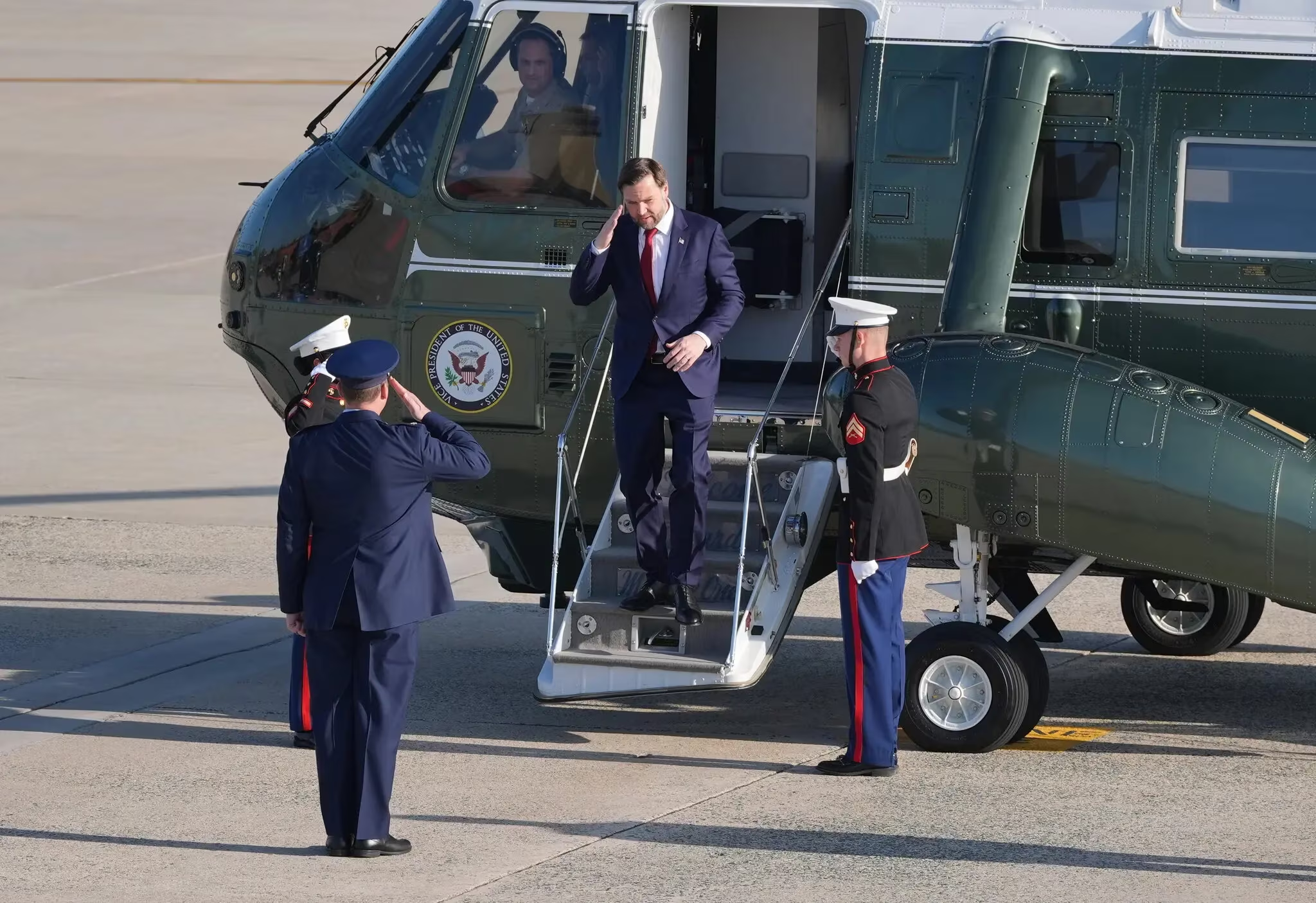
Vice President JD Vance steps off Marine Two at Joint Base Andrews, Maryland, before departing for Pakistan for talks on Iran.
A pivotal role, however, is being played by Pakistan’s powerful army chief, Field Marshal Munir, who since last year has cultivated a warm personal relationship with Donald Trump. During the 12-day war between Iran and Israel in June last year, they also discussed the Iranian issue.
In recent weeks, according to Pakistani officials and White House representatives, Field Marshal Munir has remained in regular contact with Trump and JD Vance. At the same time, Shehbaz Sharif and Pakistan’s foreign minister, Ishaq Dar, were holding phone calls with other world leaders, including Iran, with which Pakistan shares a long and troubled border as well as decades of close—if not always easy—relations.
Pakistan, however, has no diplomatic relations with Israel. On Thursday, Israeli officials said Islamabad could not be regarded as a neutral intermediary after Defense Minister Khawaja Asif posted a statement on social media with antisemitic overtones. The post was later deleted.
Pakistan has a direct and urgent interest in ending the war. The country typically imports 85 percent of its oil and gas through the Strait of Hormuz. More than half of the $40 billion sent to Pakistan each year in remittances comes from citizens working in the Gulf states. In addition, Iranian strikes on Saudi Arabia have exposed Pakistan to the risk of being drawn into the conflict under a Saudi-Pakistani defense agreement that treats an attack on one country as an attack on the other.
“Pakistan sees the Middle East as the most important region in the world for its interests,” said Michael Kugelman, a senior fellow for South Asia at the Atlantic Council, a think tank. “Because of its dependence on the Middle East and its geography, it may be more vulnerable to the fallout from this war than any other country in the region.”
Pakistan’s immediate proximity to Iran also leaves it especially vulnerable to the threat of violence in the border province of Balochistan, where security forces are already fighting armed insurgents.
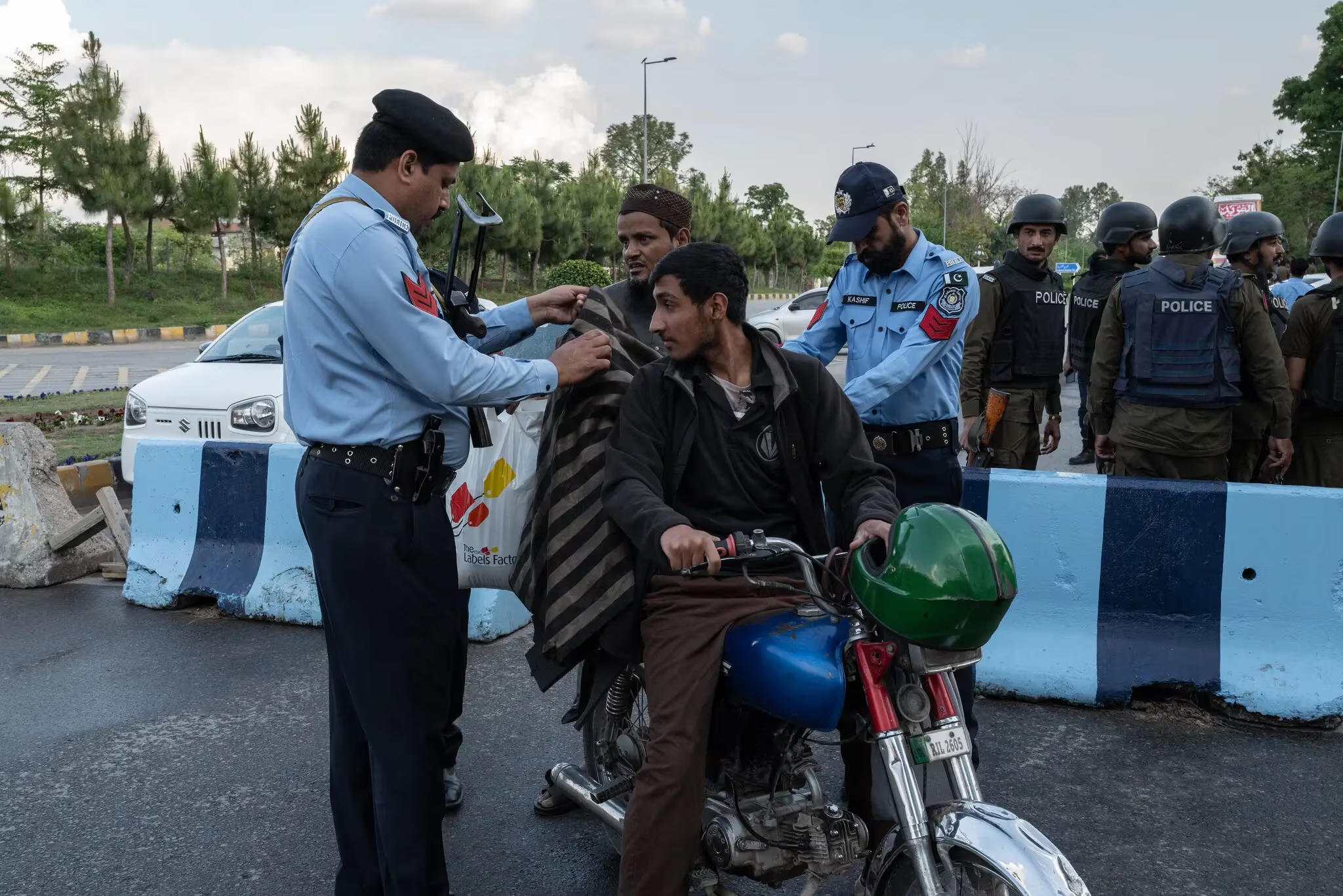
Security personnel inspect passengers at a checkpoint in Islamabad. April 10.
Rising violence in these areas has pushed the number of deaths from terrorism in Pakistan to its highest level since 2013, according to data from the Institute for Economics and Peace, a research organization. By its estimate, the country suffered the heaviest toll from terrorist attacks of any state in the world in 2025, with 1,139 people killed.
Islamabad, a city of about 1 million people, had largely remained insulated from such threats in recent years. But over the past few months, it has endured two attacks, including a February suicide bombing at a mosque that killed more than 30 worshippers and wounded nearly 170 others. Responsibility for the attack was claimed by the Islamic State group.
The authorities are also wary of retaliation from Afghanistan, where Pakistani forces have carried out dozens of airstrikes since late February. Islamabad accuses the Taliban government of backing a terrorist group that has carried out hundreds of attacks inside Pakistan in recent years.
While Pakistan was serving as an intermediary in securing a ceasefire in the Middle East, its representatives were simultaneously engaged in closed-door talks with their Afghan counterparts in China. According to the Chinese side, both countries expressed readiness to continue dialogue and refrain from further escalation.