The U.S.-Israeli military operation against Iran, carried out on Saturday, February 28, triggered a far-reaching reaction across the Middle East. Tehran’s retaliation sent missiles and interceptor debris over Arab cities, airports, and critical oil corridors—from Dubai to Kuwait.
Iran’s response included the launch of ballistic missiles and drones at U.S. bases and Israel. Strikes and interceptions also affected neighboring Arab states that host American forces or lie beneath flight paths. These include the United Arab Emirates, Qatar, Kuwait, Bahrain, and Jordan.
A high-rise building in Bahrain caught fire after being struck by an Iranian drone.
In the UAE, debris from Iranian missiles and air-defense systems fell over Abu Dhabi and Dubai’s Palm Jumeirah area. Several people were reported injured, and flights at Dubai’s main airports were temporarily suspended. The UAE foreign ministry said on X that “air defense systems intercepted and destroyed a new wave of Iranian missiles and drones launched toward the country.”
In Qatar, missiles and drones targeting the Al Udeid Air Base near Doha were intercepted, causing strong shocks in nearby areas and disruptions to air traffic, according to the state news agency.
In Kuwait, a barrage of drones and missiles struck an area near the country’s international airport and U.S. facilities. Several people were injured, parts of the terminal area were damaged, and flights were temporarily suspended. In Bahrain, missiles aimed at areas near the headquarters of the U.S. Fifth Fleet triggered evacuations and damage assessments in the Juffair district of Manama.
Jordanian air-defense systems intercepted ballistic missiles over the country. Explosions were heard in the skies above several cities, but officials said significant casualties and serious damage to civilian infrastructure were avoided. Jordan’s foreign ministry said: “Iran attacked Jordan without any justification, despite being aware of the efforts Jordan has made to seek a peaceful resolution to the crisis.”
Saudi Arabia’s foreign ministry described the strikes as “blatant Iranian aggression” and a “gross violation” of the sovereignty of states in the region. Dubai’s authorities, meanwhile, warned against the spread of unverified information after “old videos and images from past fires in Dubai” began circulating on social media. “We urge the public and the media to exercise caution, rely solely on official sources, and refrain from spreading rumors or unverified news, given their direct impact on the security and stability of society,” the statement said.
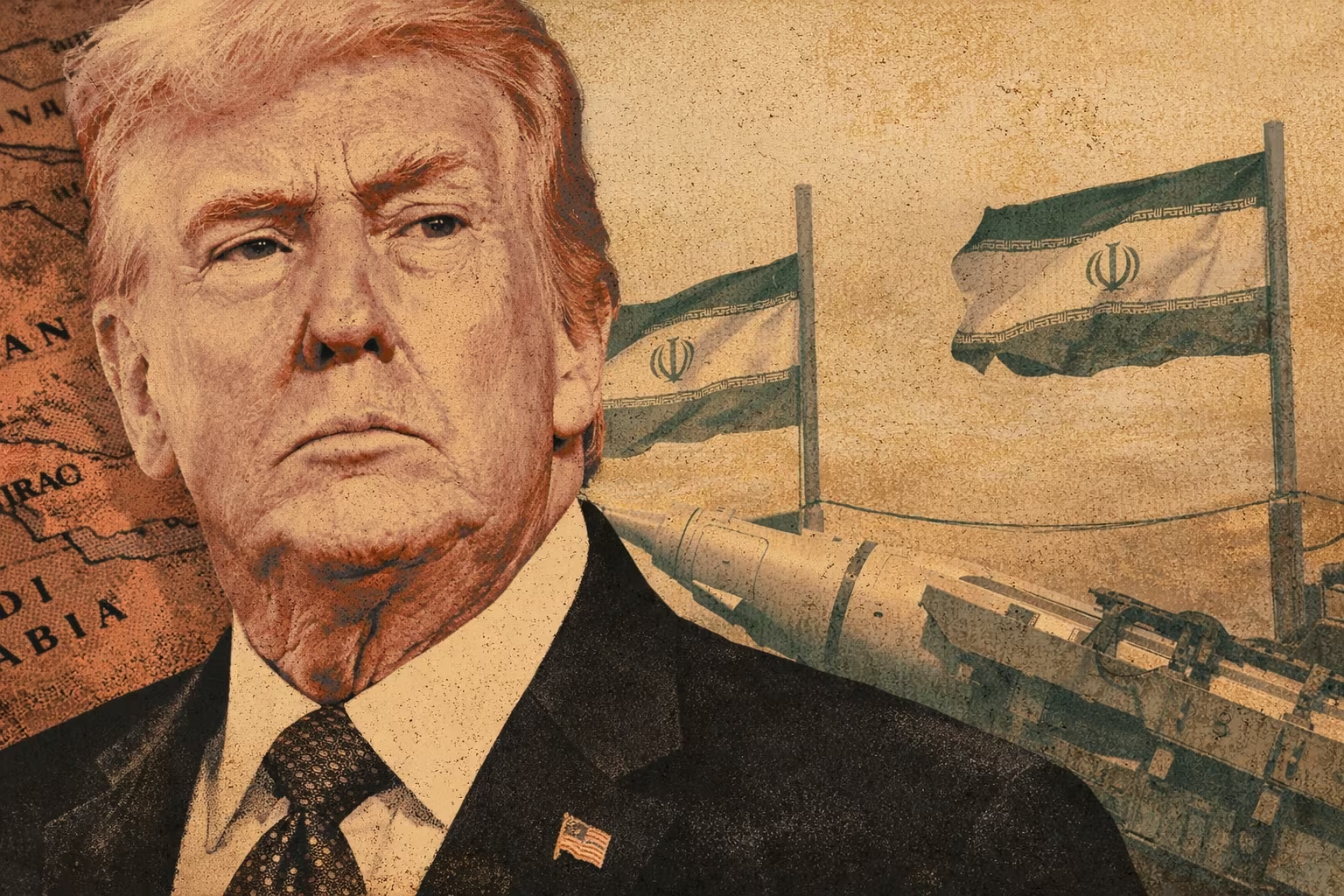
The escalation followed President Donald Trump’s ultimatum giving Tehran 10 days to conclude a nuclear agreement, and his decision to resort to force after diplomatic talks collapsed earlier this week. Trump had previously warned that walking away from a deal would trigger a military response, amid a weeks-long buildup of U.S. forces in the region.
In a video address released early Saturday morning to announce the launch of Operation Epic Fury, Trump said Iran had engaged in large-scale terrorism since the 1979 Islamic Revolution. “We will destroy their missiles and level their missile industry,” he said.
Iran’s foreign minister, Abbas Araghchi, said: “We do not understand the reasons for the American strike on Iran. Perhaps the U.S. administration was drawn into this. But here is what I know: Iran will punish those who kill our children. Our hostility is not directed at the American people, who are once again being misled.”