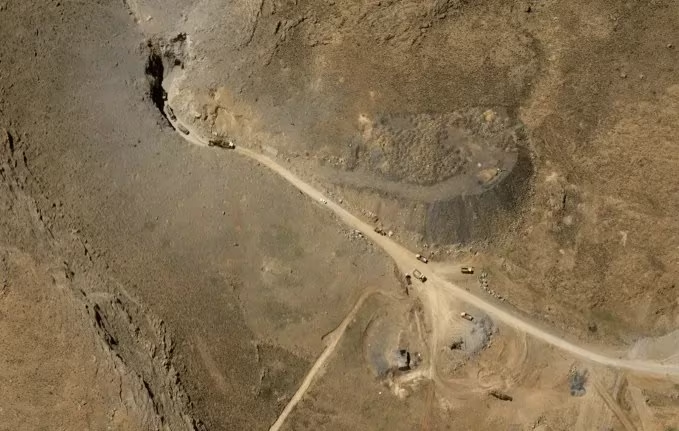
According to the channel, during the war the United States and Israel tried to disrupt Iran’s underground missile infrastructure: strikes hit access roads and tunnel entrances, which were blocked by debris. But after the ceasefire, Tehran accelerated work to restore the sites. Of 69 tunnel entrances at 18 underground bases that were hit, 50 have already been cleared.
Satellite images show that the work is being carried out with ordinary construction equipment—bulldozers, excavators and dump trucks. Roads have been restored at many sites, and some sections have been repaved.
Experts estimate that Iran may still have about a thousand ballistic missiles in underground storage. Even if production has temporarily stopped, such a stockpile would be enough to continue launches in the event of renewed escalation.
“There is nothing preventing the launchers from using the significant stockpile of missiles that Iran still has,” said Sam Lair, an analyst at the James Martin Center for Nonproliferation Studies.
CNN’s sources note that restoring the sites has proved far cheaper and simpler than the strike campaign itself. “You have to use very sophisticated and expensive weapons to inflict that kind of damage, and all it takes to repair it is bulldozers,” said Timur Kadyshev, a researcher at the University of Hamburg.
According to U.S. intelligence, Iran has already resumed drone production and is rebuilding its capacity to produce missiles and launchers. One U.S. official told CNN that Tehran is ahead of the recovery timelines previously forecast by the U.S. intelligence community.