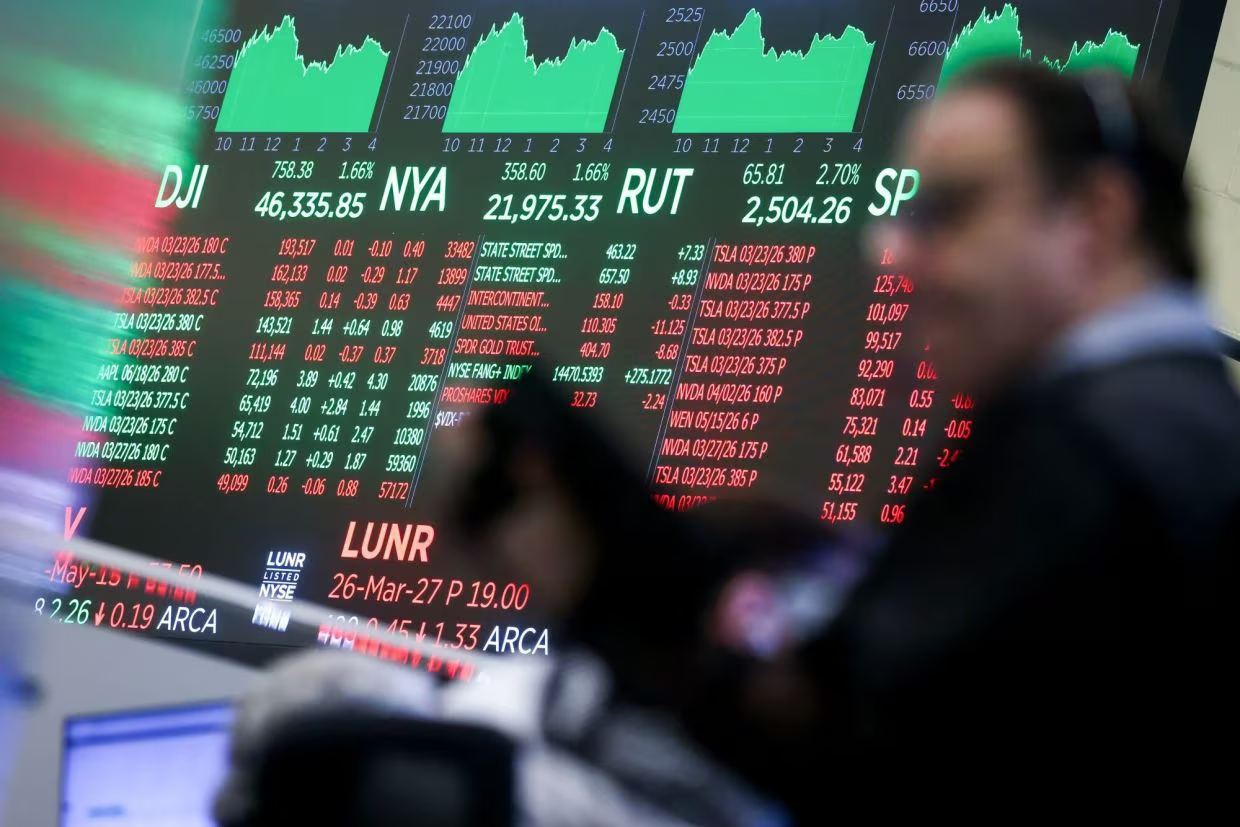
Donald Trump’s decision to delay strikes on Iran’s energy infrastructure triggered a short-term rebound in markets, but for many investors it reinforced the case for reducing risk.
U.S. equity indices rose by about 1% on Monday, while oil fell by more than 10% following the announcement of a five-day pause. Even so, fund managers’ sentiment has not shifted—most remain cautious amid persistent uncertainty.
Chauwei Yak, chief executive of the Singapore-based hedge fund GAO Capital, said she had not adjusted positions: “I’m not sure this is truly the end of the Iran situation. We believe this could drag on. We are maintaining a cautious stance until either there is a more substantial decline or clear signs emerge that the war is coming to an end.”
The conflict between the United States and Israel on one side and Iran on the other, which began in late February, has heightened volatility across global markets. A steady flow of headlines has triggered sharp price swings, while the confrontation itself has proved more protracted than market participants had expected. Its escalation has been accompanied by rising energy prices and has intensified stagflation risks.
Matthew Haupt of Wilson Asset Management said he had reduced risk even before the initial deadline and continues to advise limiting exposure until signs of de-escalation emerge. In his words, “selling on de-escalation and buying on escalation remains the right strategy”. The market is now awaiting Iran’s response, which could determine the next buying opportunity.
Asia’s equity index rose by around 2% on Tuesday, though this failed to offset the 3.4% drop the previous day.
Some analysts view the delay as a positive signal. Michael Brown, senior strategist at Pepperstone Group, said: “Uncertainty remains high, but for the first time since the conflict began we have seen a concrete step toward de-escalation”. According to him, the market reaction illustrates the potential impact of genuine moves toward a ceasefire and the restoration of commodity supplies.
Even so, most fund managers are maintaining a defensive stance—increasing cash holdings and closely watching oil price dynamics and signals from the Federal Reserve. Short-term rallies remain fragile and are driven more by expectations than by fundamental shifts.
John Withaar of Pictet Asset Management likewise said he had not altered positions, including hedges. He noted that “beyond nervous short covering, there is effectively a buyers’ strike”, adding that, in his view, Iran does not appear inclined to exit the conflict.
Since the start of the war, a number of funds have been reducing positions in currency and fixed-income markets, and even after the deadline was postponed these strategies remain highly sensitive to news flow.
Massimiliano Bondurri, chief executive of SGMC Capital, said: “In essence, little has changed. Following headlines and rumors is a direct path to losses”. In his view, the key lies in filtering out informational noise and maintaining flexible positioning with sufficient liquidity to take advantage of price moves.