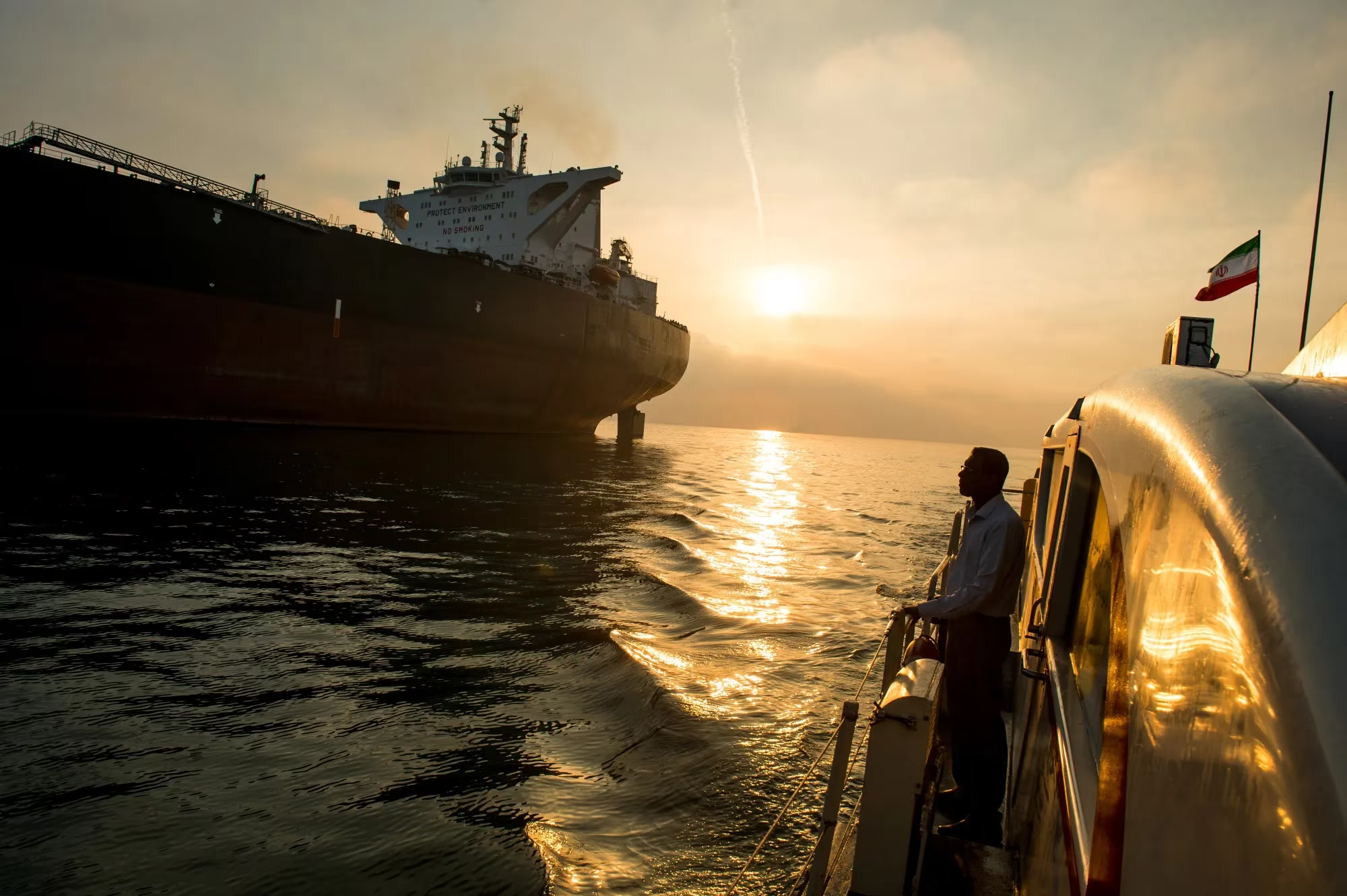
Iran has most likely secured hundreds of millions of dollars in additional oil-export revenue since the start of the war, benefiting from higher prices for its crude after emerging as the only major supplier able to use the Strait of Hormuz.
Tehran is gaining on two fronts. Its main crude grade, sold primarily to China, is trading at its narrowest discount to Brent in more than ten months. At the same time, the global benchmark itself has climbed above $100 a barrel in the wake of the strikes.
Export volumes, by some estimates, have remained close to pre-war levels this month—around 1.6 million barrels a day. Tanker shipments continue to load at the Kharg terminal and depart the Persian Gulf via the Strait of Hormuz—with activity even picking up in recent days.
This stands in stark contrast to the effective blockade facing other Persian Gulf producers.
Despite daily airstrikes by the United States and Israel, Tehran’s financial position remains resilient, underpinned by steady oil revenues. Moreover, Iran may stand to gain further after Washington, seeking to soften the war’s impact on prices, unexpectedly and temporarily suspended sanctions on part of Iran’s oil already at sea on tankers.
“The Trump administration is effectively begging Iran to sell oil,” said Richard Nephew, a senior research scholar at Columbia University’s Center on Global Energy Policy, who previously held roles at the US State Department, including deputy special envoy for Iran and coordinator for sanctions policy. “I would expect curbing Iranian oil sales to be a priority for the United States.”
According to estimates by TankerTrackers.com and prices for Iran’s flagship Iranian Light grade, Tehran was earning about $139 million a day from its sales in March—up from $115 million in February.
Iranian crude has risen markedly relative to Brent: the discount narrowed to $2.10 a barrel at the start of the week—the lowest level in nearly a year. Before the war, the gap exceeded $10.
The increase in the per-barrel price is critical for Iran against the backdrop of extensive damage from US and Israeli strikes and the looming costs of rebuilding the economy. Additional pressure comes from the need to replenish arsenals after retaliatory attacks on targets across the Middle East.
While countries such as Iraq and Kuwait were forced to sharply cut production, and the UAE and Saudi Arabia sought alternative export routes, Iran continued loading crude and dispatching tankers out of the Persian Gulf.
From March 1 to 23, exports averaged about 1.6 million barrels a day—close to pre-war levels, according to TankerTrackers.com. Even before the war, volumes had been unusually high: on February 28, loadings reached their highest level since around July 2018, data from Kpler show.
Oil infrastructure on Kharg Island—the country’s key export hub—has not been targeted by US strikes, which have been limited to military sites. Satellite imagery from the European Union’s Copernicus Browser for the period from March 2 to 22 shows large oil tankers present at the terminal throughout.
The intensity of operations, judging by the imagery, is increasing: whereas a single supertanker was off Kharg on March 2, images from March 7 and 17 show two vessels loading at once. In the latest image, taken on Sunday, two VLCCs are moored at the terminal, while a third appears to have recently departed
Iran is also exporting crude via the Jask terminal, located outside the Strait of Hormuz. A satellite image from March 5 shows a supertanker approaching the loading buoy, while an image taken three days later captures the same vessel already alongside the terminal.
Shipments via Jask are typically sporadic—since the terminal’s official launch in 2021, only five tankers have been loaded there.
Iran also earns additional revenue from transit fees: some commercial vessels passing through the strait are charged up to $2 million.
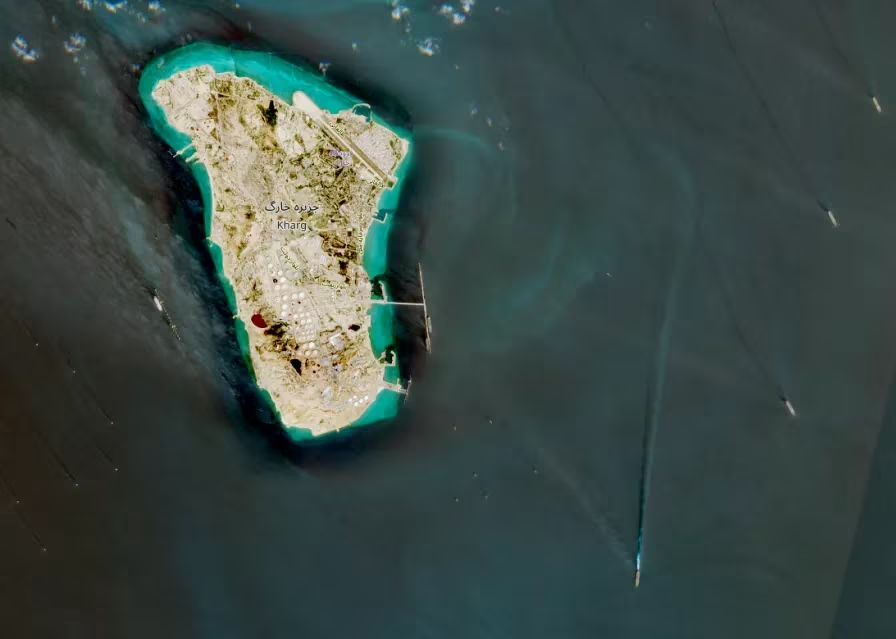
Activity at Iran’s oil terminal on Kharg Island. March 22, 2026.
Against this backdrop, oil revenues in other Persian Gulf states have fallen sharply during the war. Strikes have hit a wide range of energy infrastructure—from oil and gas fields to refineries and ports. Billions of dollars in damage were inflicted on Qatar’s Ras Laffan complex—the world’s largest liquefied natural gas export hub—leading to production losses that will last for years.
Iran’s energy infrastructure has largely avoided destruction, with the exception of Israeli strikes on the massive South Pars gas field last week. In response, the Islamic Republic launched attacks on oil and gas assets in Gulf Arab states.
Over the weekend, US President Donald Trump threatened to strike Iran’s energy infrastructure if it did not reopen the Strait of Hormuz. By Monday, he had softened his tone, citing “very good and productive conversations” with Tehran on ending the war.
Iranian authorities deny that any talks are taking place, reject the US ceasefire proposal, and continue to strike Israel and Persian Gulf states—undermining Washington’s efforts to bring the conflict to an end.