On Thursday, January 8, Iran was almost entirely cut off from the internet, monitoring groups said, as the Islamic republic sought to contain its largest wave of protests in years.
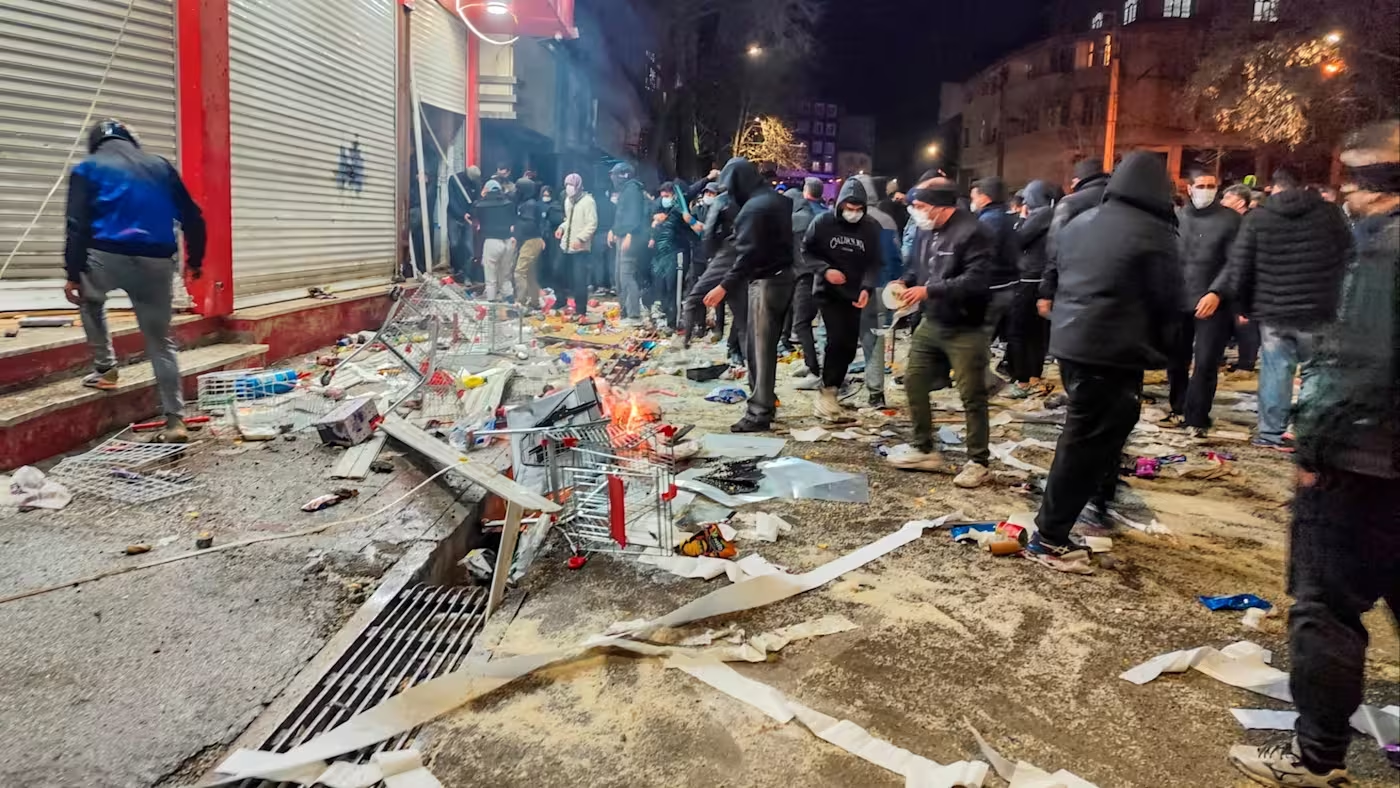
Videos posted on social media show large groups of demonstrators taking to the streets on Thursday evening in Tehran and several other cities. Protest activity appears to have intensified with the start of Iran’s weekend. The authenticity of the footage could not be independently verified.
“We are seeing a system struggling to respond to a sweeping wave of protests that has only gathered momentum since it began,” said Sanam Vakil, head of the Middle East programme at Chatham House. “Without serious structural change, the situation will reach an impasse.”
NetBlocks, an organisation that monitors internet connectivity, said Iran was “in the midst of a nationwide internet blackout”, driven by “a series of escalating digital censorship measures aimed at suppressing protests across the country”.
Authorities have previously resorted to restricting internet access during periods of mass unrest.
The latest wave of demonstrations began in late December after shopkeepers in Tehran closed their businesses in protest at rising prices, before spreading to provincial cities and towns.
The protests are unfolding at a moment when the Islamic republic is experiencing one of its most vulnerable periods in decades, confronting mounting external pressure alongside deepening domestic crises.
Since June, after Israel launched a 12-day war against Iran, the rial has fallen by more than 40 percent, fuelling a sharp surge in inflation. During the conflict, senior military commanders and nuclear scientists were killed, much of the country’s air-defence system was destroyed, and strikes were carried out on Iran’s nuclear facilities.
The United States briefly joined the fighting, carrying out strikes on key Iranian nuclear sites.
President Donald Trump said his administration was “on full combat readiness” and prepared to offer “assistance” to protesters if Iranian authorities began killing them.
Iranian state media have confirmed at least 17 deaths since the protests began last month, including members of the security forces, as well as dozens of arrests. The exact number of casualties remains unclear.
The consultancy Eurasia Group said in a note that the regime was “highly likely to weather the current surge in unrest—as it has in the past”.
However, it warned that in the absence of “solutions that address the root causes”, the demonstrations were likely to persist, with a significant risk of escalating disorder and a shift by the authorities towards harsher and more violent measures.
The current protests represent the most serious internal threat to the regime since 2022, when a woman named Mahsa Amini was detained for allegedly wearing her hijab improperly and later died in custody.
According to Amnesty International, more than 300 people were killed during the crackdown on those protests.
The latest wave of demonstrations, marked by sharply anti-government slogans—including chants of “death to the dictator”—has become a major test for President Masoud Pezeshkian, who came to power around a year and a half ago after pledging to reform the economy and ease the pressures facing ordinary Iranians.
Pezeshkian’s government has taken a series of steps in an effort to defuse tensions—holding meetings with business representatives to address their grievances and appointing a new central bank governor in the hope of restoring “economic stability”.
Yet growing numbers of Iranians are expressing frustration and anger, intensifying demands for change and a move away from the country’s theocratic leadership, which has ever fewer tools at its disposal to manage the crisis amid a prolonged economic downturn and persistently low oil prices.