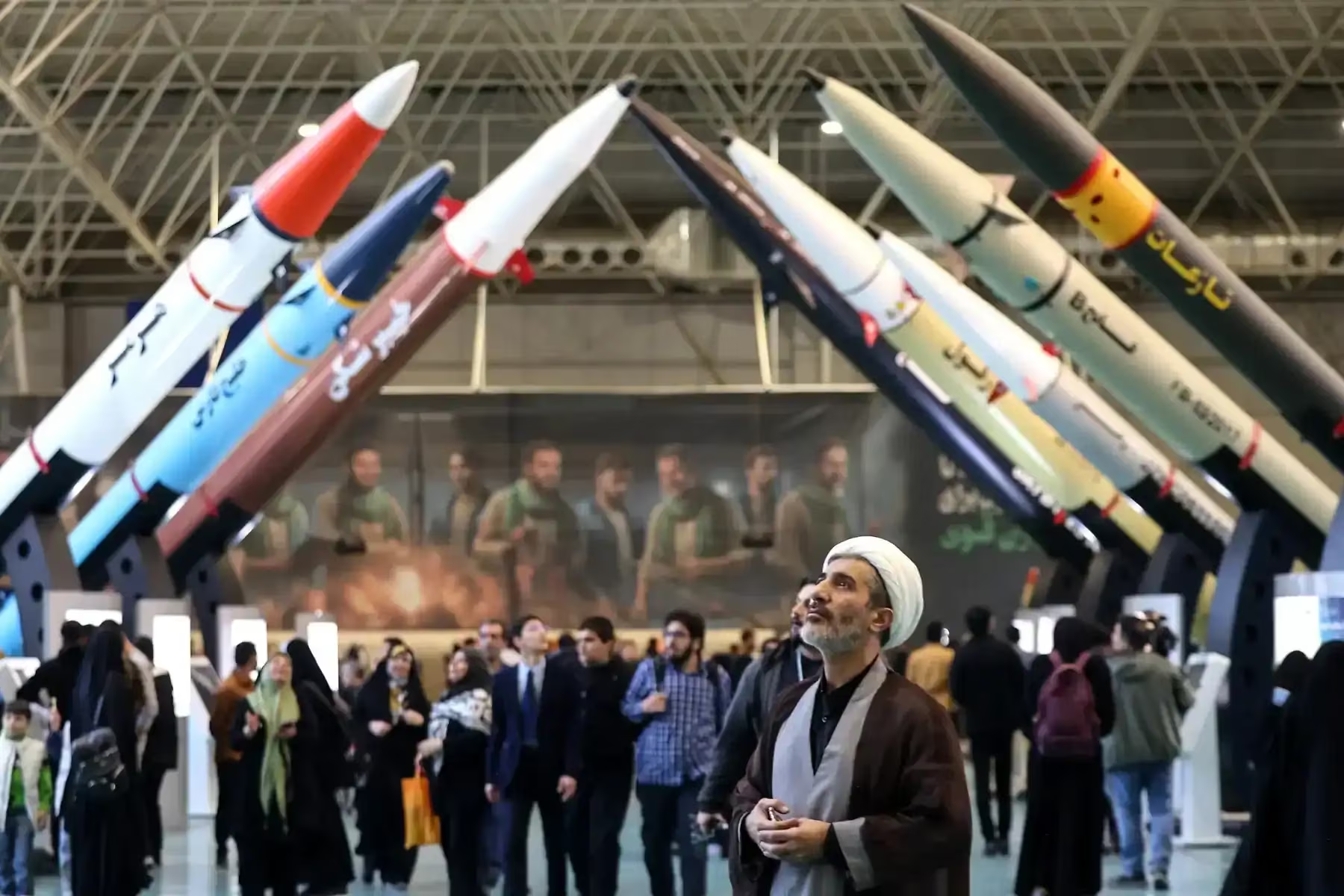
Iran has retained roughly 70 percent of its missile arsenal despite U.S. claims that the country’s military capabilities had been severely degraded. The New York Times reports, citing U.S. intelligence assessments.
According to the newspaper, Tehran has restored operational access to 30 of the 33 missile facilities located along the Strait of Hormuz. Only three sites remain completely inaccessible to the Iranian military. In addition, the Iranian army has regained access to nearly 90 percent of underground storage facilities and launch systems across the country—with parts of that infrastructure already fully operational again.
Classified intelligence assessments prepared in early May diverge sharply from the Trump administration’s public rhetoric. Defense Secretary Pete Hegseth had previously claimed that Operation Epic Fury “destroyed Iran’s war machine and rendered it combat ineffective for years to come.” Documents circulated among White House officials paint a different picture.
According to the NYT, Iran has preserved around 70 percent of its mobile launchers nationwide. Even at partially damaged facilities, Iranian forces remain capable of relocating missiles to alternative positions and, in some cases, launching them directly from surviving launch pads.
U.S. officials are said to be particularly concerned about the potential threat to American naval vessels and oil tankers in the Strait of Hormuz. Before the war, roughly a quarter of global seaborne oil exports passed through the narrow maritime corridor.
The joint U.S.-Israeli campaign inflicted substantial damage on Iran’s defenses, destroyed many strategic facilities, and led to the deaths of several senior Iranian leaders, including Supreme Leader Ali Khamenei. The country’s economy remains under severe strain, Tehran continues to block shipping through the Strait of Hormuz, and Iranian negotiators maintain a hard-line position. Yet Iran’s ability to preserve a significant portion of its military potential has deepened doubts among U.S. allies about the wisdom of the war and triggered criticism from the anti-interventionist wing of Trump’s supporters, many of whom had opposed involvement from the outset.
At the same time, intelligence officials are reportedly warning about the state of American stockpiles. During the campaign, U.S. forces used more than 1,000 Tomahawk cruise missiles, over 1,300 Patriot interceptor missiles, and around 1,100 stealth long-range cruise missiles. Replenishing those reserves could take years—Trump has urged defense contractors to quadruple production, but military officials privately estimate the timeline in terms of years rather than months.
Chief Pentagon spokesman Sean Parnell disputed the intelligence conclusions. According to him, the U.S. military “has everything it needs to accomplish the mission,” and the United States “has conducted several successful operations across combatant command areas while maintaining a deep arsenal of capabilities to defend its people and interests.”
The new intelligence assessments suggest that U.S. officials may have overestimated the scale of the damage inflicted while underestimating Iran’s ability to rapidly restore military facilities and return them to service. If the fragile ceasefire that has held for a month collapses and hostilities resume, Washington could face an adversary whose military capacity has barely diminished—while confronting its own depleted arsenal of precision weapons.