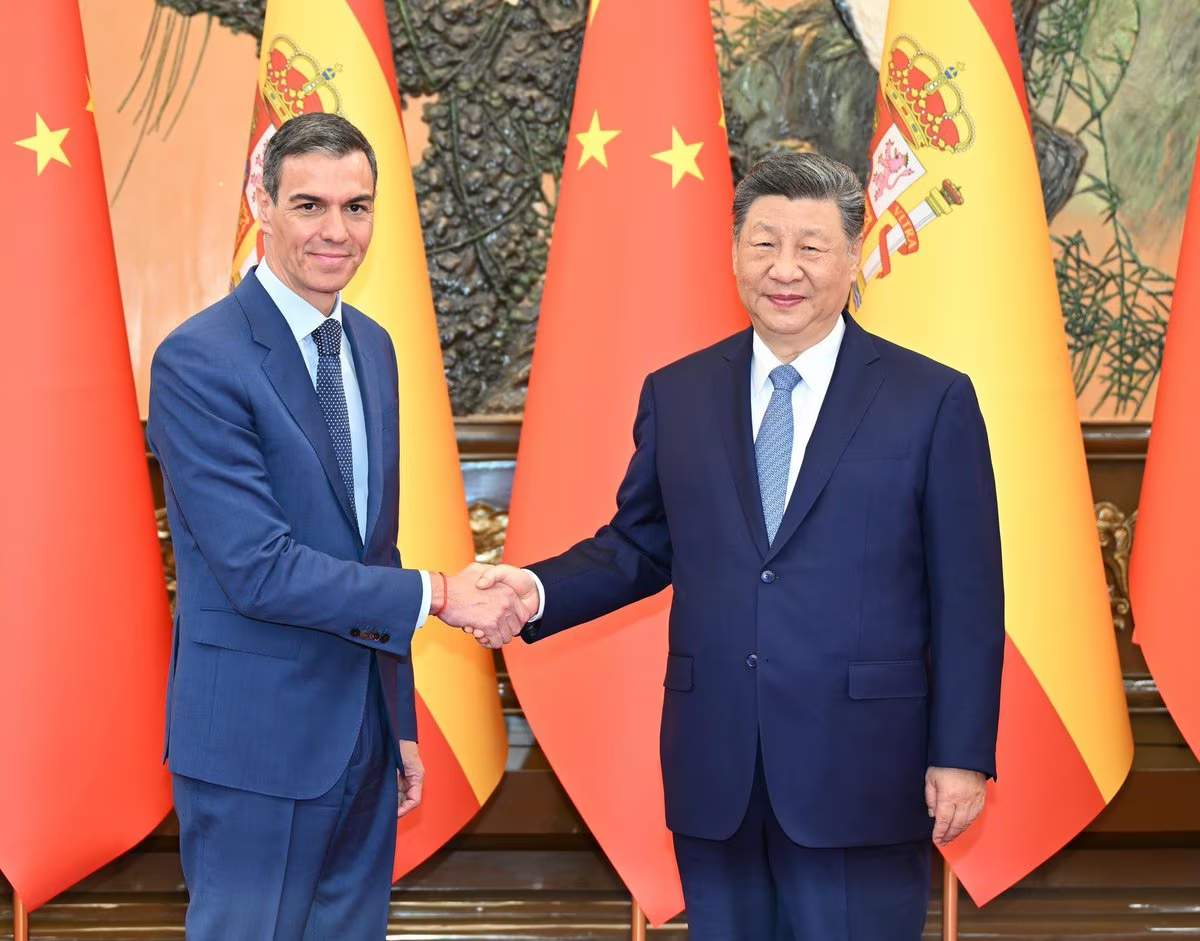
Xi Jinping said on Tuesday that the global order was descending into “chaos,” as Spain’s prime minister, Pedro Sanchez, urged the Chinese leader to use his influence to help bring the conflict over Iran to an end.
After talks with Sanchez in Beijing, Xi said Spain and China were “morally responsible” countries and should deepen cooperation to “push back against a regression to the law of the jungle” in international relations.
“The international order is breaking down and descending into chaos,” Xi said.
Sanchez, a consistent critic of the war over Iran and regarded as China’s closest partner in Western Europe, said the United States and Israel were “trampling on” international law, and intensified his call for Beijing to play a more active role in resolving the conflict.
“I find it extremely difficult to imagine any parties other than China that could resolve the situation in Iran and the Strait of Hormuz,” Sanchez said on Tuesday after a banquet with Xi during his fourth visit to China in just over three years.
Next month, Xi is expected to hold talks with President Donald Trump of the United States—the anticipated meeting is set to take place in Beijing.
On the same day, the Chinese leader also met with Abu Dhabi Crown Prince Sheikh Khaled bin Mohamed bin Zayed Al Nahyan and stressed that the rule of law cannot be “applied selectively and discarded when convenient,” according to the state news agency Xinhua.
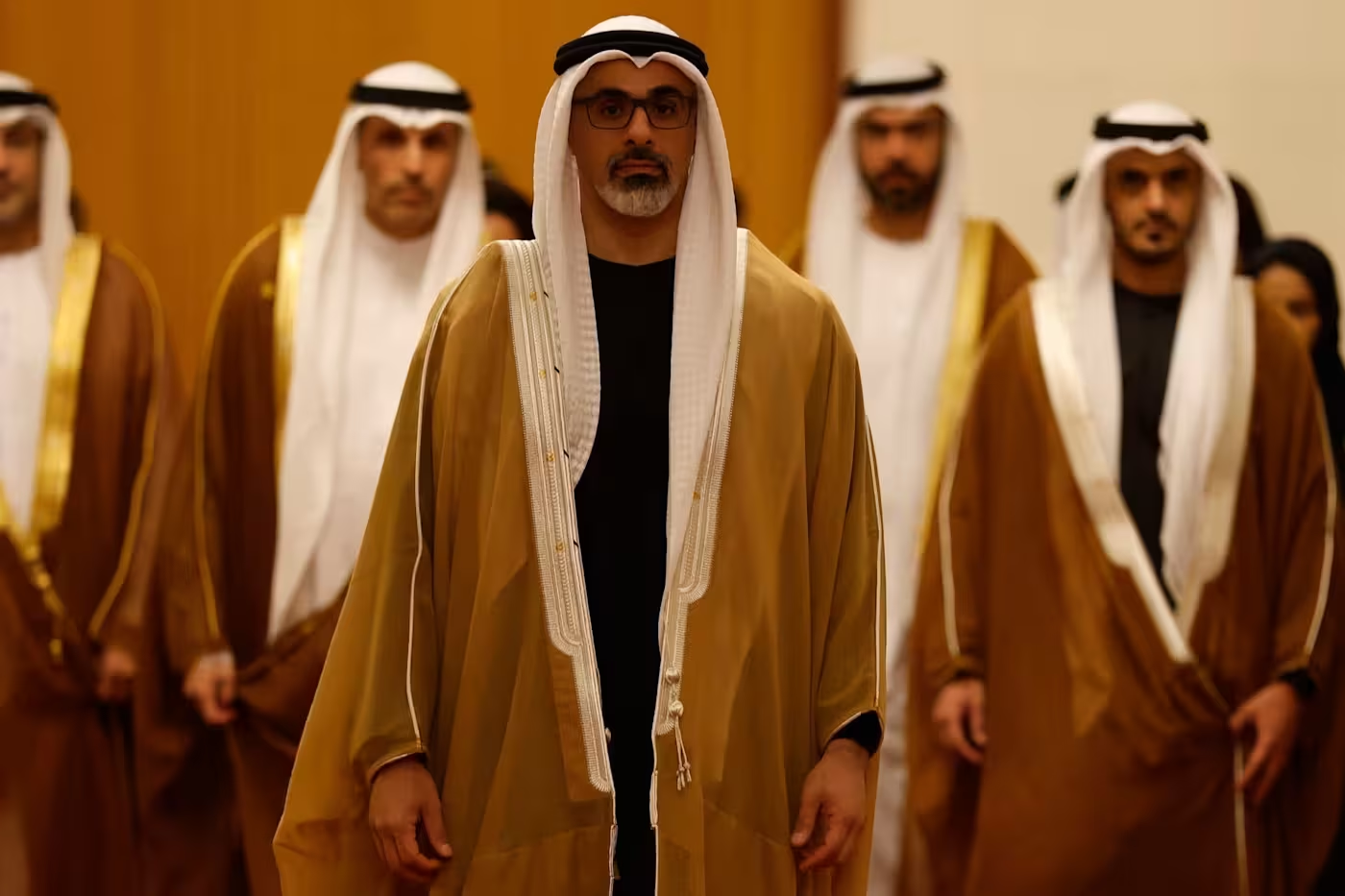
Sheikh Khaled bin Mohamed bin Zayed Al Nahyan at the Great Hall of the People in Beijing. April 14, 2026.
Although Beijing and Tehran have historically maintained close ties, those relations have cooled noticeably in recent years. Before the war, China remained one of the largest buyers of Iranian oil despite U.S. sanctions, but at the same time it sought to diversify supplies and deepened ties with Gulf states, including Saudi Arabia and the United Arab Emirates.
Against the backdrop of the strike on Iran, Beijing is trying to present itself as a “principled” defender of international law and stability, contrasting that image with the unpredictability of the Trump administration.
This conflict has also drawn China and Spain closer still. Mr Sanchez—the most influential leader of the European left—had already been at odds with the Trump administration on a range of issues, from defence spending and Gaza to the regulation of social media.
After Madrid blocked the use of American military bases in Spain for a strike on Iran, Mr Sanchez increasingly began echoing Mr Xi’s language about the need to build an “orderly multipolar” world.
“Today, international law is being trampled upon,” the Spanish prime minister said. “And that is not all: those of us who oppose governments that violate international law paradoxically find ourselves under threat from those very same countries.”
Trump said he would impose a trade embargo on Madrid for refusing to make the joint military bases in Spain available for the operation, but he has yet to carry out that threat.
Last week, addressing Spain, Israeli Prime Minister Benjamin Netanyahu said: “Those who attack the State of Israel instead of terrorist regimes will not be our partners... I have no intention of tolerating this hypocrisy and this hostility. I am not going to allow any country to wage a diplomatic war against us without paying an immediate price for it.”
Responding from Beijing, Mr Sanchez said: “I believe Spain has pursued a consistent foreign policy line, and that should not offend anyone.”
Separately, the Spanish prime minister said he was “very pleased” by the crushing defeat of Viktor Orban—Hungary’s prime minister and Trump’s chief ideological ally in Europe.
Sanchez made those remarks a day after his wife, Begona Gomez, moved one step closer to facing trial on corruption allegations.
On Monday, the judge leading the two-year criminal investigation into Gomez accused her of misusing public funds and of leveraging her relationship with Sanchez to advance her university career.
The prime minister, who has consistently insisted that his wife did nothing unlawful, said: “I ask only one thing of the justice system—that it deliver justice... I am convinced that time will put everything—and everyone—in its proper place.”