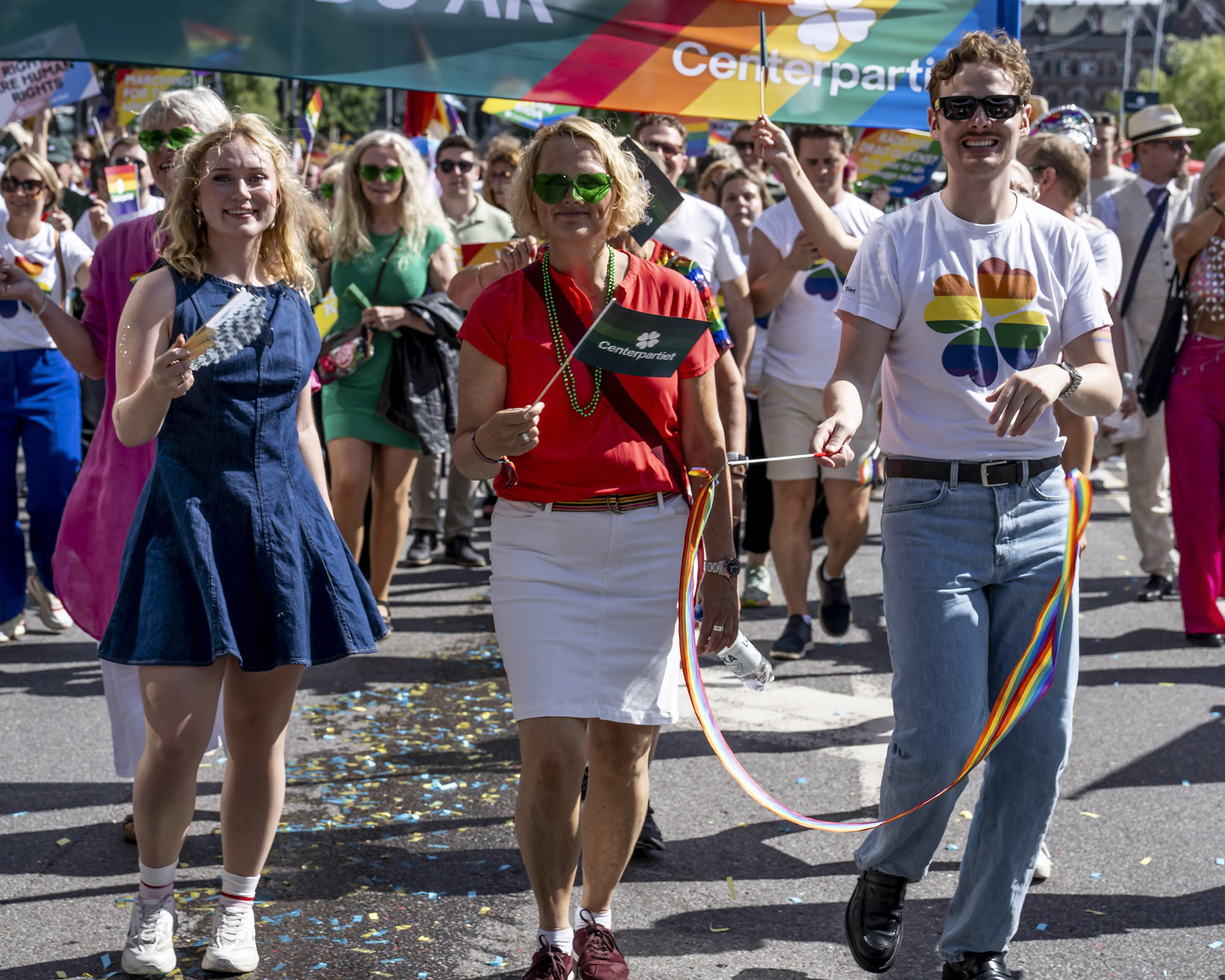
Sweden’s Equality Agency warns that mounting waves of hatred, threats and harassment targeting women in politics are pushing them out of public life and forcing them to limit what they say—posing what it calls “a major threat to democracy”.
The safety of women in politics has come under scrutiny after Anna-Karin Hatt resigned as leader of the Centre Party in October, just five months into the job. She cited intense hostility and threats as the reason for stepping down.
“Constantly feeling the need to look over your shoulder, not feeling safe even at home… it affects me far more than I expected,” she said at the time.
Hatt’s resignation came three years after a man was convicted of murdering Ing-Marie Wieselgren, the national coordinator for psychiatric services at the Swedish Association of Local Authorities and Regions, and of plotting to assassinate then Centre Party leader Annie Loof at the Democracy Festival on the island of Gotland.
Loof supported Hatt’s decision, noting: “I understand the reality she describes… I know what that feeling is like.”
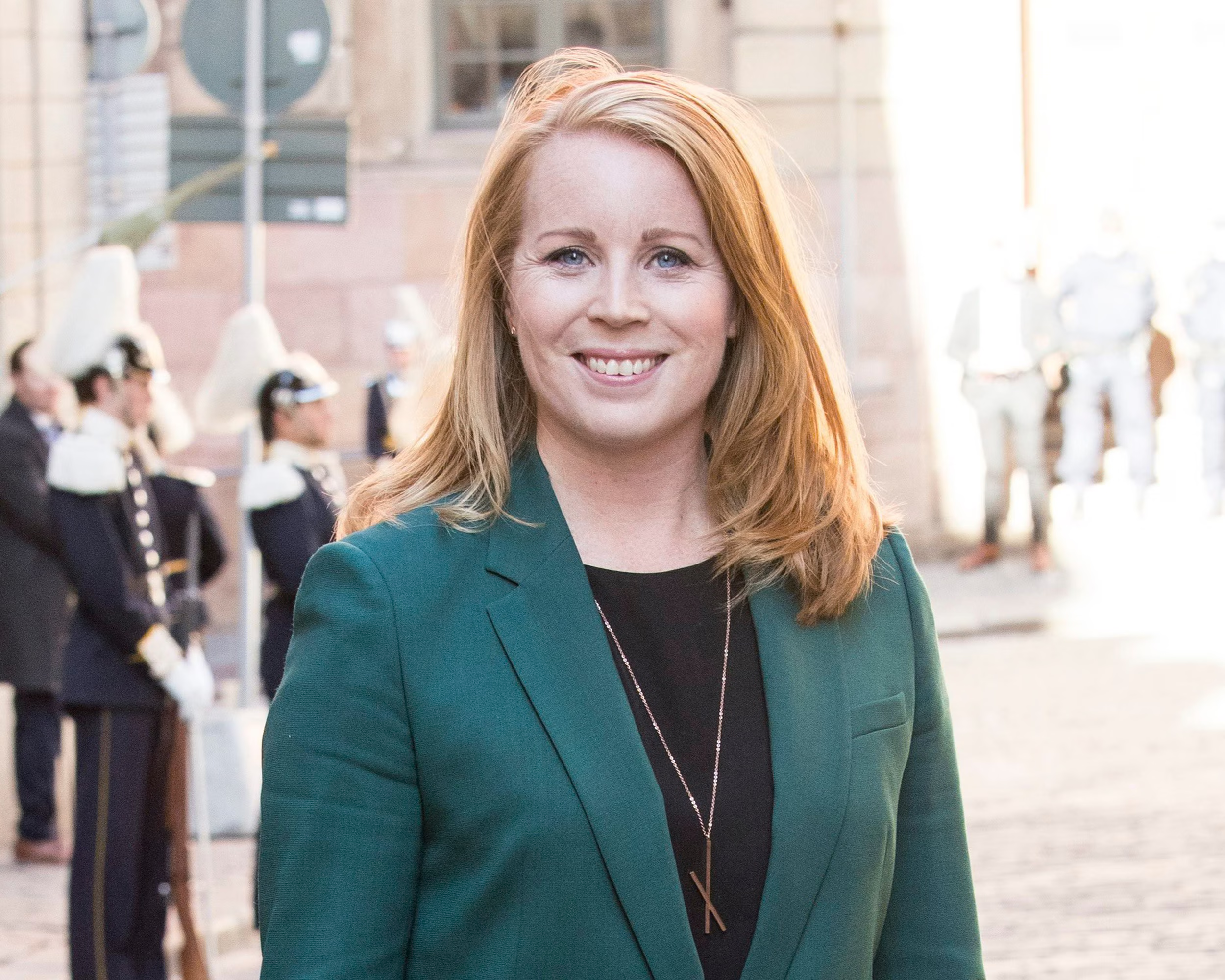
Former Centre Party leader Annie Loof.
Public figures and researchers in Sweden say the country’s political climate, like that of many others, has grown markedly more hostile and polarized in recent years. This, they argue, is deepening self-censorship in public debate and shaping the legislative process.
Lina Saell, head of analysis and monitoring at Sweden’s Gender Equality Agency, said this climate “pushes many groups away” and forces many women “to think twice” before engaging in political life.
She added: “For those of us working on gender-equality policy, this is also a shift in the wrong direction, given the government’s and parliament’s stated aim that women should have the same influence over society and their own lives as men.”
Saell said many women—especially younger ones—face “severe vulnerability” in public roles, and that it affects their ability to do their jobs and to live normally. “This is a very serious threat to democracy,” she stressed.
Some struggle to withstand such pressure. “We see a markedly higher share of young women stepping down from local political positions, and this has consequences—from self-censorship to withdrawing from public life altogether.”
Sweden is traditionally seen as a global leader on gender equality and prides itself on constitutional protections for free expression and the right to demonstrate. Yet the data on politicians tell a different story.
According to the 2025 Politician Safety Survey by the Swedish National Council for Crime Prevention, 26.3% of women in politics said they had faced threats or harassment over the past year because of their position. Among men, the figure was 23.6%.
The gap widens when it comes to perceived vulnerability: 32.7% of women reported feeling unsafe, compared with 24% of men.
Among people of foreign origin, regardless of gender, the figure was significantly higher—31.5% compared with 24.1% among respondents with Swedish roots.
Most respondents said they cope with the pressure by reducing their activity on social media. The next most common response was avoiding certain topics or refraining from commenting altogether.
Saell said the tendency of women to fall silent and withdraw from political discussion demands “clear political attention from anyone who wants to live in a democracy”.
Sandra Hokansson, a researcher at Uppsala University specialising in gender, politics and political violence, noted that many politicians—particularly women—now avoid high-risk issues, which has a chilling effect on public debate and ultimately shapes legislation. She pointed to migration policy as an example, where positions once associated with the far right have moved to the centre of the political agenda.
“This is an area of policy that many Swedes consider deeply important,” she said. “Men and women diverge slightly in their views: women tend to be more positive about accepting refugees, while men are more critical. Yet women are far less active in this debate. That may be why we don’t see a wider gap in opinion.”
Hokansson stressed that open debate is central to shaping policy, and that its narrowing because women fear speaking out has consequences for the decisions ultimately made. “Violence draws the boundaries of public debate,” she said.
Describing abuse and threats as a “professional risk” for women in politics, Hokansson said Hatt’s resignation “raises many alarms”.
Under Sweden’s freedom-of-information laws, the addresses and personal details of most citizens are publicly accessible, and criminal groups have used that information to organise deadly explosions in residential buildings. Hokansson said this, too, has heightened the sense of vulnerability among politicians.
Amineh Kakabaveh, a former member of the Swedish parliament of Kurdish origin from Iran who previously lived under police protection because of threats to her life, said the spread of social media and a “harder and more hostile” political climate in Sweden play a key role in the deterioration.
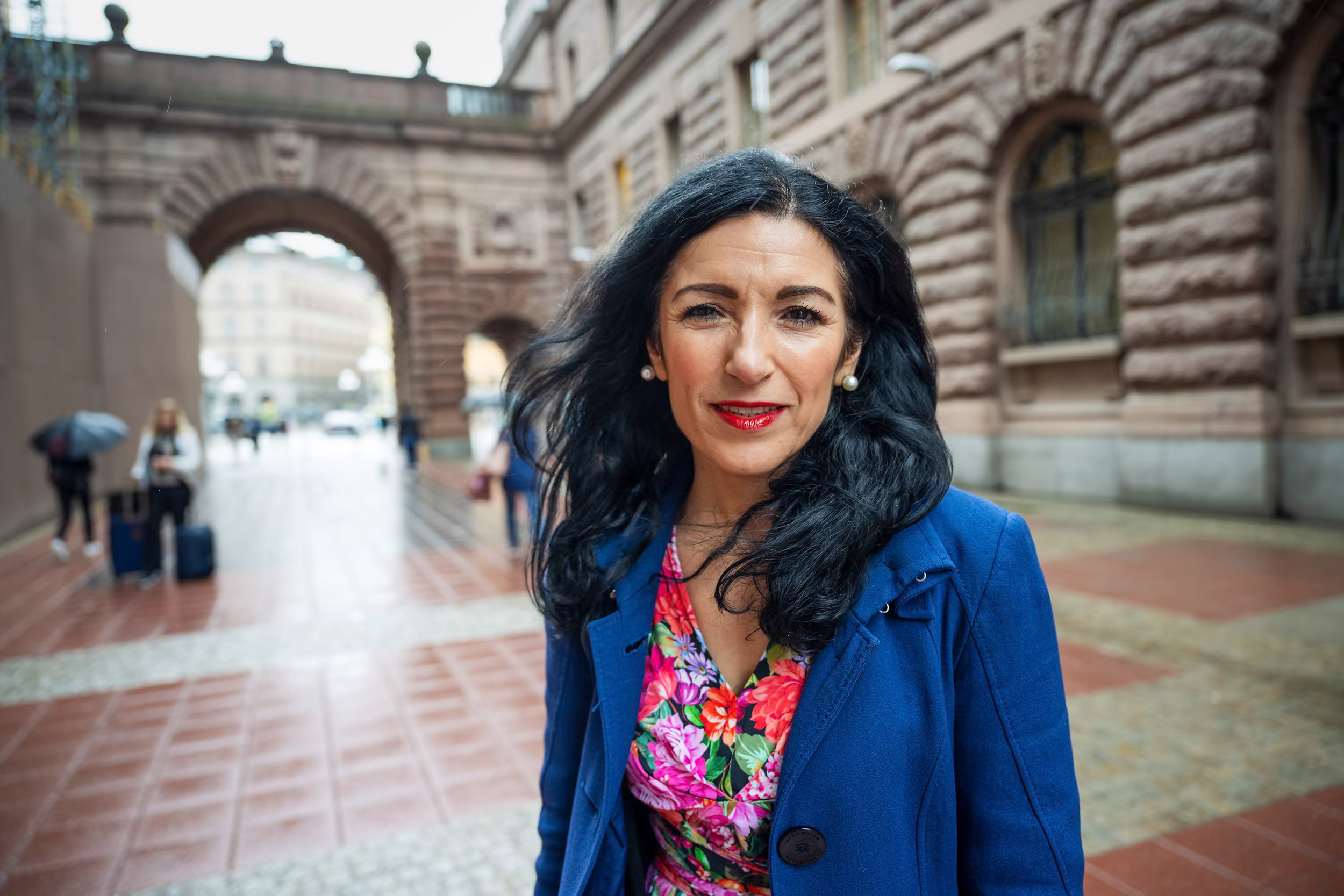
Amineh Kakabaveh.
“Within the existing power structures, there are parties such as the far-right Sweden Democrats, which to some extent promote traditional values rooted in parts of a historically male-dominated culture. Their ranks also consist largely of men,” she said.
She added that while not every woman in politics is targeted, “every threatened woman represents a democratic deficit and an obstacle to the gender equality Sweden has fought for over many years”.
Kakabaveh said that as a woman of foreign origin she faces pressure on several fronts—from racist attacks to threats from Islamists and foreign governments. “I live with this reality today,” she said. “But the point is not to allow yourself to be silenced.”
Minister for Gender Equality Nina Larsson said: “When women are driven out of politics or forced into silence, both democracy and open debate suffer.”
Calling for “a clear cultural shift” in norms of online behaviour, Larsson stressed: “A large part of the problem is that we have tolerated misconduct in the digital sphere for far too long.” She also urged social-media platforms to take “greater responsibility for curbing hate and threats”.
“The government has already taken steps, including strengthened protection for elected officials,” she said. “But more is needed—especially to protect women, who are more exposed than men.”