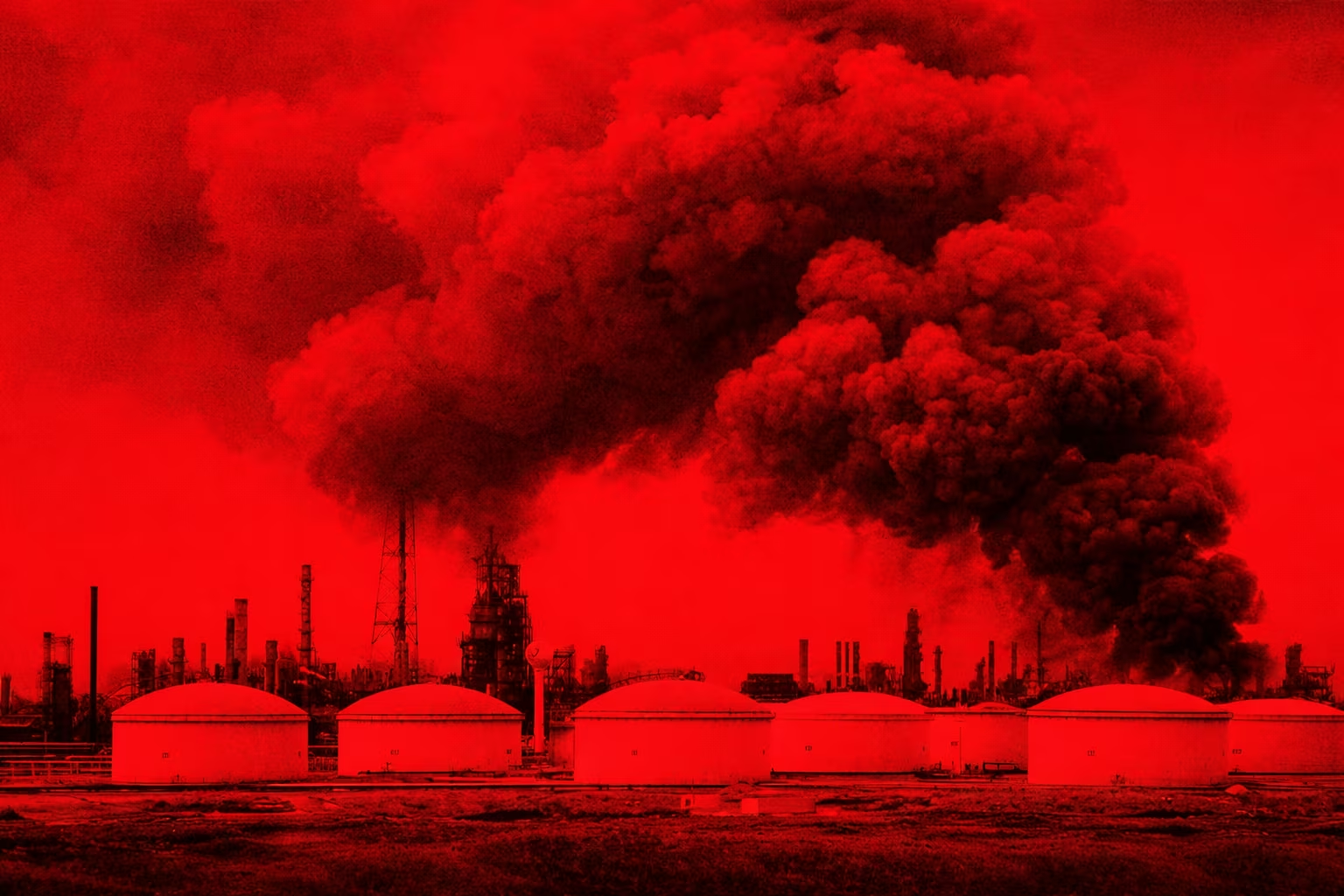
The International Monetary Fund has warned that the U.S.-Israeli war against Iran could trigger a “global, yet asymmetric” shock, darkening the outlook for economies that had only recently begun to recover from earlier crises.
Countries in Africa and Asia that rely heavily on oil imports are already facing mounting difficulty securing the supplies they need—even at inflated prices, the fund said in a blog post published Monday.
“All roads lead to higher prices and slower growth,” the IMF said. The ultimate consequences for supply chains and infrastructure will depend on whether the conflict proves brief or prolonged. Even so, the fund allows for an intermediate scenario—“the world may end up somewhere in between—tensions persist, energy remains costly, and inflation proves difficult to contain—amid continuing uncertainty and geopolitical risk.”
Against the backdrop of U.S. troop deployments to the region, Brent crude moved toward $115 a barrel on Monday, on course for a record monthly gain. President Donald Trump again threatened to destroy Iran’s energy infrastructure if the Strait of Hormuz is not reopened soon, deepening fears of further escalation in the conflict that began on February 28 with the U.S.-Israeli strike on Iran.
Beyond the energy shock, rising food and fertilizer prices are already placing pressure on countries from the Middle East to Latin America. The IMF warns that for the poorest economies, this heightens the risk of food insecurity. Disruptions to agrochemical supplies from the Gulf states are coming just as the spring planting season begins in the Northern Hemisphere, putting harvests throughout the year at risk.
“People in low-income countries are the most vulnerable to rising food prices, as such costs account for an average of about 36% of their consumption, compared with 20% in emerging-market economies and 9% in advanced economies,” the fund said in the publication, prepared by economists including Tobias Adrian and Jihad Azour.
“This means that any surge in fertilizer and food prices becomes not merely an economic issue, but a socio-political one as well—especially where budgetary resources to cushion the blow are limited,” the IMF said.
The fund plans to present its detailed report on the global economic outlook next month at the IMF and World Bank Spring Meetings in Washington, where finance ministers and central bank governors will gather.