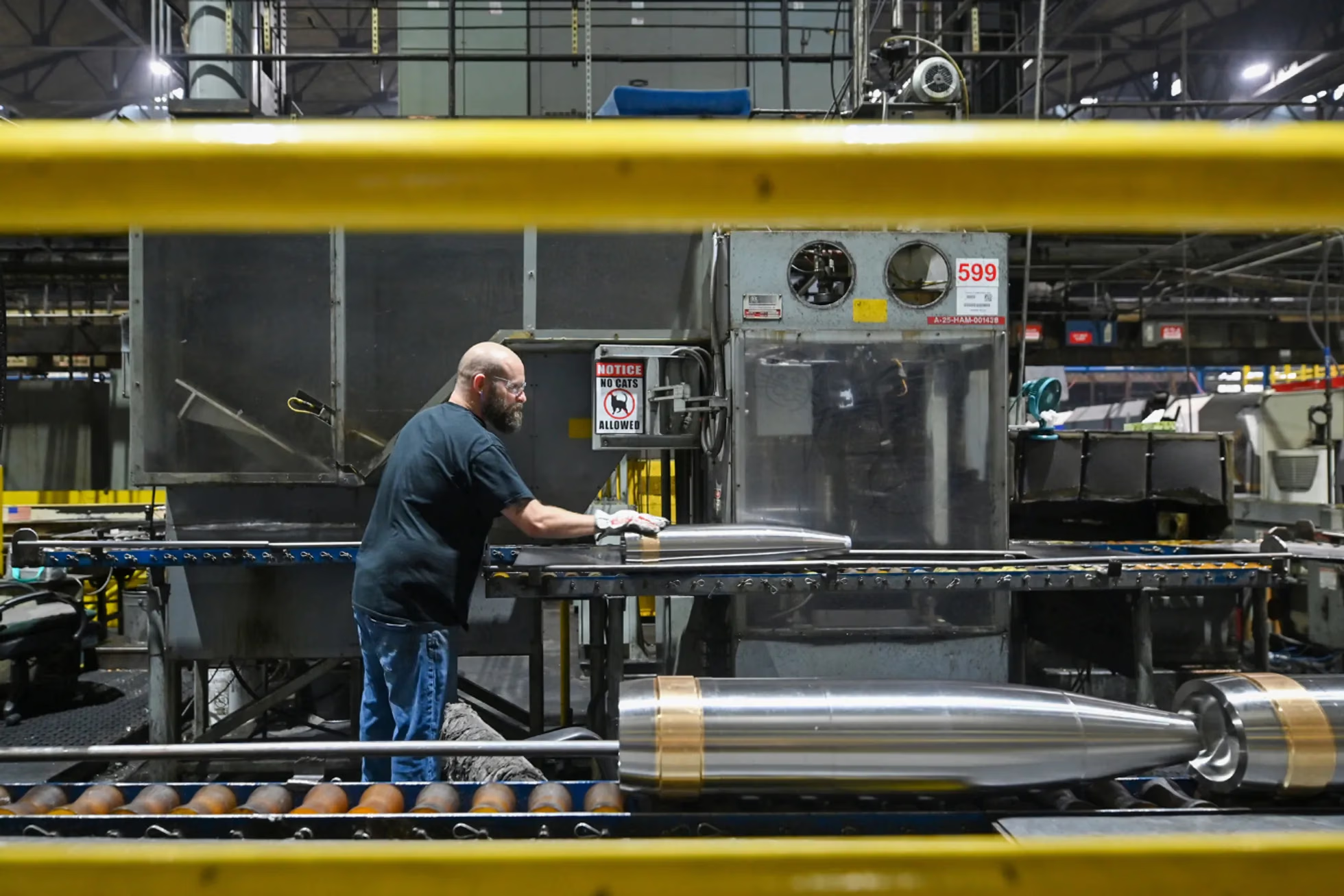
SIPRI has released a new report, showing that in 2024 the combined revenues of the world’s 100 largest arms and military-services producers rose by 5.9% to an unprecedented $679 billion.
The total revenue of the world’s 100 largest defense companies increased by 5.9% in 2024, reaching a record $679 billion, according to new research by the Stockholm International Peace Research Institute (SIPRI).
SIPRI attributes the industry’s revenue growth to heightened demand driven by the war between Russia and Ukraine, the fighting in Gaza, as well as broader global and regional tensions and the steady expansion of military budgets.
The strongest contribution to revenue growth came from US and European firms. Most regions saw rising earnings, with the exception of Asia and Oceania, where declining revenues among Chinese companies reflect difficulties across the country’s defense industry. SIPRI analysts link the drop in Chinese sales to cancellations or delays of major contracts in 2024 amid corruption scandals.
With demand surging and new contracts emerging, many arms manufacturers expanded production lines, increased capacity, set up additional units or acquired competitors.
The combined revenue of US companies in SIPRI’s top 100 reached $334 billion in 2024, up 3.8% from the previous year. Thirty of the 39 firms reported higher arms-sales revenue, including Lockheed Martin, Northrop Grumman and General Dynamics. Yet several major systems are being held back by significant delays and budget overruns, including the F-35 fighter program, Columbia-class submarines and the Sentinel intercontinental ballistic missile.
Across Europe, 23 of the 26 companies listed in the ranking posted revenue gains. Their combined income rose by 13% to $151 billion, driven by the Russia-Ukraine war and a growing sense of threat from Moscow. The sharpest increase came from the Czech-based Czechoslovak Group, whose revenues jumped by 193% to $3.6 billion in 2024, largely due to major arms deliveries to Ukraine.
The report’s authors note that European defense firms are investing heavily in expanding production capacity to meet surging demand. Yet ambitions for rapid rearmament may run up against constraints stemming from supply-chain difficulties, especially shortages of critical minerals.
Two Russian companies—Rostec and the United Shipbuilding Corporation—managed to boost their combined arms-sales revenue by 23%, reaching $31.2 billion despite sanctions. The report highlights that domestic demand has been strong enough to offset declining exports. “Beyond sanctions, Russian arms manufacturers face a shortage of skilled labor. Yet, contrary to expectations, Russia’s defense industry has shown resilience during the war against Ukraine,” SIPRI analysts conclude.
Nine Middle Eastern arms manufacturers entered the ranking for the first time. Their combined revenue reached $31 billion, while overall arms sales in the region rose by 14%.
Among the companies posting gains were three Israeli producers—Elbit Systems, Israel Aerospace Industries and Rafael. Their total arms-sales revenue increased by 16%, reaching $16.2 billion. “The growing backlash against Israel’s actions in Gaza appears to have had little effect on demand for its weaponry. Many countries continued to place new orders with Israeli firms in 2024,” the report’s authors note.