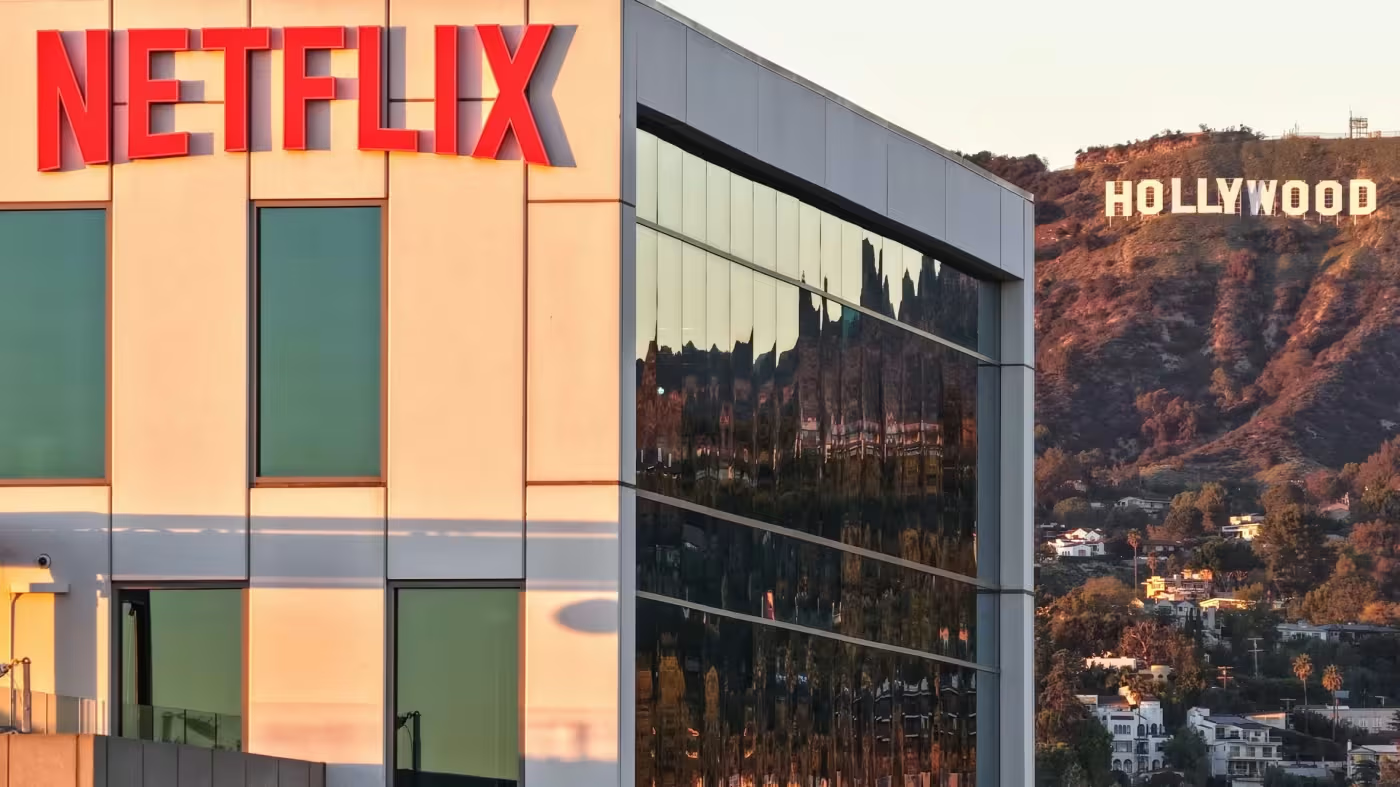
The $83 billion acquisition of Warner Bros by Netflix has become the industry’s most debated development, triggering unease among unions, studios, and cinema owners. Since the announcement, sector representatives have warned that the merger could lead to job losses and further shrink the pool of buyers in a market already weakened by the bursting of the streaming bubble and last year’s strikes. Critics fear that continued consolidation will intensify pressure on creators and erode earnings across the production chain. Netflix’s leadership, however, insists that integrating Warner Bros will expand output and create new opportunities.
Hollywood is bracing for fresh cost-cutting and layoffs if Netflix’s $83 billion purchase of Warner Bros wins approval. Entertainment-industry figures and influential unions are urging regulators to block the deal.
The Writers Guild has joined cinema owners—long critical of Netflix’s reluctance to give films broad theatrical releases—in opposing the transaction. Actress Jane Fonda said it «poses a threat to the entire entertainment industry».
«Job cuts and the future of theatrical distribution—these are the industry’s two central fears», said Stephen Galloway, dean of Chapman University’s film school.
Netflix emerged as the winning bidder for Warner Bros on Friday, surpassing rival offers from Paramount and Comcast. The agreement comes just four months after Skydance completed its $8 billion acquisition of Paramount.
The fact that two century-old studio brands were put up for sale almost simultaneously underscores the scale of the transformation unleashed by Netflix and the broader streaming revolution in film and television.
These transactions also highlight the growing footprint of major technology companies in Hollywood—following Amazon’s 2022 acquisition of MGM and Apple’s launch of its streaming service in 2019.
Netflix remains a company with Silicon Valley roots, while Paramount’s sale was made possible largely by Larry Ellison, the Oracle co-founder whose son David runs the Hollywood studio. YouTube is also strengthening its foothold, and top influencers are launching their own production outfits across Los Angeles.
Agents, producers, and other industry players worry that the Netflix–Warner and Skydance–Paramount deals will reduce the number of buyers for series and films—and with it, the volume of work across the sector.
«It harms any industry when the number of major buyers dwindles to a minimum», Galloway stressed. «For people working in Hollywood, it means lower earnings».
The downturn began after the streaming bubble burst in 2022. Conditions worsened a year later amid prolonged writers’ and actors’ strikes that halted production and delayed releases. Box-office revenues remain well below pre-pandemic levels.
Since 2020, Hollywood has shed tens of thousands of jobs, prompting many professionals to leave Los Angeles in search of work. The ripple effects have reached adjacent sectors—from makeup artists and restaurateurs to florists and DJs.
«You earn less, you spend less, someone else loses income as a result, and that chain reaction triggers a local economic contraction», Galloway explained.
Netflix Buys Warner Bros Discovery’s Studios and Streaming Service for $83 Billion
The Deal Makes the Company the Largest Player in Hollywood

Elon Musk Called for a Boycott of Netflix Over a Show With a Transgender Character
The Series Was Canceled in 2023 After Two Seasons
Even so, Netflix co-chair Greg Peters said on Friday that acquiring Warner Bros would allow the company to expand US-based production and continue investing in original content. «This means more opportunities for creative professionals and more jobs across the entertainment industry», Peters said.
Asked whether Netflix would continue to allow Warner Bros to release films in cinemas, the company’s co-chair Ted Sarandos stressed that the service has «no fundamental objection to theatrical distribution». He said audiences can expect all projects already slated for theatrical release through Warner Bros to proceed as planned.
Warner Bros chief David Zaslav told employees on Friday that he understands their «anxiety» over potential layoffs but does not expect them to be extensive. The deal is not projected to close before the third quarter of 2026.
According to Zaslav, Netflix intends to «retain most people, because they do not have many employees of their own». He added that the company lacks a major film studio or a substantial gaming division, making the merger appear both logical and promising for staff.
Despite the criticism, some industry figures argue that Netflix—with a market capitalization exceeding $425 billion—is best positioned to shield Warner Bros from the fate of once-iconic studios that failed to adapt, such as RKO.
«The good news is that Ted Sarandos loves film, loves television, and understands both extraordinarily well», Galloway concluded.
Oscar-winning producer and UCLA School of Theater, Film and Television lecturer Tom Nunan believes Netflix’s technological mindset and record of innovation could give Warner Bros a better chance of preserving its autonomy as a studio.
«I do not share the pessimism of those who worry about Netflix as a buyer», he noted.
According to Nunan, Netflix began as a mail-in DVD rental service but reinvented itself as a leading streaming platform, effectively having «won the streaming wars». «If Warner is going to sell itself to one of these hyenas, let it be the smartest one—the one that looks like the alpha», he said.