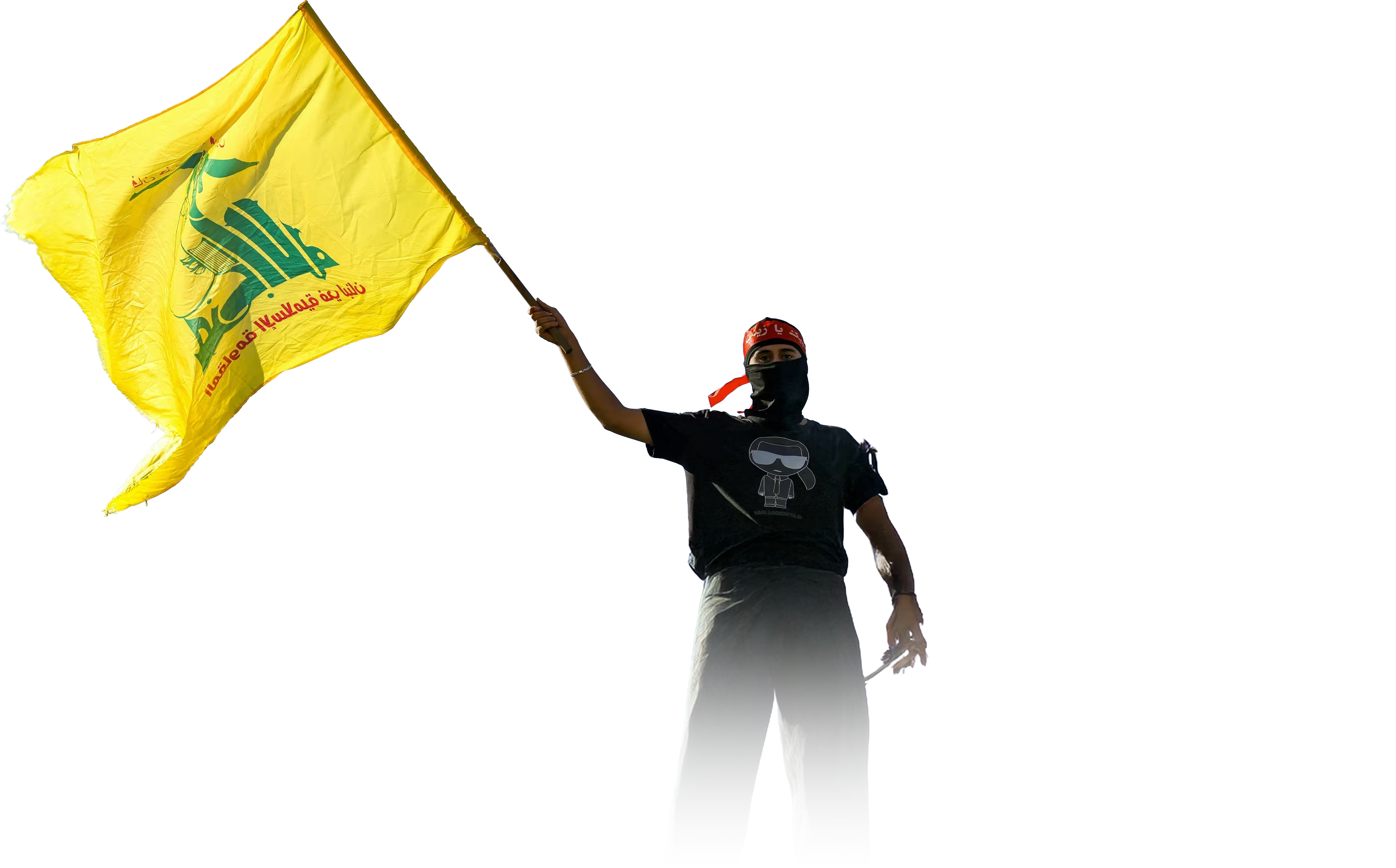
In parallel with the war against Iran, which Israel is waging alongside the United States, the country has opened another—more familiar—front against the Tehran-backed Shiite group Hezbollah in neighboring Lebanon. As early as the day after the operation against Iran began, Hezbollah started striking Israeli territory, relying primarily on short-range rockets and drones. The scale of these attacks is comparable to the threat posed by Iranian ballistic missiles. In response, the Israeli army carried out a series of intensive air strikes across Lebanon and deployed ground units into the south of the country, expanding the zone of hostilities.
According to the latest data, more than 1,000 people have been killed in Lebanon, and around one million have been forced to leave their homes. This is increasing pressure on the Lebanese government, which has yet to fulfill its promise to disarm Hezbollah and thereby reduce tensions in its long-running confrontation with Israel. Israel, while focused on countering Iran, is also viewing the current regional crisis as an opportunity to push Hezbollah away from its northern border once and for all—even if that requires re-establishing a buffer zone on Lebanese territory that was abandoned in 2000. Weakened by a series of setbacks, Hezbollah is facing the most serious challenge in its four-decade history.
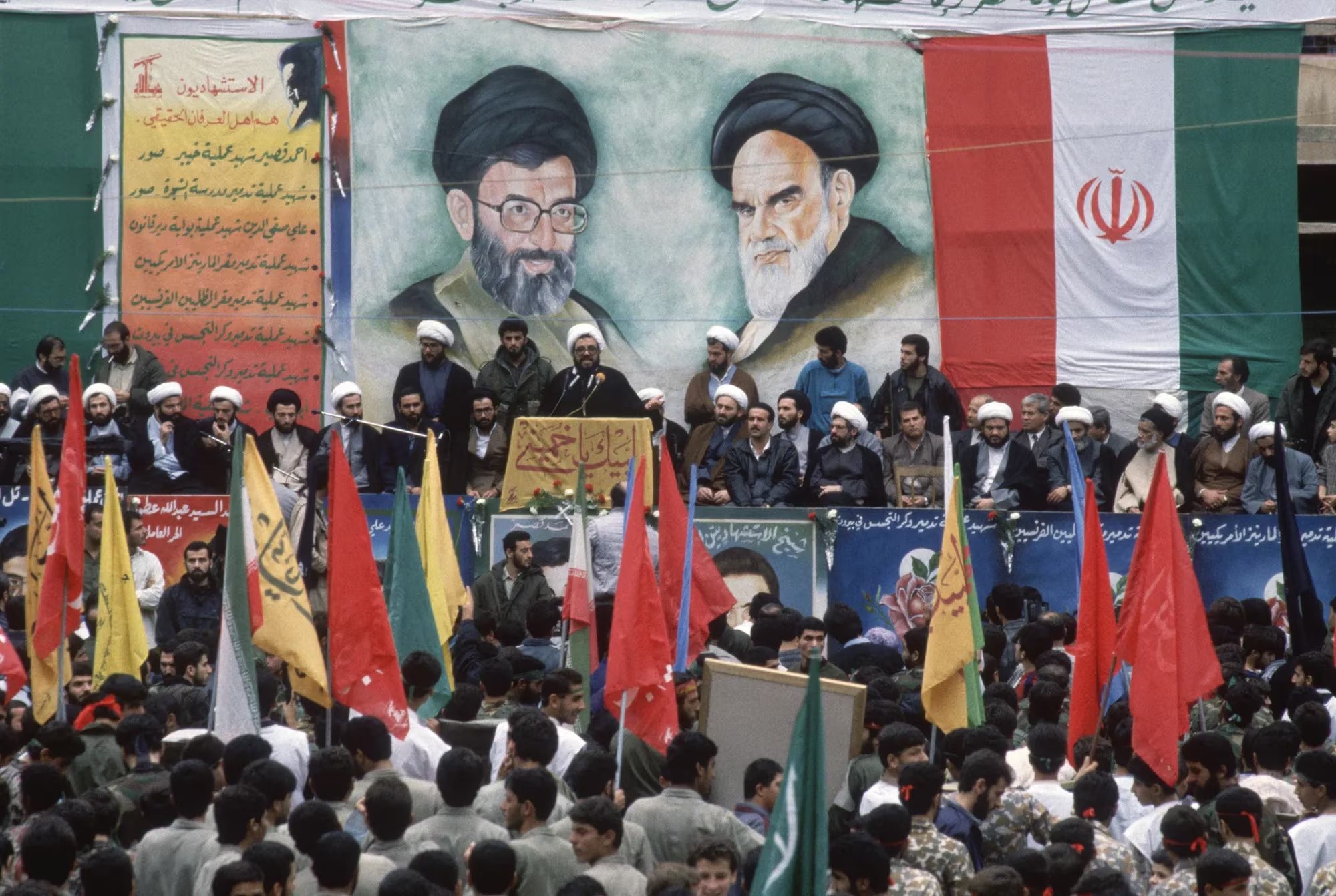
A Hezbollah rally in Beirut. 1989.
What Is Hezbollah?
Lebanon’s Shiite population established a movement in 1982 that later became known as Hezbollah—“the Party of God.” Its emergence was a response to Israel’s occupation of the country’s south, launched to prevent attacks by Palestinian militants on Israel. The group’s formation was shaped by the Islamic Revolution in Shiite Iran three years earlier, with the Islamic Revolutionary Guard Corps serving as its key external reference point. Shiites and Sunnis each make up roughly 30% of Lebanon’s population.
Hezbollah is widely believed to have been behind a series of major attacks against American targets in the 1980s. The United States, several Western countries, and Gulf states belonging to the Gulf Cooperation Council have designated it a terrorist organization.
Hezbollah’s guerrilla campaign was one of the factors that pushed Israel to withdraw its forces from the so-called “security zone” in southern Lebanon in 2000. Yet the clashes did not cease—in its manifesto, the movement described Israel’s withdrawal from Lebanon as “a prelude to its ultimate destruction.” The confrontation ultimately escalated into the devastating war of 2006, which ended in a ceasefire brokered by the United States and held until 2023.
Over time, Hezbollah has evolved into the most powerful paramilitary force in the Middle East, far outmatching the Lebanese army in terms of armaments. It occupies a central place in Iran’s network of allied groups, which includes, among others, Yemen’s Houthis, as well as Hamas and Islamic Jihad operating in the Gaza Strip.
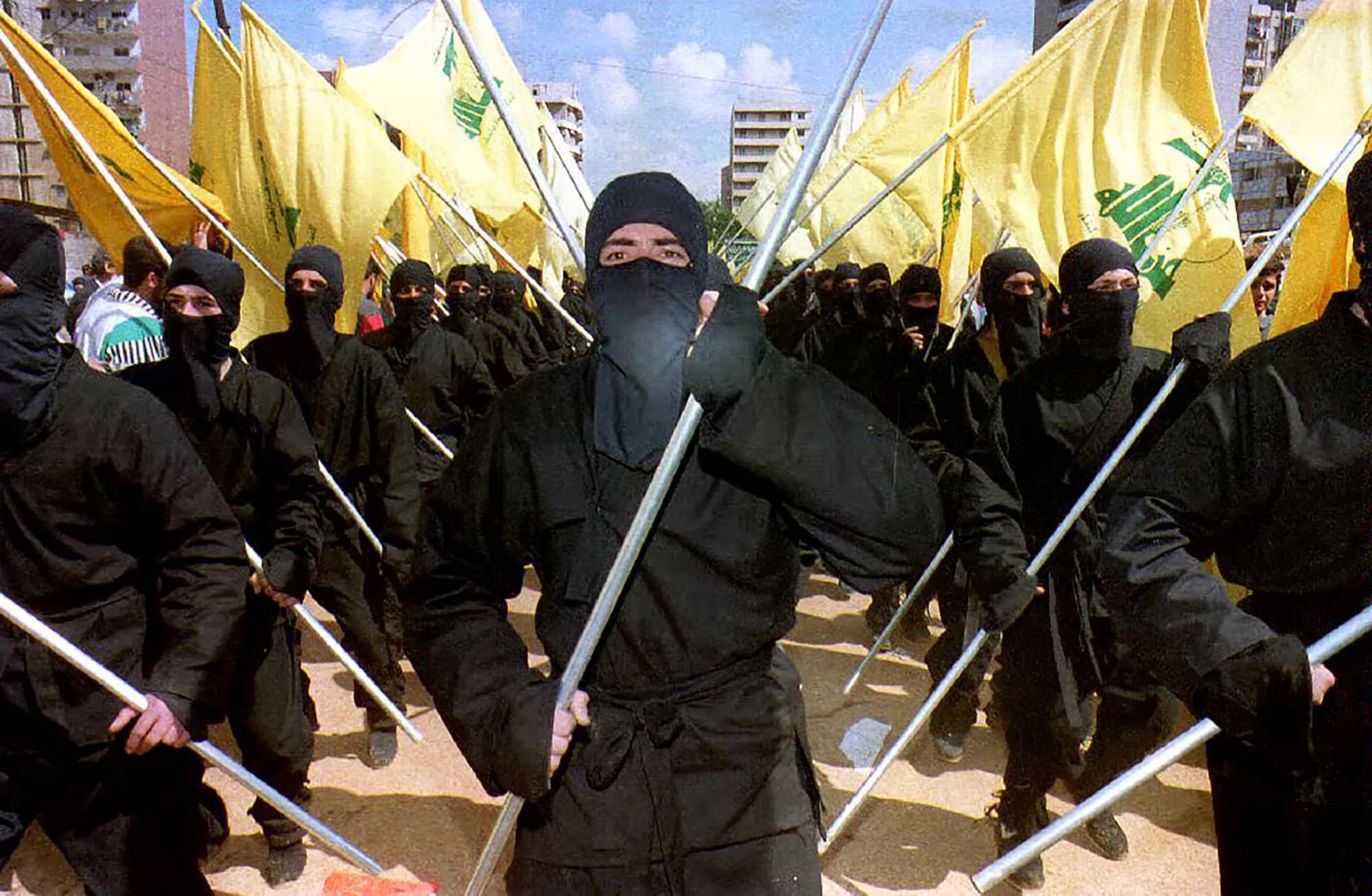
Masked Hezbollah fighters march through Beirut. 1993.
What Setbacks Has Hezbollah Faced?
After Hamas launched its war against Israel by attacking from the Gaza Strip on October 7, 2023, Hezbollah joined the fighting, carrying out its own strikes, which Israel answered in kind. A year of cross-border attacks culminated in an Israeli military operation in Lebanon that significantly degraded the group’s capabilities and deprived it of its leadership. The Israeli operation, targeting Hezbollah’s use of pagers, enabled the breach of its communications system, while its command structure was effectively dismantled—not least through the killing of its long-time leader Hassan Nasrallah in an air strike on Beirut in September 2024.
In December of the same year, the movement suffered a further blow to its logistics, losing its close ties with Syrian President Bashar al-Assad, whose regime was overthrown by Sunni rebels. Under Assad, Syria had served as a critical route for supplying Iranian weapons to Hezbollah, as Iran shares no border with Lebanon. During Syria’s 14-year civil war, Hezbollah fighters fought alongside Assad’s forces together with Iran and Russia.
The ceasefire between Israel and Hezbollah in November 2024, brokered by the United States and France, paved the way for the election of U.S.-backed President Joseph Aoun in Lebanon and the formation of a technocratic government tasked with stabilizing the weakened economy. In an unprecedented move, the cabinet instructed the army to develop a plan to disarm all armed groups, including Hezbollah—something the organization itself denounced as a “grave sin.” The plan, however, was never implemented.
The fighting of 2023–2024 inflicted severe damage on southern Lebanon—a region where Hezbollah has traditionally held influence. Unlike the aftermath of the 2006 war, when the movement distributed funds for reconstruction, this time it has been unable to help its supporters rebuild destroyed homes and agricultural land.
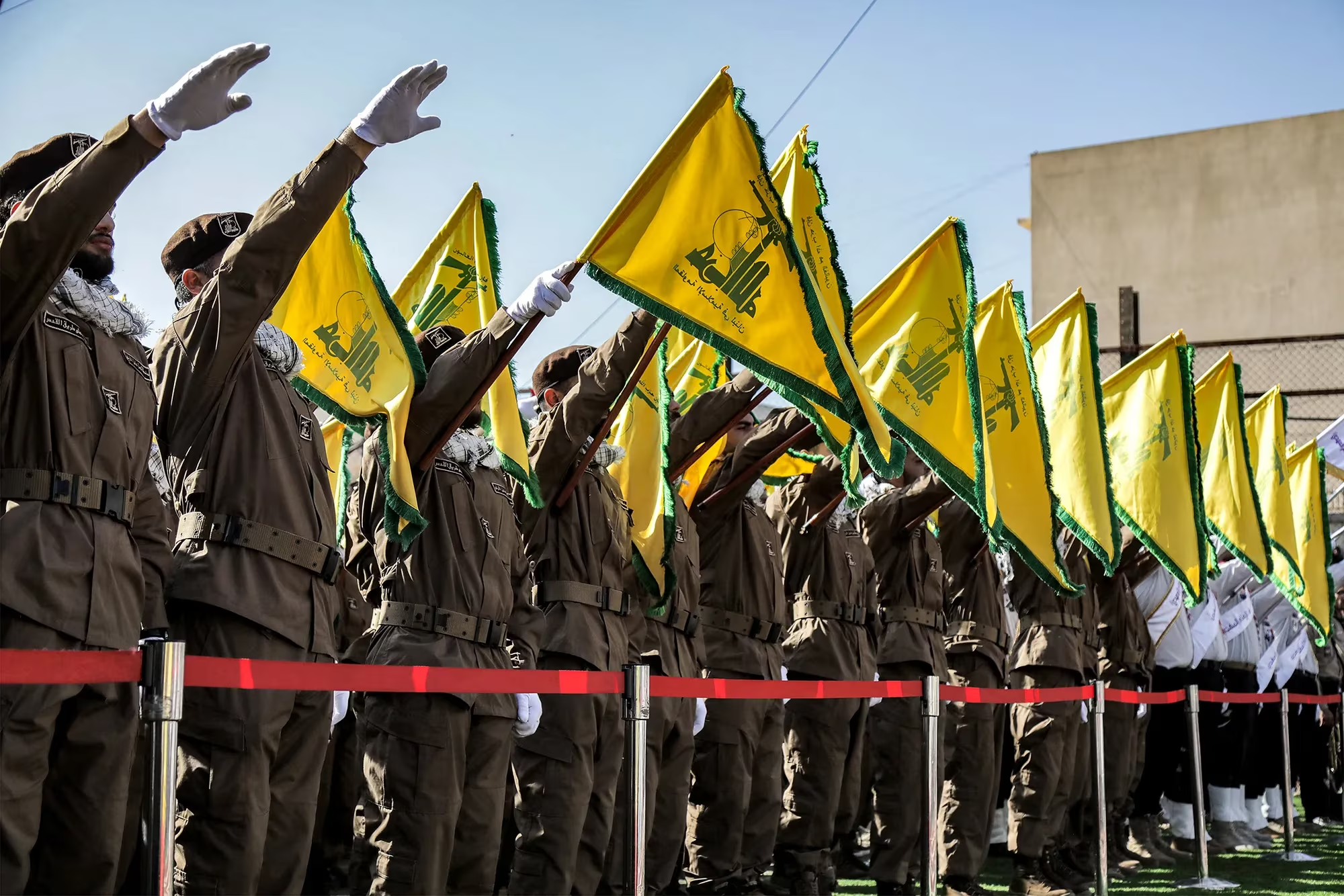
Hezbollah members during a funeral in Shehabiya, Lebanon. 2024.
How Capable Is Hezbollah Today?
Israel says it has destroyed a significant portion of the group’s arsenal and has struck tunnels beneath villages in southern Lebanon used for storing and moving weapons and fighters. According to Israeli estimates, Hezbollah’s stockpile has been reduced to roughly one-sixth of its level at the time of Hamas’s October 7 attack. Even so, Israeli officials believe it still retains between 11,000 and 13,000 rockets and munitions.
Despite its losses, Hezbollah retains significant military potential. According to Tom Barrack, the U.S. ambassador to Turkey and special envoy for Syria, the group has around 40,000 fighters at its disposal, including active personnel and reservists. Israel, for its part, says that hundreds of trained Hezbollah units continue to operate in southern Lebanon, carrying out ambushes against Israeli forces deployed there.
What Is Hezbollah’s Relationship with Iran?
Hezbollah is far more closely tied to the Iranian regime than the Houthis or Hamas. According to the U.S. State Department, Iran provides the group with “most of its funding, training, weapons, and explosives, as well as political, diplomatic, financial, and organizational support.” By these estimates, annual financial assistance amounts to hundreds of millions of dollars.
Washington also says that Hezbollah draws funds from both legal and illicit sources, including “the smuggling of goods, passport forgery, drug trafficking, money laundering, as well as fraud involving credit cards, immigration documents, and banking operations.” The organization itself has previously stated that all its resources come from Iran and has repeatedly denied involvement in drug trafficking.
Following Nasrallah’s killing, experts say, effective control of the group shifted into the direct hands of the Islamic Revolutionary Guard Corps. In their view, this became evident in Hezbollah’s decision to join what Tehran sees as a struggle for the regime’s survival.
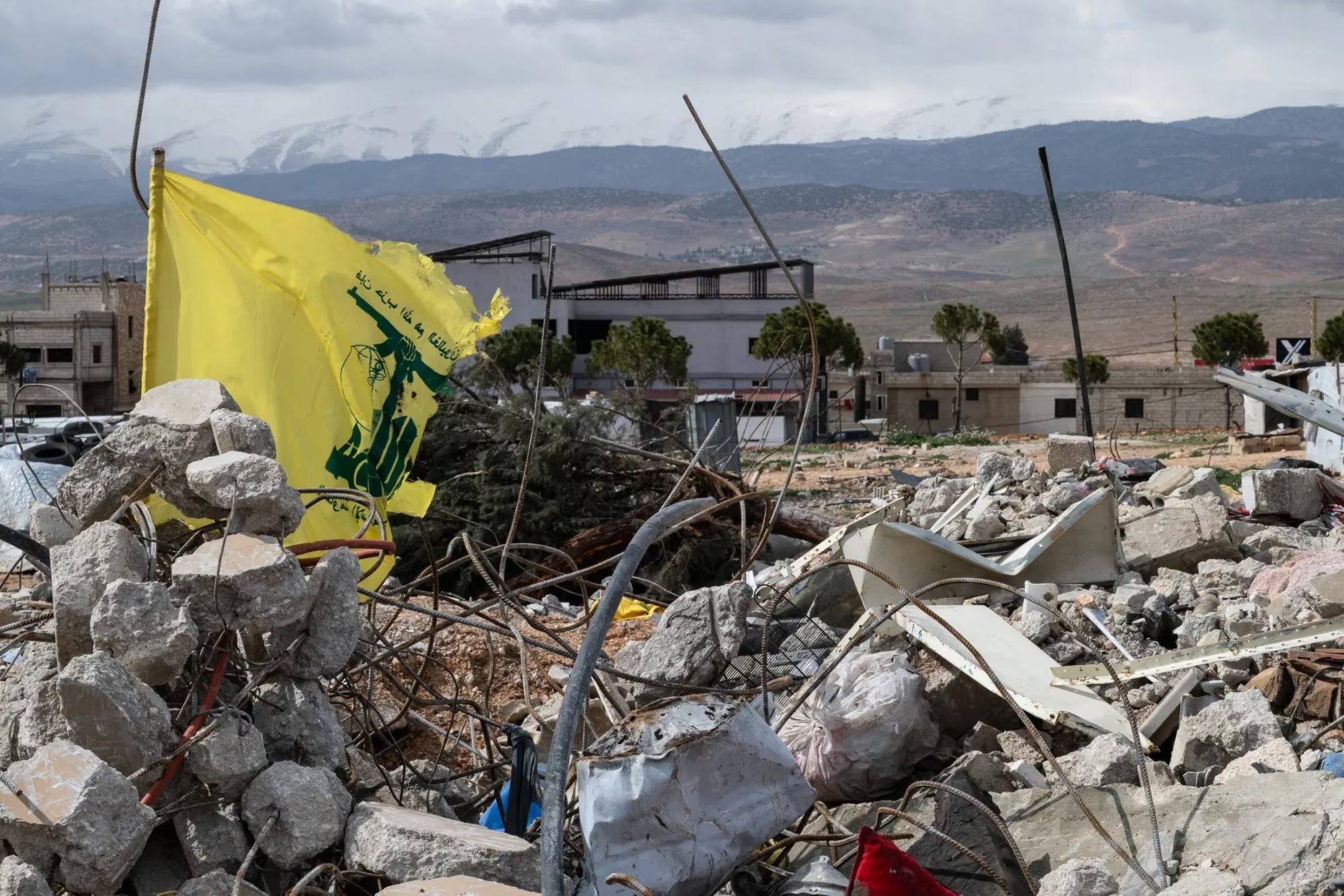
A Hezbollah flag amid the rubble after an air strike in a valley in Lebanon. March 23, 2026.
What Is Israel’s Current Strategy Against Hezbollah?
The November 2024 ceasefire agreement allowed Israel to retain five military outposts on Lebanese territory—on high ground directly along the border. In the current conflict, according to military sources, Israel has moved up to 20,000 additional troops across the border and taken control of more than a dozen positions, some of them several kilometers inside Lebanese territory.
Heavy air strikes have destroyed large parts of Beirut’s southern suburb of Dahiyeh, long the location of Hezbollah’s headquarters. Israel says that underground facilities for missile production and other group infrastructure were located in the area, and states that it had warned civilians in advance to leave the zone.
Israel has also threatened to establish a new buffer zone extending to the Litani River, covering roughly 10% of southern Lebanon’s territory. The aim of such a move would be, in effect, to push Hezbollah out of the area.
According to Israeli commanders, the key objective is to prevent anti-tank missile strikes and armed incursions into civilian communities in northern Israel. It was precisely such attacks in 2023–2024 that forced the evacuation of tens of thousands of residents, and Israel is seeking to ensure they do not recur.
Southern Lebanon has effectively been depopulated as a result of evacuation orders which, Israel says, are intended to prevent civilian casualties during operations. Authorities maintain that residents cannot return as long as Hezbollah continues to pose a threat. Israel has also declared its intention to destroy what it describes as “terrorist infrastructure” in Lebanese border villages—potentially including the demolition of residential homes in the frontier zone and a ban on their reconstruction.
What Is Hezbollah’s Position Inside Lebanon?
Hezbollah remains an influential force in Lebanon, as reflected in the government’s inability to implement a plan to disarm it. The limited capabilities of the Lebanese army have left the authorities with little room to maneuver after the group threatened civil war.
The movement is not only an armed organization but also a political force. Its alliance with the Shiite Amal movement, led by Parliament Speaker Nabih Berri, ensures that together they represent the majority of the country’s Shiites. From 2018 to 2022, Hezbollah and its allies controlled a parliamentary majority. The extensive network of social services established by the group helps sustain its support within the Shiite community.
At the same time, the political balance is gradually shifting. The government has banned the organization’s military and security wing, and the Justice Ministry has even proposed issuing an arrest warrant for its leader, Naim Qassem. In late March, the authorities went further and stripped the Iranian ambassador of accreditation.
It is becoming increasingly difficult to gauge the level of support for Hezbollah among Shiites. Publicly, many continue to express unwavering loyalty, yet in private conversations there is growing frustration over the constant bombardment and displacement that accompany the group’s attacks against Israel.