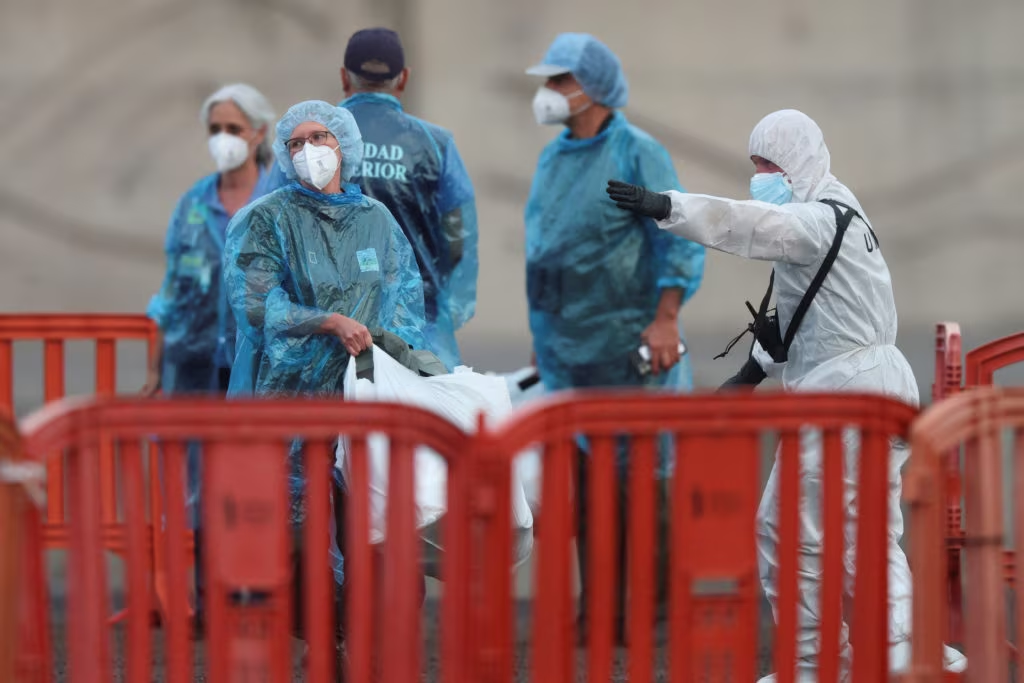
The number of confirmed hantavirus infections has risen to 11 after additional cases were identified among passengers aboard the cruise ship MV Hondius. The newly infected include a French woman now in critical condition in Paris and a passenger from Spain whose infection was detected after disembarking from the vessel.
The World Health Organization has confirmed nine cases of infection. The deaths of a Dutch couple, who health officials believe may have contracted the virus during travel in South America, have also been confirmed. Another death—that of a German citizen—is being treated as probably linked to hantavirus.
The WHO said it expects additional cases because of the conditions for transmission aboard the ship and the virus’s lengthy incubation period.
“At this stage, there are no signs of the beginning of a larger outbreak,” the organization said in a statement. The WHO recommended a 42-day quarantine for passengers and crew members starting from the date of disembarkation.
WHO Director-General Tedros Adhanom Ghebreyesus also said the situation does not currently point to the start of a major epidemic, but warned that because of the long incubation period, new cases could emerge over the coming weeks.
The French patient is being treated at Bichat Hospital in Paris. Infectious disease specialist Xavier Lescure told the Associated Press that she had developed a severe form of the infection involving damage to the heart and lungs. Doctors connected her to an extracorporeal circulation and oxygenation system, which he described as “the last stage of supportive therapy.”
The Spanish passenger with a confirmed infection has been placed in quarantine at a military hospital in Madrid. Thirteen additional Spaniards who tested negative are also being monitored.
Oceanwide Expeditions, the company that operates the MV Hondius, said 27 passengers, 25 crew members, and two medical workers remain aboard the vessel. No symptoms of hantavirus have yet been identified among those still on board.
Argentina’s Health Ministry announced that it is sending a team of experts to investigate the source of the outbreak. The ship departed the country on April 1.
According to the preliminary theory, the source of the infection may have been a birdwatching excursion during which the Dutch couple visited a landfill site where infected rats may have been present. Specialists intend to examine that area first.
Hantavirus is typically transmitted through rodents, although in rare cases human-to-human transmission is possible through close contact. The incubation period can last up to six weeks.
In the United States, 17 Americans and one British citizen who may have been exposed aboard the cruise ship are under observation. They are quarantined in Nebraska and Georgia. Most have shown no symptoms. One individual tested positive despite displaying no signs of illness, while another passenger experienced mild symptoms but tested negative for infection.
U.S. authorities emphasize that the risk to the public remains low and is not comparable to the threat posed by COVID-19 before the 2020 pandemic.
“This is not a new COVID, but it is a serious infectious disease,” said WHO epidemic and pandemic preparedness director Maria Van Kerkhove. According to her, the vast majority of people will never encounter this virus.