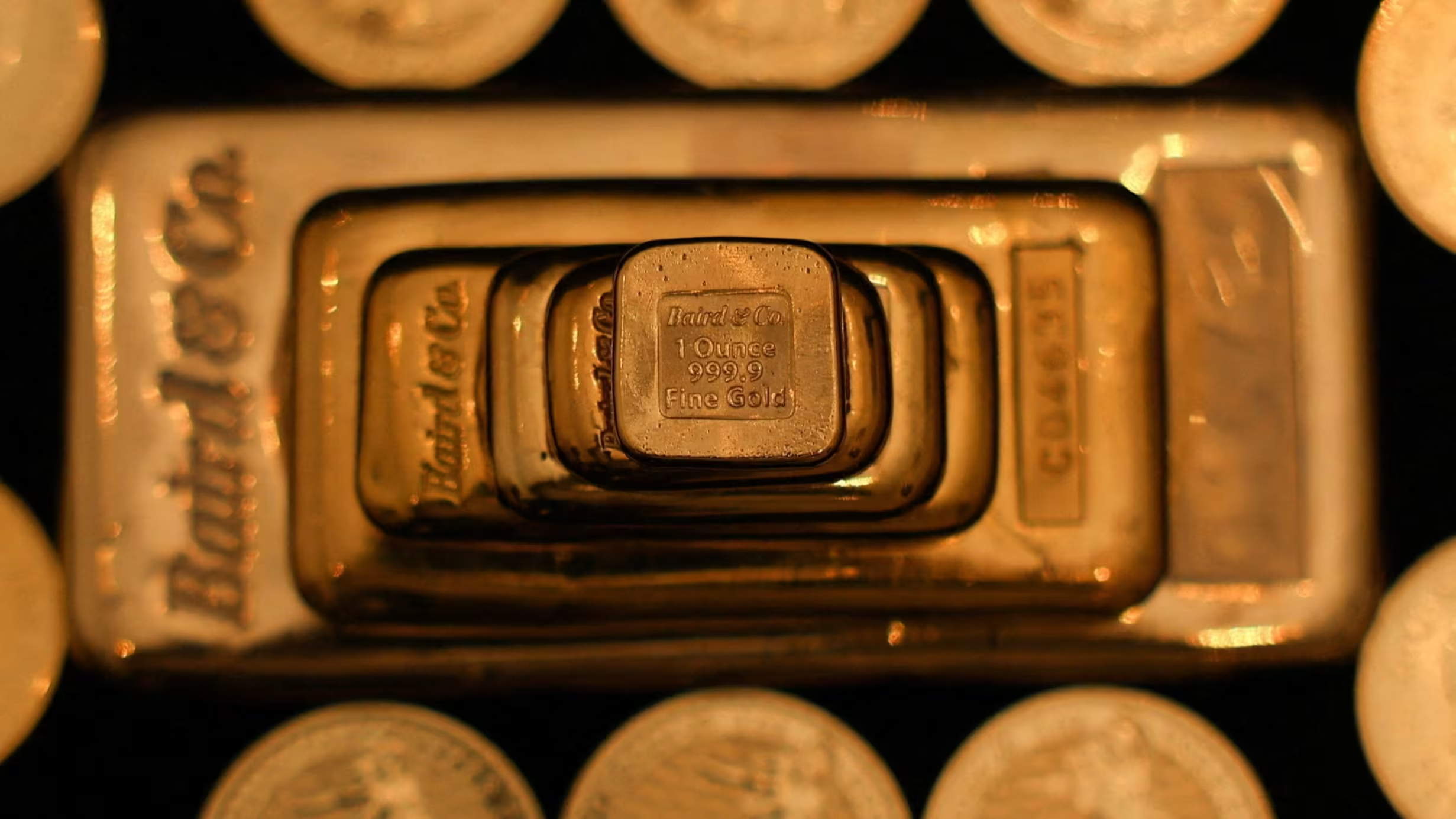
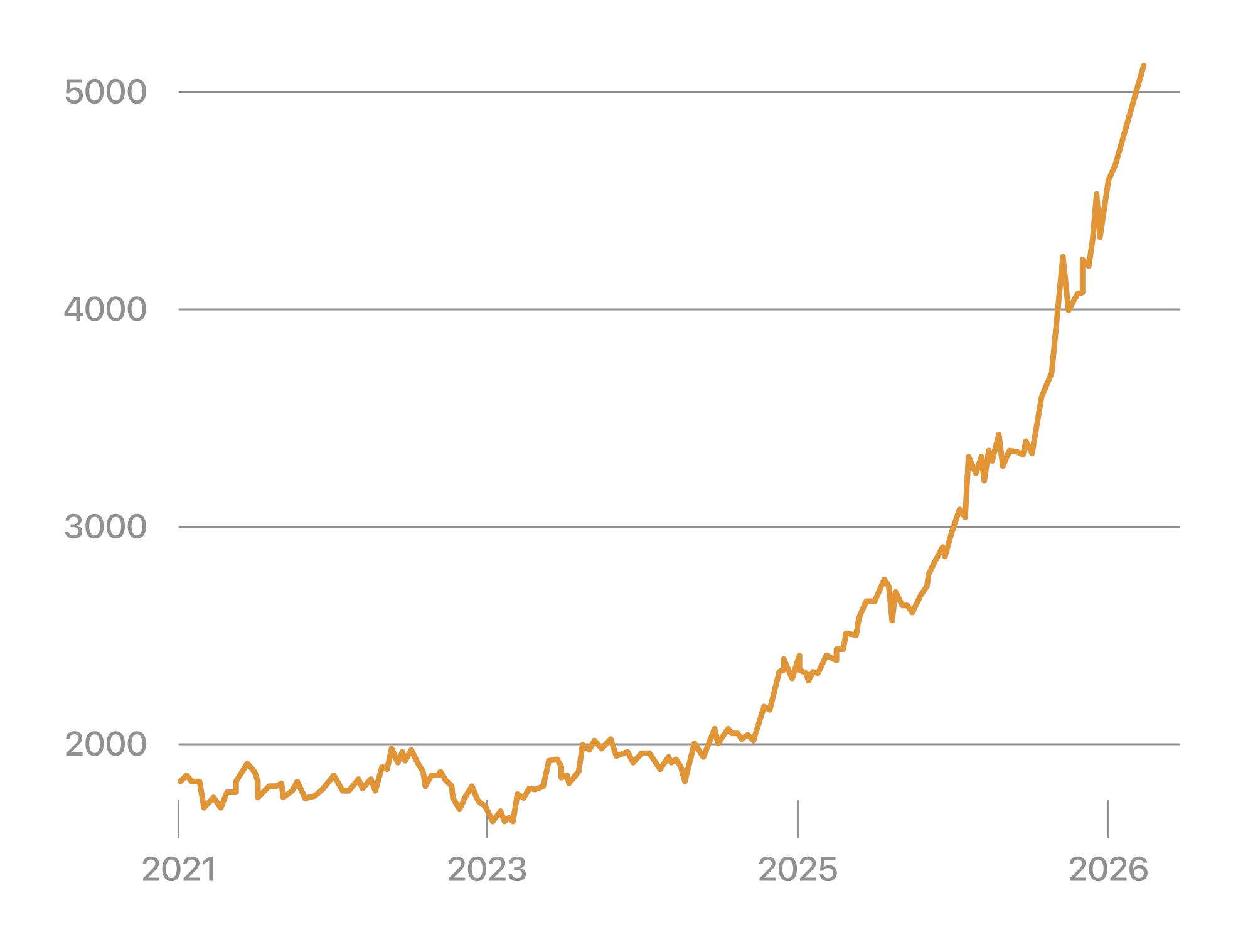
Gold has pushed past the $5,000 mark per troy ounce, vividly illustrating how rising global tensions are driving investors into safe-haven assets at volumes the market has never seen before.
After a sharp jump last week—when concerns surrounding Greenland delivered gold its strongest weekly gain since the financial crisis—the rally continued on Monday. The metal’s price rose by another 2.2 percent and at its peak reached $5,110 per troy ounce.
Gold Price Dynamics, US Dollars Per Troy Ounce
“We’ve crossed another threshold—and much faster than I expected,” said Michael Haigh, an analyst at Société Générale. Investors, he noted, are now paying little attention to price levels, betting instead on the continuation of upward momentum. Global uncertainty remains elevated, he added, pointing to developments in Venezuela, Greenland, and Iran as factors pushing capital toward traditional safe-haven assets, including gold.
Since the start of the month, gold has risen by 18 percent, marking its strongest monthly gain in more than 40 years.
In the past, the metal has typically crossed major price thresholds during periods of global upheaval. During the 2008 financial crisis, it moved above $1,000 per ounce, and during the pandemic it reached $2,000.
Last year, gold surged rapidly through the $3,000 and $4,000 levels amid the first year of Donald Trump’s presidency, which heightened market volatility and raised questions about the stability of the US dollar. An additional driver was growing doubt over the independence of the US Federal Reserve, where Chair Jerome Powell is under criminal investigation.
Investor inflows into gold-backed exchange-traded funds have reached unprecedented levels—amounting to $89 billion last year, the highest figure on record.
Demand from central banks has remained at historically high levels over the past four years, as many diversify their reserves by reducing exposure to the US dollar. The pace of such purchases slowed last year, yet gold still became the second-largest reserve asset held by central banks, trailing only the dollar.
Samantha Dart, co-head of global commodities research at Goldman Sachs, said gold offers investors “an opportunity to diversify risks linked to uncertainty in monetary and fiscal policy.”
The pace of gold’s price surge has exceeded even the market’s most optimistic expectations.
“Every time someone publishes an aggressive forecast for gold, the market reaches that level within a matter of weeks,” said Tai Hui, chief Asia-Pacific market strategist at JPMorgan Asset Management. Current policy, he added, is only reinforcing the sense of uncertainty surrounding an emerging new world order.
Against this backdrop, silver and platinum rose by 3.7 percent and 2 percent respectively, setting new all-time highs. At the same time, the dollar weakened by 0.5 percent against a basket of key trading partners, including the pound sterling and the euro.
Analysts say additional pressure on the gold market came from rising yields on Japanese government bonds last week, driven by concerns over Tokyo’s expansive fiscal plans.
“This is directly linked to what is happening in the Japanese bond market, as gold is viewed as a safe-haven asset,” Dart explained.
The decline of the dollar has also fueled a fresh surge in demand. “Commodities and precious metals often strengthen when the dollar weakens,” said Prashant Bhayani, Asia chief investment officer at BNP Paribas Wealth Management.
A weaker US currency makes gold more affordable for buyers using other currencies, thereby lending support to prices.
On January 26, the dollar fell by 1.1 percent against the yen and was trading near the 154-yen level amid speculation about a possible currency intervention to support the Japanese currency. “It is the movement of the yen that is now underpinning gold and base metals,” Bhayani stressed.